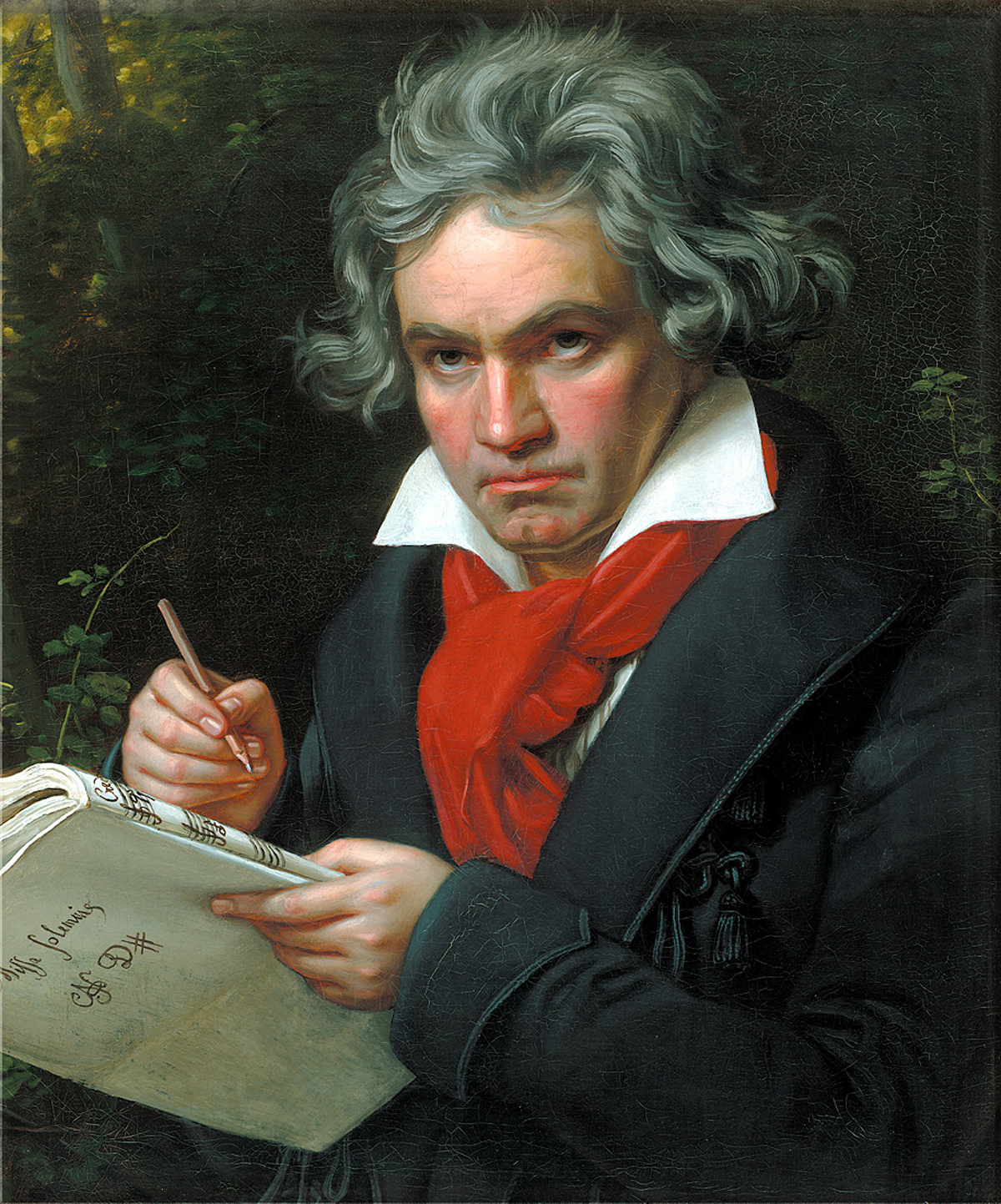
Will Triumphs Over Fate
In the 1802 Heiligenstadt Testament, Beethoven expressed his despair over deafness, but immediately chose to continue composing. He believed that the will to create art could transcend physical limitations; this belief became the core driving force of his later creative life.
Source: Heiligenstadt Testament, Beethoven, 1802 / Maynard Solomon, Beethoven, 1977
Heroic Aesthetic: Suffering is the Path to the Sublime
Beethoven's heroic period works (Third through Eighth Symphonies) established a new musical narrative: through depicting conflict, suffering, and struggle, ultimately reaching victory and transcendence. This narrative pattern influenced all artistic creation in the Romantic era.
Source: Charles Rosen, The Classical Style, 1971 / Lewis Lockwood, Beethoven: The Music and the Life, 2003
Music is the Universal Language of Humanity
Beethoven incorporated Schiller's Ode to Joy lyrics into the Ninth Symphony, expressing the ideal of human brotherhood. He believed music transcended language and national boundaries, serving as a spiritual bond connecting all of humanity.
Source: Beethoven's Ninth Symphony, 1824 / Jan Swafford, Beethoven: Anguish and Triumph, 2014
Artistic Autonomy: Refusing to Serve the Powerful
Beethoven was among the first composers in history to refuse to depend on aristocratic patrons, maintaining an independent artistic career through publishing, concerts, and commissions; this choice pioneered the model of modern composers' independent creation.
Source: Maynard Solomon, Beethoven, 1977
Adversity Creation Model: Constraints Unleash Creativity
The most severe constraints often force creators to transcend habitual thinking, producing the most breakthrough works
The Ninth Symphony (1824), composed after complete deafness, is one of the greatest works in Western music history. Deafness forced him to rely entirely on internal musical imagination, paradoxically liberating his creation from dependence on external sound, reaching a purer musical realm
Creative WorkAdversity BreakthroughPersonal Growth
Heroic Narrative Structure: Conflict-Struggle-Victory
By presenting the process of conflict and struggle in a work, make the final victory or transcendence carry deeper emotional meaning
The fate motif opening the Fifth Symphony (da-da-da-DUM) symbolizes fate's knock; the entire symphony moves from the dark conflict of C minor to the bright victory of C major, establishing a heroic narrative structure that influenced the next two centuries
Narrative DesignPresentation and CommunicationProduct Story
Late Style: Beyond Understanding, Reaching the Essence
After mastery peaks, the greatest creators enter a late style that transcends conventional aesthetics, directly touching deeper truths
Beethoven's late string quartets (Op.127-135) were not fully understood for decades after his death, viewed by contemporary audiences as bizarre, but later recognized as the pinnacle of Western chamber music, influencing all successors from Brahms to Bartók
Creative DeepeningProfessional MaturityBreaking Convention
Early Period: Classical Inheritance Phase
1770-1802
Learning and mastering the Classical tradition, building technical foundation
Received early music education in Bonn, went to Vienna in 1792 to study under Haydn, quickly establishing reputation as pianist and composer. Early works (First and Second Symphonies, early piano sonatas) showed nascent personal style within the Haydn and Mozart tradition.
Heroic Period: Creative Peak
1803-1812
Breaking Classical limitations, establishing heroic aesthetics
Starting with the Third Symphony Eroica, Beethoven established a completely unique musical language, including longer structures, more intense emotional expression, and heroic narrative patterns. The Fifth Symphony, Sixth Symphony Pastoral, and Emperor Piano Concerto were all produced in this period.
Middle Period: Silence and Transformation Phase
1813-1817
Relatively reduced creative output, internal transformation period
Relatively fewer works in this period, viewed by scholars as a transition from the heroic period to late style. Personal life difficulties (worsening deafness, nephew custody battle) ran parallel to internal musical exploration.
Late Period: Transcendent Creation Phase
1818-1827
Creating the most profound works in complete deafness, transcending conventional aesthetics
After going completely deaf, Beethoven created the Ninth Symphony, Missa Solemnis, and late string quartets; these works exceeded all contemporary works in depth and complexity, and were not fully understood and appreciated until decades after his death.