
The Self Is a Strange Loop
The 'I' in consciousness emerges when a system refers to itself across levels and forms a stable pattern, not from a simple entity.
Source: Douglas Hofstadter, I Am a Strange Loop, 2007 / Wired, Me, My Soul, and I, 2007
Loading Thinker Node
正在读取方法论、关键决策和影响关系。
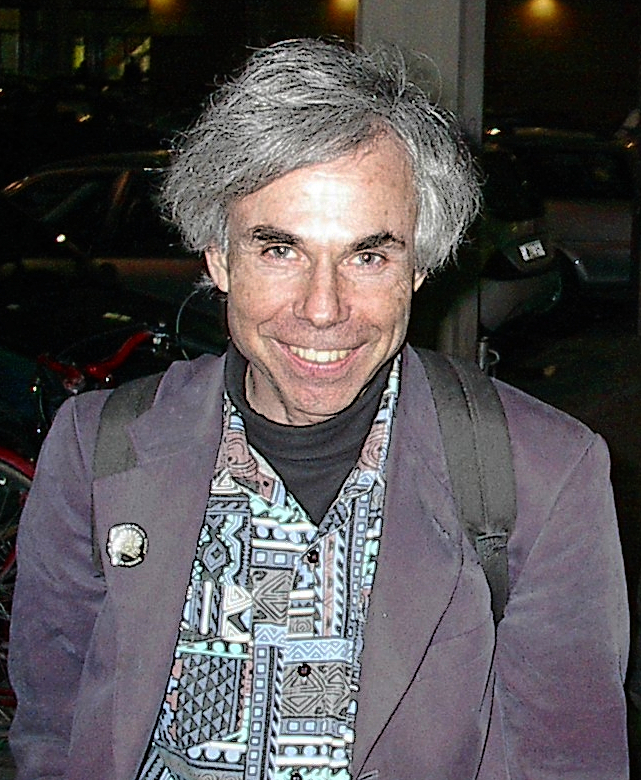
Cognitive scientist exploring how minds emerge from symbols through strange loops, analogy, and self-reference
Douglas Hofstadter is an American cognitive scientist and author whose 1979 book Gödel, Escher, Bach: An Eternal Golden Braid won the 1980 Pulitzer Prize for General Nonfiction. The book uses mathematical logic, art, music, dialogues, and puzzles to explore self-reference, formal systems, and the emergence of mind. At Indiana University's Center for Research on Concepts and Cognition, he continued studying analogy, conceptual fluidity, and creativity through models such as Copycat. Hofstadter has remained cautious about artificial intelligence, stressing that genuine intelligence involves analogy, meaning, and self-modeling, not merely scaling symbolic or statistical operations.
The 'I' in consciousness emerges when a system refers to itself across levels and forms a stable pattern, not from a simple entity.
Source: Douglas Hofstadter, I Am a Strange Loop, 2007 / Wired, Me, My Soul, and I, 2007
Human understanding is not mechanical rule matching but discovering structural correspondences across situations, transferring meaning, and reshaping concepts.
Source: Fluid Concepts and Creative Analogies, 1995 / Surfaces and Essences, 2013
Meaningless symbols inside formal systems can, through levels, feedback, and interpretation, produce high-level meaning and self-models.
Source: Gödel, Escher, Bach, 1979 / Pulitzer Prize page for Gödel, Escher, Bach
When a system moves across levels and returns to itself, new self-meaning can appear.
GEB juxtaposes Gödel's incompleteness, Escher images, and Bach canons to show self-reference across domains.
To understand a new situation is to find deep similarity with an old one.
The Copycat program used a letter-string microworld to study how humans make analogies in problems that are not fully rule-governed.
Mental phenomena often occur where low-level mechanisms and high-level meanings influence each other.
GEB repeatedly moves between formal systems and meta-systems to explain how meaning exceeds rules themselves.
He is an important figure in early AI and cognitive science, yet has long criticized reducing intelligence to computation or statistical performance.
GEB has broad popular influence, but its logical, musical, artistic, and philosophical structure is highly complex.
1970-1980
Self-reference, formal systems, cross-art structures
Moved from physics and mathematics into questions of mind and formal systems, wrote GEB, and won the Pulitzer Prize.
1981-2006
Copycat, analogy, creativity
At Indiana University, built a research group using computational models to study analogy, conceptual slippage, and creativity.
2007-至今
Strange loops, self, translation, AI critique
Through I Am a Strange Loop, Surfaces and Essences, and other works, deepened discussions of self, analogy, and meaning.
Context: His father Robert Hofstadter was a Nobel Prize-winning physicist, and the family environment was rich in scientific culture.
Decision: Entered mathematics and physics training early.
Reasoning: Scientific family and education provided a foundation in formal thinking.
Outcome: Developed interests across science, humanities, and art.
Lesson: Formal training can become a tool for humanistic questions.
Context: Completed doctoral training in physics at the University of Oregon.
Decision: Gradually moved from physics toward cognition and formal systems.
Reasoning: Questions of meaning behind formal structures attracted him more than narrow physics problems.
Outcome: Prepared the way for the interdisciplinary writing of GEB.
Lesson: A field change can preserve methods while changing questions.
Context: Used dialogues, mathematics, music, and visual art to explore self-reference, formal systems, and mind.
Decision: Wrote cognitive science in an unconventional form.
Reasoning: The problem of mind required analogies across mathematics, art, and language.
Outcome: Became an interdisciplinary classic and public intellectual event.
Lesson: A complex idea can be performed by the structure of the work itself.
Context: GEB won the 1980 Pulitzer Prize for General Nonfiction and a National Book Award in science.
Decision: Continued along the path of cognitive science and writing.
Reasoning: Public response showed broad appeal for interdisciplinary questions of mind.
Outcome: Established his role as a public thinker.
Lesson: Serious thought need not be confined to journal articles.
Context: Built an interdisciplinary environment around analogy, conceptual fluidity, and creativity.
Decision: Used small cognitive models to study high-level mind.
Reasoning: Analogy and conceptual slippage require experimentable microworlds.
Outcome: Produced models such as Copycat and a series of research works.
Lesson: Small models can target large questions.
Context: Collected projects such as Copycat and systematically presented conceptual fluidity and analogy mechanisms.
Decision: Combined computational models with cognitive philosophy.
Reasoning: The key to intelligence lies in flexible concepts, not dead rules.
Outcome: Became an important text in analogy research and cognitive modeling.
Lesson: Creativity emerges from the tension between rules and fluidity.
Context: Explored language, form, meaning, and creative constraints through translation.
Decision: Treated translation as a problem of cognition and analogy.
Reasoning: Translation requires maintaining correspondences of form and meaning across levels.
Outcome: Expanded his work from AI into language art.
Lesson: Meaning lies not only in content but also in formal constraints.
Context: Returned to GEB's central question and directly discussed self, consciousness, and symbolic strange loops.
Decision: Restated his theory of consciousness in a more personal way.
Reasoning: He felt many readers treated GEB as an intellectual game rather than a theory of self.
Outcome: Made strange-loop theory the center of his later thought.
Lesson: An idea may need to explain its real question again years later.
Context: Co-authored with Emmanuel Sander, arguing that analogy is the fuel and fire of thinking.
Decision: Elevated analogy into a general framework of cognition.
Reasoning: Concept formation, language understanding, and problem solving all rely on analogy.
Outcome: Consolidated his status as a thinker of analogy.
Lesson: The most everyday mechanism of understanding may also be the core of high intelligence.
Written by Hofstadter and winner of the 1980 Pulitzer Prize for General Nonfiction; the core source for his ideas on self-reference, formal systems, and emergence of mind.
Work by Hofstadter and his research group presenting models such as Copycat; a primary source for his research on analogy and conceptual fluidity.
Written by Hofstadter; directly restates his theory of self, consciousness, and strange loops, making it a core late work.
Co-authored with Emmanuel Sander; elevates analogy into a universal mechanism of cognition and represents his later analogy theory.
Gödel's incompleteness theorem is a central source for Hofstadter's thinking on strange loops and formal systems.
Escher's recursive images and impossible structures provided visual material for his cross-domain account of self-reference.
Bach's canons and fugues became key material for showing levels, recursion, and formal beauty.
Dennett and Hofstadter have long influenced each other on mind, self, and intentional systems.
Mitchell worked on Copycat and continued traditions of complex systems, analogy, and AI critique.
Minsky's Society of Mind and Hofstadter's layered symbolic emergence both explain intelligence as built from smaller mechanisms.
Penrose and Hofstadter both bring Gödel and foundations of mathematics into consciousness debates, though through different conclusions.
Every few decades, an unknown author brings out a book of such depth, clarity, range, wit, beauty and originality that it is recognized at once as a major literary event.
recipient of a 1980 Pulitzer Prize for his book Gödel, Escher, Bach