
Management Is a General Function
Management is not a craft limited to one industry but a general capability in organized activity.
Source: Administration industrielle et générale
Loading Thinker Node
正在读取方法论、关键决策和影响关系。
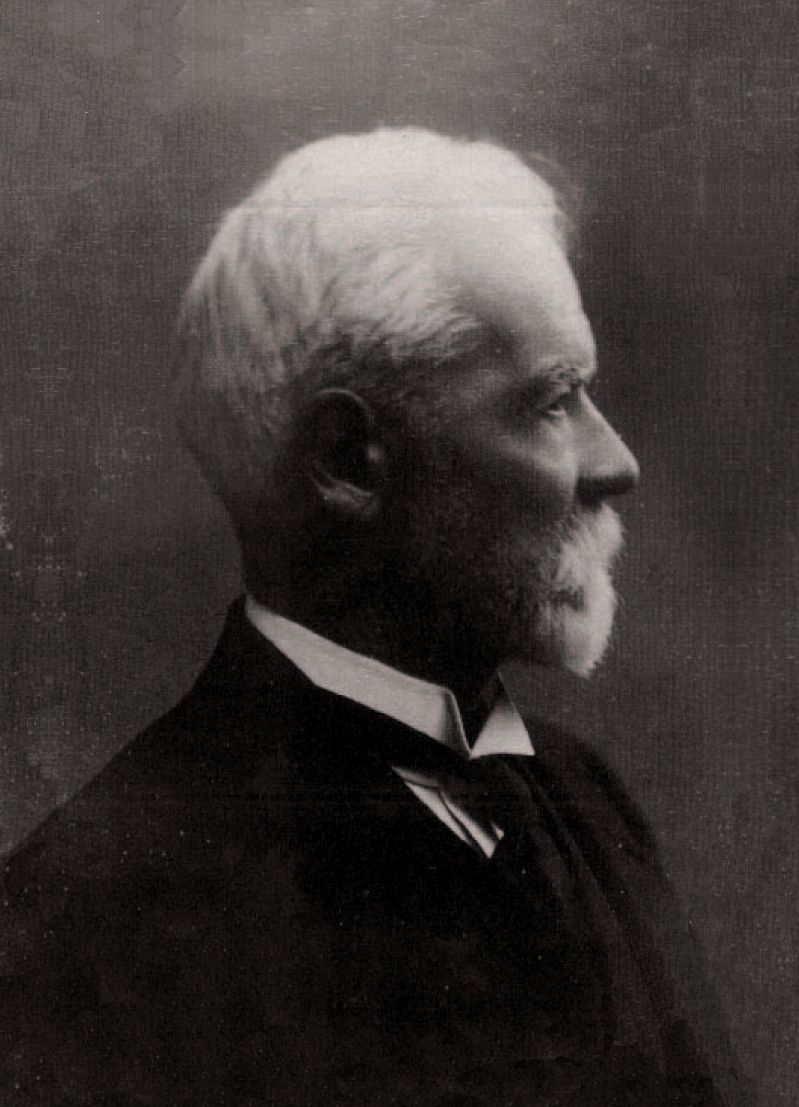
Administrative management founder who turned managerial experience into general functions and principles
Henri Fayol was a French mining engineer and executive who built a general theory of administration from long experience running a mining company. He treated management as a system of functions that could be analyzed, taught, and applied, and articulated fourteen principles of management.
Management is not a craft limited to one industry but a general capability in organized activity.
Source: Administration industrielle et générale
Organizations must forecast and plan before resources and action can be coordinated.
Source: General and Industrial Management
Management principles must be weighed by situation rather than mechanically applied.
Source: General and Industrial Management
Administrative knowledge should be systematized and included in education.
Source: Fayol writings and later management histories
Plan first, then organize, command, coordinate, and control.
General and Industrial Management decomposed administration into learnable functions.
Keep a clear chain of authority while allowing necessary lateral shortcuts.
Fayol discussed the scalar chain while recognizing lateral communication can avoid delay.
One person reports to one direct superior to reduce conflicting orders.
Unity of command and unity of direction became classic organization-design language.
He articulated principles while stressing they were not rigid laws.
He valued the scalar chain while allowing lateral links for efficiency.
1860-1888
Mining technology, site management, safety, production
Accumulated experience coordinating technology, people, and production through engineering practice.
1888-1918
Mining-company leadership, reorganization, financial recovery
Led Commentry-Fourchambault and helped restore the company.
1916-1925
General administration theory, fourteen principles, management education
Systematized executive experience into transmissible management theory.
Context: French industrialization needed engineers and mining specialists.
Decision: Entered the mining engineering field.
Reasoning: Technical training became an experiential base for later management thinking.
Outcome: Began a long mining career.
Lesson: Management theory often abstracts from concrete professional practice.
Context: Mining firms had to handle geology, production, safety, and labor organization.
Decision: Started engineering and managerial work at Commentry.
Reasoning: Long tenure in one firm enabled cross-level observation.
Outcome: Provided evidence for later administrative theory.
Lesson: Deep experience can form general frameworks.
Context: Mining safety and productivity depended on coal and geological properties.
Decision: Published technical research on spontaneous heating of coal.
Reasoning: Engineering problems require observation, classification, and causal analysis.
Outcome: Showed he was not merely an administrator but had an engineering-science background.
Lesson: Technical rationality shapes managerial rationality.
Context: The company faced difficulty and needed operational and organizational recovery.
Decision: Assumed senior executive responsibility.
Reasoning: Restore capability through administration, planning, and control.
Outcome: The company later became a strong industrial combine.
Lesson: Management capability can be a key turnaround asset.
Context: Long executive experience was being organized into more general management thought.
Decision: Presented management and administrative ideas to mineral-industry peers.
Reasoning: Industry experience can become material for general management theory.
Outcome: Prepared the way for the 1916 systematic publication.
Lesson: Ideas often spread first inside professional communities.
Context: Taylor’s scientific management was spreading, while administration lacked systematic expression.
Decision: Articulated management functions and fourteen principles.
Reasoning: Management should move from personal experience to discussable, teachable knowledge.
Outcome: Became a classic of modern management theory.
Lesson: Naming and classification turn experience into transmissible knowledge.
Context: After years of administrative and operational adjustment, the company’s position improved.
Decision: Retired from company leadership.
Reasoning: Long management effectiveness should be judged through organizational continuity, not single events.
Outcome: His experience became a source of theoretical credibility.
Lesson: Practical results strengthen theoretical persuasion.
Context: The French work had limited reach in Anglophone management.
Decision: The English translation General and Industrial Management was published.
Reasoning: The influence of theory depends on language and educational systems.
Outcome: Fayol became established as a classic management author in the English-speaking world.
Lesson: Distribution channels can change an idea’s historical status.
Core work in which Fayol presented his administrative theory, management functions, and principles; English translation spread later.
Original French publication that introduced Fayol’s general administrative theory.
Scholarly article used to contextualize Fayol’s administrative theory and later translation history.
Edited scholarly evaluations of Fayol’s work and its role in management history.
Mining engineering experience shaped his language of planning, safety, coordination, and control.
They shaped modern management from shop-floor scientific management and administration respectively.
Management functions and principles entered business schools and management textbooks.
Fayolism became a pillar of classical management theory.
Taylor approached work efficiency; Fayol approached administrative functions, and the two are often compared.
Weber’s bureaucracy and Fayol’s administrative principles form a shared classical organization-theory context.
Fayol is widely acknowledged as a founder of modern management methods.