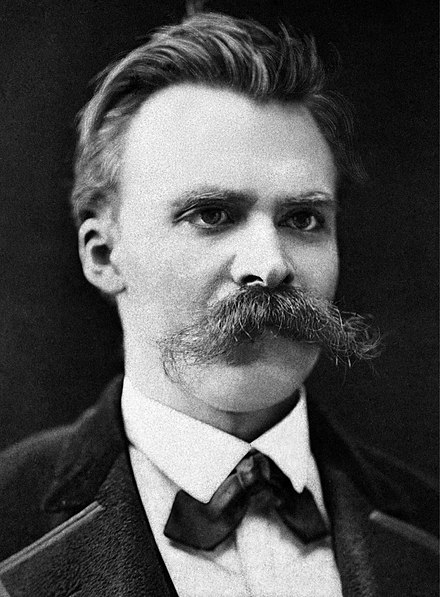
Base Profile
Friedrich Nietzsche
The philosopher who hammered with the Übermensch and the death of God to announce an era of value revaluation
Friedrich Nietzsche (1844-1900) was born in the Prussian province of Saxony; his father was a Lutheran pastor. He became a classics professor at the University of Basel at 24 (the youngest in history), deeply influenced by Schopenhauer and Wagner. He resigned due to illness in 1879, thereafter writing as a wandering philosopher across Europe, completing nearly all his major works within a decade. He suffered a mental breakdown in Turin in 1889, spending his last 11 years under the care of his sister Elisabeth until his death in 1900. Major works include The Birth of Tragedy, Thus Spoke Zarathustra, Beyond Good and Evil, On the Genealogy of Morality, and Twilight of the Idols. His thought profoundly influenced 20th-century philosophers including Sartre, Camus, Heidegger, Foucault, and Derrida, and controversially influenced Freudian psychology, Nazi ideology (after misappropriation by his sister), and postmodernism.
PhilosophyEthicsCultural CriticismPsychologyEra 1869-1889Influence 95
Controversy TagsMisappropriated by sister Elisabeth as philosophical basis for Nazism (Nietzsche himself explicitly opposed anti-Semitism)Übermensch concept misread as racial superiority theoryWill to power politicized as might makes rightControversy over causes of mental breakdown (syphilis? hereditary disease? mental pressure?)