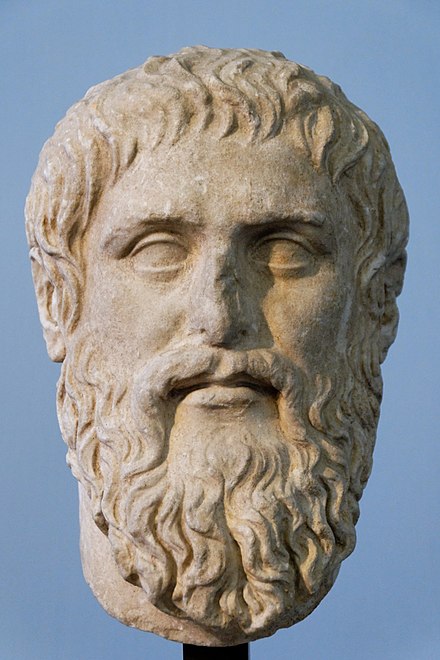
The World of Forms Is More Real Than the Sensory World
Plato believed that the material world we perceive with our senses is merely a shadow of true existence. True reality consists of eternal, unchanging Forms—such as Beauty itself, Goodness itself, Justice itself. Philosophy's task is to transcend sensory illusion and know these eternal Forms.
Source: Plato: Complete Works, edited by John M. Cooper, Hackett Publishing, 1997 / Plato by R.M. Hare, Oxford University Press, 1982
The Wise Should Rule
In the Republic, Plato argued that the best rulers of a city-state are philosopher-kings—those who have undergone lengthy philosophical education and come to know the Form of the Good. Democracy allows the ignorant majority to rule, like letting passengers who know nothing about navigation steer a ship.
Source: Plato: Complete Works, edited by John M. Cooper, Hackett Publishing, 1997 / Plato by R.M. Hare, Oxford University Press, 1982
Virtue Is Knowledge
Inheriting the Socratic tradition, Plato believed that people do evil because of ignorance—if one truly knows what is good, one would not choose evil. Therefore philosophical education (knowing the Form of the Good) is the fundamental path to moral cultivation.
Source: Plato: Complete Works, edited by John M. Cooper, Hackett Publishing, 1997 / Plato by R.M. Hare, Oxford University Press, 1982
The Soul Is Immortal; Philosophy Is Practice for Death
Plato believed the soul is immortal and the body is its prison. Philosophy trains reason to restrain bodily desires, allowing the soul to return to the world of Forms after death. Thus the philosophical life is the best preparation for death—Socrates' composure before his death in the Phaedo is the embodiment of this belief.
Source: Plato: Complete Works, edited by John M. Cooper, Hackett Publishing, 1997 / Plato by R.M. Hare, Oxford University Press, 1982
Allegory of the Cave
Prisoners mistake shadows on the wall for reality; philosophical education is forcing people to turn and face the light
In Book VII of the Republic, Plato describes prisoners chained in a cave who can only see shadows. This allegory reveals the cognitive gap between ordinary people (who only see sensory phenomena) and philosophers (who know the reality of Forms), becoming one of the most famous allegories in Western philosophical history.
EpistemologyPhilosophy of EducationIntellectual Awakening
Socratic Method (Elenchus)
Reveal the interlocutor's ignorance through continuous questioning, forcing them to rethink concepts they thought they understood
In the Meno, Plato records Socrates discussing geometry with a slave boy, guiding the boy through questions to independently discover the Pythagorean theorem, demonstrating that knowledge is the soul's internal recollection rather than external instruction.
Critical ThinkingPhilosophical DialogueConceptual Clarification
Tripartite Soul Model
Divide the soul into reason, spirit, and appetite; justice is the harmonious state where each performs its proper function
In the Republic, Plato maps the three classes of the city-state (philosopher-kings/guardians/producers) onto the three parts of the soul (reason/spirit/appetite), arguing that city-state justice and personal justice are structurally identical.
PsychologyEthical Decision-MakingSelf-Management
Form of the Good as Sun Analogy
The Form of the Good is like the sun—both the source of all knowledge and the foundation of all existence
In Book VI of the Republic, Plato uses the sun analogy to explain the Form of the Good: just as the sun enables the eye to see objects and enables objects to exist, the Form of the Good enables the intellect to know other Forms and enables other Forms to exist. This is the core of Plato's metaphysical system.
MetaphysicsAxiologyPhilosophical Education
Socratic Influence Period
约前408-前399年
Studying under Socrates, forming the foundation of dialogue method and ethical philosophy
Began studying under Socrates around age 20; Socrates' dialectical method and moral philosophy profoundly influenced Plato's thinking. The execution of Socrates in 399 BCE became the turning point of Plato's philosophical career.
Exile and Travel Period
约前399-前387年
Traveling to Egypt, Italy, Sicily, encountering Pythagorean philosophy
Left Athens after Socrates' death, traveled throughout the Mediterranean, deeply influenced by Pythagorean mathematics and mysticism. First visit to Sicily (c. 388 BCE) attempted to realize political ideals in Syracuse but ended in failure.
Academy Founding and Maturity
约前387-前360年
Founding the Academy, writing major dialogues, developing Theory of Forms and political philosophy
Founded the Academy in 387 BCE, the first institution of higher learning in Western history. During this period wrote the most important dialogues including the Republic, Phaedo, and Symposium, developing the complete Theory of Forms system. Aristotle joined the Academy in 367 BCE.
Late Revision Period
约前360-前348年
Revising early Theory of Forms, writing the Laws, shifting toward more pragmatic political philosophy
Late dialogues (such as Parmenides, Timaeus, Laws) show Plato's self-criticism and revision of early Theory of Forms. The Laws abandoned the philosopher-king utopia, shifting toward more realistic and feasible rule-of-law solutions.