
Refuse the White Gaze as Center
Black literature does not need to center the explanatory needs of white readers.
Source: Playing in the Dark, 1992; interviews
Loading Thinker Node
正在读取方法论、关键决策和影响关系。
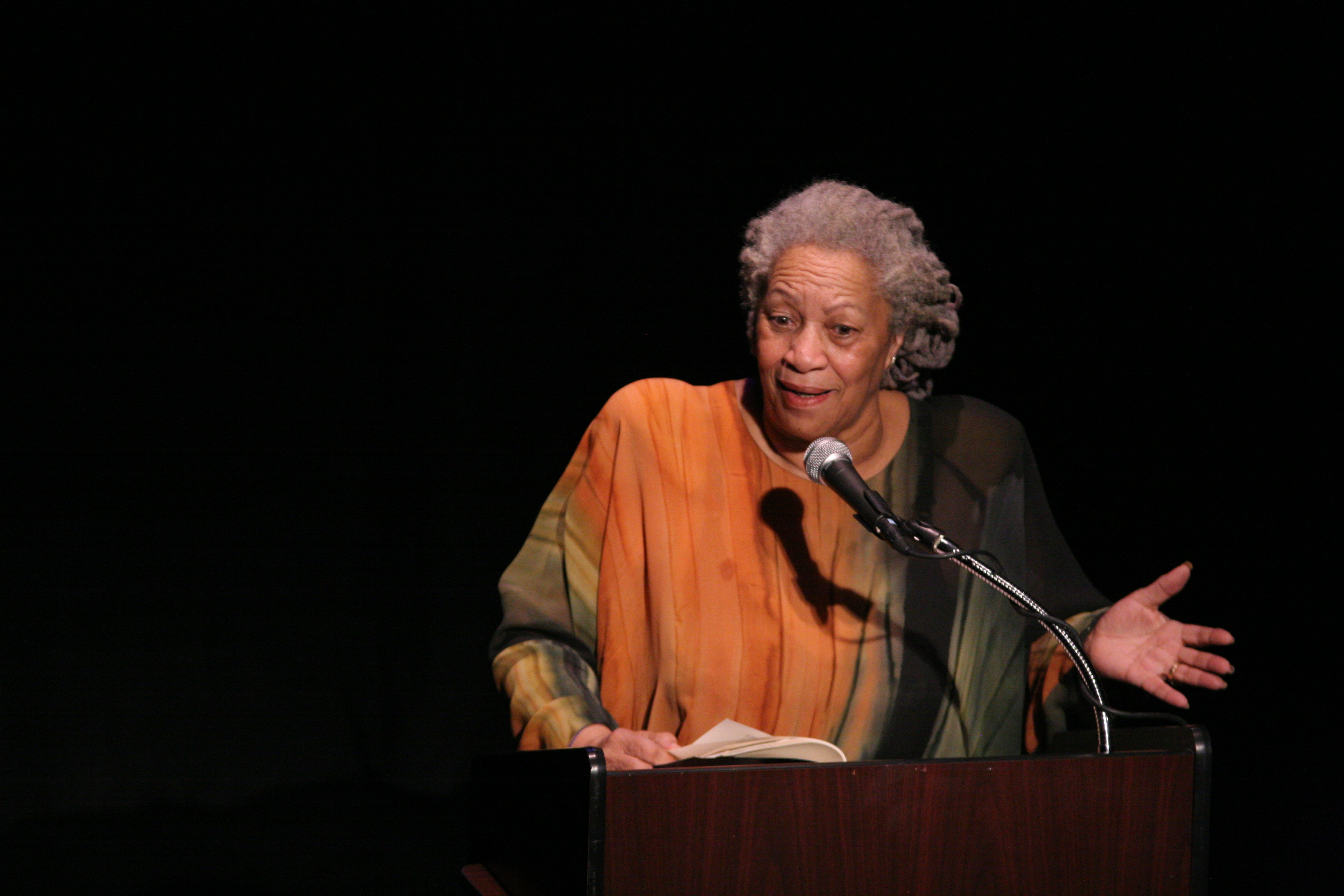
Nobel novelist who placed Black life at the center of literature
Morrison reshaped the center of American literature through fiction, editing, and teaching. Her work refused to make Black characters mere evidence or problem cases; language, myth, memory, and intracommunity tension do the work of world-building.
Black literature does not need to center the explanatory needs of white readers.
Source: Playing in the Dark, 1992; interviews
Suppressed history does not vanish; literature lets it return in bearable form.
Source: Beloved, 1987
Who holds naming power shapes which experiences become visible in the world.
Source: Nobel Lecture, 1993
Place people usually marginalized at the center of the narrative universe.
The Bluest Eye and Song of Solomon build worlds from inside Black communities.
Treat trauma as a reality that recurs in space and body.
Beloved uses a ghost to make the violence of slavery return inside family space.
Change who enters public memory through selection, support, and publication.
At Random House she edited works by Toni Cade Bambara, Angela Davis, Muhammad Ali, and others.
The more she refused to explain for dominant readers, the more universal force her work gained.
As an editor she expanded Black literary space while building her own fictional universe.
Howard, Cornell, marriage, teaching
Formed literary training and Black intellectual networks.
Random House, early novels, public reputation
Edited Black intellectual works while building a fictional world.
Pulitzer, Nobel, late works
Became a central voice in world literature and American memory politics.
Context: After growing up in Lorain, she studied English at Howard University.
Decision: She entered Black intellectual and theater communities.
Reasoning: Literary identity needs both community and canonical training.
Outcome: Howard shaped her language and character worlds.
Lesson: Educational spaces are also spaces of identity imagination.
Context: She studied suicide themes in Virginia Woolf and William Faulkner.
Decision: She carried modernist formal training into later fiction.
Reasoning: The canon can be learned without becoming the center of creation.
Outcome: She gained credentials for university teaching.
Lesson: After mastering central traditions, one can rewrite the center more powerfully.
Context: Black women senior editors were rare in U.S. publishing.
Decision: She edited works by Black writers, thinkers, and public figures.
Reasoning: Publishing is not a neutral channel but a structure of memory and power.
Outcome: She helped enlarge publishing space for Black voices.
Lesson: Changing a canon requires positions inside production mechanisms.
Context: American literature rarely narrated from inside a Black girl's self-hatred.
Decision: She used fragmented structure to write internalized violence around race, beauty, and desire.
Reasoning: Aesthetic standards can become psychological colonization.
Outcome: The debut laid the foundation for her central themes.
Lesson: Entering through the most vulnerable experience can reveal the largest structure.
Context: She explored family, myth, migration, and male coming-of-age.
Decision: She joined folklore and modern fiction to connect personal and communal history.
Reasoning: Identity search cannot be separated from ancestors, place names, and voices.
Outcome: The book brought national literary attention.
Lesson: Myth is not escape from reality but a structure for historical memory.
Context: She drew from the true story of Margaret Garner to address slavery's memory.
Decision: She combined ghost, motherhood, body, and communal witness.
Reasoning: Extreme historical violence requires breaking the surface of realism.
Outcome: The book won the Pulitzer Prize and became a classic of American literature.
Lesson: Trauma narrative must make the unmourned visible again.
Context: She had become an unavoidable novelist and public intellectual in American letters.
Decision: In her Nobel lecture she used fable to discuss language, power, and responsibility.
Reasoning: Language can oppress and can release the future.
Outcome: She became the first Black woman to win the Nobel Prize in Literature.
Lesson: The highest honors can become tools for redefining literary centers.
Context: Her literary and public influence crossed academia, publishing, and popular culture.
Decision: She received a national cultural honor.
Reasoning: Marginalized narratives can eventually rewrite national self-understanding.
Outcome: It reinforced her status as a central figure in U.S. culture.
Lesson: Cultural change often becomes visible through belated institutional recognition.
One of Morrison's defining novels, inspired by Margaret Garner and centered on slavery's trauma.
Her debut, showing how racialized beauty standards damage a Black girl's subjectivity.
Winner of the National Book Critics Circle Award, joining family history, myth, and identity search.
A critical work on whiteness and the structural role of Black presence in American literature.
Morrison studied Faulkner and transformed multi-voice, historically burdened narrative resources.
Her master's work included Woolf, and she absorbed modernist interior time and consciousness.
She opened wider aesthetic and publishing space for later Black women writers.
Morrison edited Angela Davis's autobiography at Random House.
Toni reaches us deeply, using a tone that is lyrical, precise, distinct, and inclusive.