Thinking with Type
Ellen Lupton · 2004Recommended
Draplin listed this book in lectures as his core reference for learning typography system knowledge; he particularly appreciates Lupton's democratized presentation of typeface history, highly consistent with his belief that "design knowledge should be open to everyone"
Behind the Cloud
Marc Benioff · 2009Recommended
As Salesforce CEO's autobiography, this book was cited by Levie in multiple interviews as a model for understanding 'how to disrupt the established order in traditional enterprise software markets with SaaS'—Box's enterprise sales model in many ways resembled Salesforce's early strategy.
Give and Take: A Revolutionary Approach to Success
Adam Grant · 2013Written by
Grant's most important work, overturning the business assumption that givers always lose, demonstrating through large-scale research that givers are most common at both the bottom and top of organizations—the key is how to give.
Originals: How Non-Conformists Move the World
Adam Grant · 2016Written by
Explores the psychological profiles of original thinkers, debunking popular myths about genius innovators. Proposes that original success comes from abundant output, moderate risk tolerance, and first-step action rather than waiting for perfect inspiration.
The Wealth of Nations
Adam Smith · 1776Written by
Smith's most important economics work, written over nearly ten years, systematically articulating division of labor, price mechanism, free trade, and invisible hand theory, establishing the foundations of modern economics. Smith stated in the preface that the book aimed to investigate the nature and causes of national wealth.
Sony: The Private Life
John Nathan · 1999About
John Nathan's in-depth Sony biography written through extensive internal interviews, revealing the corporate culture and power structure behind Morita and Ibuka — the most authoritative external perspective work on Sony.
The Toyota Way: 14 Management Principles from the World's Greatest Manufacturer
Jeffrey Liker · 2004About
Jeffrey Liker's The Toyota Way systematically articulates the core principles of the Toyota Production System and is an important reference for understanding the corporate culture that Akio Toyoda inherited and developed; Akio Toyoda himself recommended this book on multiple occasions.
Eleven Rings: The Soul of Success
Phil Jackson, Hugh Delehanty · 2013Recommended
Ferguson mentioned Phil Jackson's leadership book in multiple interviews, saying it highly resonated with his own philosophy on team culture building and long-termism. In his 2015 Harvard Business School talk, he listed Jackson as one of the sports leaders he most admired
The Courage to Be Disliked
Ichiro Kishimi and Fumitake Koga · 2013About
Japanese authors Ichiro Kishimi and Fumitake Koga reinterpreted Adlerian psychology in Socratic dialogue form; after publication in 2013 it became a phenomenon in Japan, South Korea, and China, selling over 2 million copies in Chinese. The single most important work driving the spread of Adler's thought in 21st-century East Asia.
Principia Mathematica
Alfred North Whitehead and Bertrand Russell · 1910Written by
Co-authored by Whitehead and Russell and published in three volumes from 1910 to 1913; the key primary work of his logicist period.
My Years with General Motors
Alfred P. Sloan · 1963Written by
Written by Sloan himself, systematically articulating the theory and practice of divisional management, price ladder strategy, and data-driven decision making — praised by Peter Drucker as 'one of the most important business books ever written,' the primary source for understanding his management thinking.
The Practice of Management
Peter Drucker · 1954Cited in
Drucker extensively cites GM cases in this book, systematizing Sloan's management practices into modern management theory. Sloan himself highly endorsed this book's interpretation of his thinking.
The 4-Hour Workweek
Tim Ferriss · 2007Recommended
Ali's recommendation lists include Tim Ferriss's The 4-Hour Workweek, a book that shaped many creator-entrepreneurs' thinking about automation, leverage, and lifestyle design.
The Undoing Project: A Friendship That Changed Our Minds
Michael Lewis · 2016About
Michael Lewis's biography about the collaboration story of Tversky and Kahneman; the best narrative text for understanding their academic partnership and intellectual development
Behave: The Biology of Humans at Our Best and Worst
Robert Sapolsky · 2017Recommended
Huberman has mentioned this book by his mentor Robert Sapolsky multiple times in his podcast, calling it the most comprehensive work for understanding the biological basis of human behavior, and directly integrating its analysis of stress and hormones into his own health protocol framework.
The Structure and Interpretation of Computer Programs
Harold Abelson & Gerald Sussman · 1985Recommended
Ng's course design for Coursera's ML curriculum was influenced by this book; SICP's philosophy that 'programs are tools for thought' aligns closely with his AI education approach
Measure What Matters: How Google, Bono, and the Gates Foundation Rock the World with OKRs
John Doerr · 2018Cited in
This book thoroughly documents Grove's creation of OKR at Intel and presents his management philosophy through Doerr's perspective; Grove supported the book's writing before his death
Working Backwards: Insights, Stories, and Secrets from Inside Amazon
Colin Bryar and Bill Carr · 2021Cited in
Jassy wrote the foreword for this book, which details the Working Backwards methodology, six-pager narratives, and leadership principles he practiced at AWS. This is the most authoritative primary source for understanding Jassy management philosophy.
The Everything Store: Jeff Bezos and the Age of Amazon
Brad Stone · 2013About
This book is the most important biographical source for understanding Amazon culture and Jassy background, detailing the origins and early development of AWS and the working relationship between Jassy and Bezos.
Mindset: The New Psychology of Success
Carol Dweck · 2006Recommended
Duckworth repeatedly cites and strongly recommends Dweck's growth mindset research in Grit, arguing that growth mindset is the psychological foundation for the fourth grit cultivator, hope. In the Character Lab curriculum, growth mindset and grit are the two core cultivation targets.
Outliers: The Story of Success
Malcolm Gladwell · 2008Recommended
Duckworth mentions Gladwell's 10,000-hour rule in talks and its relationship to GRIT, arguing they are complementary: Gladwell emphasized time investment, while Duckworth's research further demonstrates that passion and perseverance determine who can actually sustain 10,000 hours of deliberate practice.
Crime and Punishment
Fyodor Dostoevsky · 1866Recommended
Merkel mentioned Dostoevsky's influence on her in multiple interviews, especially her experience reading Russian literature during the East German period. In a 2021 pre-retirement interview she mentioned Dostoevsky's works helped her understand human moral choices in extreme circumstances. Crime and Punishment is one of the literary works she mentioned most frequently.
Decisive: How to Make Better Choices in Life and Work
Chip Heath and Dan Heath · 2013Recommended
Duke has listed the Heath brothers' book as an important supplementary read in decision science in interviews and course recommendations, viewing the WRAP framework as complementary to her probabilistic approach (Source: The Alliance for Decision Education recommended reading list).
Being Mortal: Medicine and What Matters in the End
Atul Gawande · 2014Written by
Written by Gawande himself, redefining medicine's responsibility toward death through his father's end-of-life experience and extensive clinical cases, calling for patient-centered end-of-life care.
The Sovereign Individual
James Dale Davidson & William Rees-Mogg · 1997Recommended
Balaji has recommended this book in multiple interviews and tweets, saying it predicted the rise of cryptocurrency and digital sovereignty in 1997 and is essential reading for understanding 'how technology liberates individuals'
Benjamin Franklin: An American Life
Walter Isaacson · 2003About
Walter Isaacson's authoritative biography of Franklin, the best modern introduction to understanding Franklin's life, diplomatic achievements, and intellectual system. Isaacson, also the author of Steve Jobs, sees Franklin as the best representative of the American pragmatic spirit. The book is widely used in business school curricula and leadership training.
How to Win Friends and Influence People
Dale Carnegie · 1936Cited in
Dale Carnegie repeatedly cited Franklin's diplomatic techniques and interpersonal wisdom in this book, treating Franklin as one of the best historical practitioners of winning others' goodwill. Franklin's social philosophy of making others feel important is an important intellectual source for the book.
The Intelligent Investor
Benjamin Graham · 1949Written by
Graham's most important work for a general audience; Buffett called it 'the best book on investing ever written'; systematically explains margin of safety and Mr. Market
Competition Demystified: A Radically Simplified Approach to Business Strategy
Bruce Greenwald · 2005Recommended
Ackman recommended this book in a Columbia University lecture, stating that Greenwald's simplified framework for competitive barriers helps investors quickly identify corporate moats and is an important tool for activist investing due diligence.
Persuasive Technology: Using Computers to Change What We Think and Do
BJ Fogg · 2003Written by
Fogg's foundational work establishing the Captology research field, studying how computers influence human attitudes and behavior through design; an important reference for behavior design in the tech industry.
Dare to Lead: Brave Work, Tough Conversations, Whole Hearts
Brené Brown · 2018Written by
Brown's definitive work applying the vulnerability framework to corporate leadership, proposing the BRAVING trust model and four core skills of daring leadership. Based on large-scale interview research with leaders, it is her work that most tightly integrates academic and practical dimensions.
Market Wizards: Interviews with Top Traders
Jack Schwager · 1989About
Schwager's in-depth interview with Kovner is the most important primary source for understanding his trading philosophy; the discussions on the exit-first principle and position control have become classic textbooks for global macro trading.
Reminiscences of a Stock Operator
Edwin Lefevre · 1923Cited in
Kovner recommended Reminiscences of a Stock Operator in his Market Wizards interview, believing that Jesse Livermore's trading psychology and risk control experience has inspirational value for every trader.
The Intelligent Asset Allocator
William Bernstein · 2000Recommended
Malkiel explicitly recommended Bernstein's book in the recommended reading list of A Random Walk Down Wall Street, 10th edition (2011), calling it 'a perfect complement to A Random Walk, presenting modern portfolio theory in a way ordinary people can understand'.
Common Sense on Mutual Funds
John C. Bogle · 1999Recommended
Malkiel recommended Bogle's book in multiple editions of A Random Walk Down Wall Street, calling it the most authoritative reference for understanding index fund superiority, and in a Wall Street Journal column (2005) called Bogle's work 'a must-read for every investor'.
A Biographical Dictionary of Later Han to the Three Kingdoms
Rafe de Crespigny · 2007About
The most authoritative English academic study of Cao Cao and the Three Kingdoms era in Western sinology, providing an objective perspective beyond traditional Chinese historiographical narratives
Learned Optimism
Martin Seligman · 1991Recommended
Dweck cited Seligman's learned optimism research in multiple academic papers, viewing it as an important theoretical predecessor to growth mindset; both focus on how cognitive explanations of failure affect resilience
The Great Mental Models
Shane Parrish and Rhiannon Beaubien · 2019Recommended
Listed on GoodBooks as recommended by Chamath Palihapitiya; useful as an external reference for multidisciplinary models in investing and decision-making.
Willpower: Rediscovering the Greatest Human Strength
Roy Baumeister and John Tierney · 2011Cited in
Duhigg cited Baumeister's willpower research in The Power of Habit as a comparative framework for understanding why changing habits is more effective than relying on willpower (Source: The Power of Habit bibliography, 2012).
The Selfish Gene
Richard Dawkins · 1976Recommended
Munger lists evolutionary biology as one of his most important mental models and recommends this book as an introduction to competition, cooperation, and genetic logic; Dawkins' 'gene-level view' influenced Munger's biological analogy for corporate moats
Predictably Irrational
Dan Ariely · 2008Written by
Ariely's landmark work, systematically revealing irrational patterns in human decision-making; one of the most influential popular books in behavioral economics.
Flow: The Psychology of Optimal Experience
Mihaly Csikszentmihalyi · 1990Cited in
Pink extensively cites Csikszentmihalyi's flow theory in Drive's mastery chapter, considering the flow state as the core intrinsic experience of mastery pursuit (Source: Drive bibliography, 2009; Daniel Pink recommended reading list).
Superintelligence: Paths, Dangers, Strategies
Nick Bostrom · 2014Recommended
Amodei mentioned in multiple interviews (including the 2023 Lex Fridman podcast) that Bostrom's 'Superintelligence' had a foundational influence on his AI risk cognitive framework, calling it 'an essential early text' for understanding AI existential risk. This book directly influenced his assessment of the severity of AI alignment problems.
Parallel Distributed Processing: Explorations in the Microstructure of Cognition
David Rumelhart, James McClelland, and the PDP Research Group · 1986Cited in
Amodei deeply studied the PDP two-volume set during his computational neuroscience PhD training; it is one of the core literature sources of his interdisciplinary background. He mentioned in multiple academic discussions the foundational role of the PDP framework for understanding neural network representation learning, which also influenced his later design thinking for 'principle-driven representation correction' in Constitutional AI.
The Richest Man in Babylon
George S. Clason · 1926Recommended
Ramsey recommended Clason's book multiple times in The Total Money Makeover and on his radio show, calling it one of the most important classics in personal finance, especially as the Pay Yourself First principle highly aligns with Baby Steps Step 1. Source: The Total Money Makeover recommended reading list, Ramsey radio show, 2010.
The Millionaire Next Door
Thomas J. Stanley and William D. Danko · 1996Recommended
Ramsey frequently cited The Millionaire Next Door's research on his show; the book's core finding (truly wealthy people live modestly, accumulating wealth through saving and investing) is highly consistent with Ramsey's financial philosophy. Source: The Dave Ramsey Show radio program, mentioned multiple times in 2015.
The 7 Habits of Highly Effective People
Stephen R. Covey · 1989Recommended
Allen mentioned Covey's work as an important reference in the productivity management field in multiple speeches and interviews, with the two complementing each other on priority management concepts. David Allen Company official training materials present Covey's importance/urgency matrix alongside the GTD framework.
Creative Confidence
David Kelley, Tom Kelley · 2013Written by
Written by Kelley himself, systematically articulating the core belief that 'everyone is creative' and how to overcome fear and rebuild creative confidence through design thinking. The primary first-hand source for understanding Kelley's thought system.
Change by Design
Tim Brown · 2009Recommended
Kelley assigned this book as required reading in Stanford d.school courses, considering Tim Brown's account of design thinking application in business contexts the most authoritative business reading, and recommended it to all IDEO's corporate executive clients.
Why We Sleep
Matthew Walker · 2017Recommended
Sinclair recommended this book in his Huberman Lab podcast interview (2021) and multiple public lectures, emphasizing that sleep quality is a core factor affecting epigenetic stability and that sleep deprivation accelerates DNA damage accumulation and epigenetic noise, directly accelerating aging.
The Greatest Trade Ever
Gregory Zuckerman · 2009Cited in
Zuckerman's The Greatest Trade Ever documents the most successful investors during the 2008 financial crisis, including market context related to Tepper, very helpful for understanding the market environment of Tepper's 2009 bet.
The Power of Now
Eckhart Tolle · 1997Recommended
Chopra has recommended this book by Tolle multiple times in interviews and lectures, calling it highly aligned with his own theories about consciousness and the present moment, and one of the best introductory readings for understanding non-attachment and present awareness. The two discussed the book's core ideas together on Oprah's show.
Autobiography of a Yogi
Paramahansa Yogananda · 1946Recommended
Chopra has listed this book as one of the most deeply influential books on him in multiple interviews, saying it opened his understanding of the depth of Indian spiritual tradition and is an important introductory reading for understanding the relationship between Eastern mysticism and science. This book was also Steve Jobs' favorite, and Chopra used it as an entry point to discuss the influence of Eastern wisdom on Western tech innovators.
On China
Henry Kissinger · 2011Cited in
Kissinger had multiple direct interactions with Deng; the book contains profound firsthand observations of Deng strategic thinking, an important reference for understanding Deng international strategic thinking.
Less and More: The Design Ethos of Dieter Rams
Klaus Klemp, Keiko Ueki-Polet · 2009About
The authoritative catalog published alongside the 2009 touring exhibition, with Rams personally involved in content organization, containing systematic articulation of his design principles and complete Braun product archives. Jony Ive has stated on multiple occasions that this is one of his most important design reference books.
Toyota Production System
Taiichi Ohno · 1978Recommended
The Toyota Production System has long been a core reference text in Gree's internal management training system for lean manufacturing; Dong Mingzhu has repeatedly mentioned Toyota's influence on Gree's quality management system in public speeches.
Venture Deals: Be Smarter Than Your Lawyer and Venture Capitalist
Brad Feld, Jason Mendelson · 2011Recommended
Leone recommended this book to junior partners and founders in Sequoia's internal training, believing that understanding VC deal structures is foundational for building trust between founders and investors.
How Google Works
Eric Schmidt & Jonathan Rosenberg · 2014Written by
Written by Schmidt himself, systematically articulating Google's management philosophy including the 70-20-10 rule, smart creative management, and scaling culture protection
The Attention Merchants
Tim Wu · 2016Recommended
Published the same year Medium pivoted to subscriptions; Williams mentioned Wu's historical survey of the attention economy in a series of articles about Medium's business model change, believing the book historically validated the systemic flaws of advertising-driven content platforms.
Understanding Media: The Extensions of Man
Marshall McLuhan · 1964Cited in
McLuhan's theory that "the medium is the message" is an important theoretical precondition for Chimero's "web grain" concept. Chimero cites McLuhan in multiple articles, arguing that web designers must understand the web's inherent characteristics as a medium rather than merely viewing it as a container for content
Competitive Advantage: Creating and Sustaining Superior Performance
Michael Porter · 1985Recommended
Smith has referenced Porter's competitive advantage theory in multiple executive training sessions and speeches to explain FedEx's moat strategy; this book is required reading for FedEx's executive team (Source: FedEx internal training materials, 1990s).
The Machine That Changed the World
James P. Womack, Daniel T. Jones, Daniel Roos · 1990Cited in
Womack et al. use Taylor's scientific management (mass production model) as the historical counterpart to Toyota's lean production in this book, analyzing the evolutionary path from Taylorism to lean thinking. The book directly cites Taylor's time studies and standardization methods as the starting point of 20th-century production management.
The Art of Learning
Josh Waitzkin · 2007Recommended
Kasparov recommended this book in multiple interviews, finding Waitzkin's discussion of learning transfer and flow states highly aligned with his own training philosophy (Source: Chess.com interview, 2015)
The Future of Management
Gary Hamel with Bill Breen · 2007Written by
Hamel calls for a complete reinvention of management, replacing industrial-era bureaucratic systems with humanism, using Google, W.L. Gore, and other companies as cases to demonstrate the possibilities of management innovation
The Language Instinct
Steven Pinker · 1994Cited in
Marcus repeatedly cited Pinker's The Language Instinct in his PhD research and books, treating it as a foundational text for innate language capacity and cognitive structure theory. The book is cited in Rebooting AI as a theoretical basis for human cognitive benchmarks.
The Education of a Value Investor
Guy Spier · 2014Written by
Spier's 2014 memoir and account of investor self-education; biographical claims, environment design, and checklist attribution are checked primarily against this book and his official site.
Conscious Capitalism
John Mackey, Raj Sisodia · 2013Recommended
Nooyi has recommended this book in multiple speeches and interviews, calling it highly resonant with the Performance with Purpose strategy. Whole Foods CEO John Mackey's Conscious Capitalism theory mutually confirms Nooyi's mission-driven corporate philosophy. Source: Harvard Business School speech, 2015.
The Dream Machine: J.C.R. Licklider and the Revolution That Made Computing Personal
M. Mitchell Waldrop · 2001Recommended
John and Patrick both recommend this book; how Licklider drove the birth of the internet's predecessor at ARPA reflects Stripe's belief that infrastructure investment changes the world
The General Theory of Employment, Interest and Money
John Maynard Keynes · 1936Written by
Keynes' most important work and the founding text of modern macroeconomics. In the preface Keynes explicitly stated his purpose was 'to escape from habitual modes of thought,' fundamentally reconstructing economics' analytical framework. This is the indispensable primary source for understanding Keynes' thought.
Guns, Germs, and Steel: The Fates of Human Societies
Jared Diamond · 1997Cited in
Diamond's geographic determinism work on inequality among human societies; Henrich engaged with it as an important dialogue partner in The WEIRDest People in the World, arguing that Diamond's geographic determinism neglects the independent role of cultural evolution and needs supplementation from a cultural evolution perspective.
Innovation and Entrepreneurship
Peter Drucker · 1985Cited in
Drucker explicitly cited Schumpeter's innovation theory as the theoretical foundation in this book and transformed it into an operational management framework. This book is the most important inheritance of Schumpeter's thought in the management field.
Hedge Fund Market Wizards
Jack Schwager · 2012About
Schwager's Hedge Fund Market Wizards includes interviews with multiple Tiger Cubs, indirectly presenting Robertson's investment philosophy and cultivation system through their perspectives; an important reference for understanding Tiger's legacy.
AI Superpowers: China, Silicon Valley, and the New World Order
Kai-Fu Lee · 2018Written by
Written by Lee himself, systematically laying out the US-China AI bipolar competition and its impact on labor markets, proposing the 'compassion economy' as humanity's response to AI displacement.
The Singularity Is Near
Ray Kurzweil · 2005Recommended
Lee cited Kurzweil's exponential growth framework multiple times in 'AI Superpowers,' and stated in public interviews that the book helped him establish confidence in AI's long-term trajectory in the early 2000s.
The One Minute Manager
Ken Blanchard and Spencer Johnson · 1982Written by
Co-authored with Spencer Johnson, presenting three core management tools — One Minute Goals, One Minute Praisings, One Minute Reprimands — in parable form; with over 15 million copies sold, one of the best-selling business books in publishing history
Hooked: How to Build Habit-Forming Products
Nir Eyal · 2014Recommended
Instagram's like and comment mechanics align closely with the Hooked model — trigger, action, variable reward (uncertain like counts), investment (posting content); Systrom's product design naturally embodied this framework
Not for Bread Alone: A Business Ethos, A Management Ethic
Konosuke Matsushita · 1984Written by
Written by Matsushita in his later years, systematically articulating his management philosophy including the tap water philosophy and human-centered management — the best work for understanding his firsthand thinking.
Execution: The Discipline of Getting Things Done
Larry Bossidy and Ram Charan · 2002Written by
Co-authored with Charan, systematizing Bossidy's execution practice at AlliedSignal and Honeywell into the three-process framework; with over 3 million copies sold globally, one of the most influential management works
Zero to One: Notes on Startups, or How to Build the Future
Peter Thiel · 2014Cited in
Thiel's vertical progress (0 to 1) thinking resonates strongly with Page's 10X thinking; widely circulated in Silicon Valley founder circles, Page has publicly expressed agreement with Thiel's ideas
The Alchemist
Paulo Coelho · 1988Recommended
LeBron has mentioned The Alchemist multiple times on The Shop, saying the book helped him understand the importance of following your personal legend and was one of his spiritual supports when facing the controversy over The Decision
Surely You're Joking, Mr. Feynman!
Richard Feynman · 1985Recommended
Fridman has mentioned Feynman as one of his most important role models in multiple interviews; this book shows how scientists can explore the world with curiosity and humor, highly aligned with Fridman's interview philosophy.
The Emperor's New Mind
Roger Penrose · 1989Recommended
Fridman explicitly mentioned this book's profound influence on his views on AI and consciousness in his podcast interview with Roger Penrose; Penrose's arguments about quantum consciousness sparked his ongoing thinking about whether AI can genuinely be conscious.
Competing for the Future
Gary Hamel and C.K. Prahalad · 1994Cited in
Hamel and Prahalad's "Core Competence" theory had a profound influence on Li Shufu's globalization acquisition strategy. The core logic of Geely's Volvo acquisition — obtaining core technological capabilities (safety technology, luxury brand) through acquisition — is precisely the practice of core competence theory.
Hooked: How to Build Habit-Forming Products
Nir Eyal · 2014Recommended
Liang Ning recommended Hooked when discussing user retention and product stickiness, believing that Eyal's Hook model is highly consistent with her emotion-driven framework at the underlying logic level: both drive user behavior by triggering emotions.
How Emotions Are Made: The Secret Life of the Brain
Lisa Feldman Barrett · 2017Written by
Barrett's public-facing systematic account of constructed emotion, with extended scientific notes on her website, is the core source for this profile's emotion theory.
Management Challenges for the 21st Century
Peter Drucker · 1999Recommended
Liu Chuanzhi referenced Drucker as an important reference for his management thinking in multiple speeches, especially ideas about 'knowledge worker management' and 'results orientation.' He recommended Drucker's works in Lenovo's internal training multiple times.
Built to Last: Successful Habits of Visionary Companies
Jim Collins & Jerry Porras · 1994Recommended
Liu Chuanzhi listed 'Built to Last' as required reading for Lenovo executives; its discussions on corporate vision, core values transmission, and successor cultivation directly influenced how he designed Lenovo's corporate culture and succession system.
Made in America: My Story
Sam Walton · 1992Recommended
Liu Qiangdong regards Walton's supply chain efficiency philosophy as an important reference for JD.com and mentioned this book's influence on his retail thinking in multiple interviews
Philosophical Investigations
Ludwig Wittgenstein · 1953Written by
Published posthumously, this later masterpiece introduced language games, family resemblance, and meaning as use, the main source for this profile's later methods.
Steve Jobs
Walter Isaacson · 2011Recommended
Luo Yonghao expressed admiration for Jobs in multiple speeches and interviews, explicitly stating he was influenced by the Jobs biography; the design philosophy and presentation style of Smartisan phone launches show Jobs' influence throughout
Long Walk to Freedom
Nelson Mandela · 1994Recommended
Malala mentioned Mandela's autobiography in a post-Nobel ceremony interview as one of the important books she read during her hospital recovery, saying 'Mandela taught me that suffering can be a source of strength, not a reason for despair.'
High Output Management
Andy Grove · 1983Recommended
Andreessen lists this as required reading for tech founders, saying Grove's systematic thinking on management leverage and early OKRs has never been surpassed
Meditations
Marcus Aurelius · 180Written by
Aurelius's Stoic philosophical diary written for himself during his reign (161-180 CE). Never intended for publication, it became one of the most widely read philosophical texts across two millennia. Tim Ferriss lists it as his top life-changing book in Tools of Titans.
The Obstacle Is the Way
Ryan Holiday · 2014About
Holiday built this book around the Aurelius insight from Meditations Book V that "the obstacle is the way," applying Stoic wisdom to modern business and athletics; it is the best entry point for understanding Aurelius's contemporary impact.
Ethics in the Confucian Tradition: The Thought of Mengzi and Wang Yangming
Philip J. Ivanhoe · 2002About
Philip Ivanhoe's scholarly work is one of the most important English-language monographs on Mencian ethics, systematically comparing the moral philosophy of Mencius and Wang Yangming. Cited as an authoritative reference for understanding Mencius's place in the Confucian tradition.
Liar's Poker
Michael Lewis · 1989Recommended
Burry mentioned in interviews that Lewis's Liar's Poker helped him understand Wall Street's culture and incentive mechanisms — important background knowledge for his later ability to identify systemic problems in the subprime market
The E-Myth Revisited: Why Most Small Businesses Don't Work and What to Do About It
Michael Gerber · 1995Written by
Gerber's most important work, using the story of bakery owner Sarah as its narrative thread, systematically presenting the E-Myth three-role framework and franchise prototype thinking. One of the bestselling books in small business management, with sales exceeding 3 million copies.
The Psychology of Money
Morgan Housel · 2020Written by
Written by Housel himself, this is the definitive expression of his core ideas. Through 19 behavioral stories about wealth, it explains why financial success depends more on behavior than intelligence. Over 4 million copies sold globally.
The Beginning of Infinity
David Deutsch · 2011Recommended
Naval lists this as the book he recommends most often; Deutsch's epistemology — that 'good explanations are infinitely improvable' — is, in Naval's view, a unified framework for understanding why science, democracy, and free markets work
The 48 Laws of Power
Robert Greene · 1998Cited in
Robert Greene extensively cites Machiavelli's ideas in this book, modernizing and systematizing them — the most widely read derivative work for understanding Machiavelli's ideas applied to contemporary business and power dynamics
Empires of Light: Edison, Tesla, Westinghouse, and the Race to Electrify the World
Jill Jonnes · 2003About
The authoritative historical work documenting the War of Currents (DC vs AC), detailing the technical and commercial competition between Tesla, Edison, and Westinghouse.
Beloved
Toni Morrison · 1987Recommended
Oprah selected 'Beloved' for Oprah's Book Club in 1996, calling it 'the book that changed my life.' She later produced and starred in the film adaptation (1998), the most direct expression of her love for this book. Source: Oprah's Book Club official selection records and multiple show interviews.
Thoughts on Design
Paul Rand · 1947Written by
Written by Rand himself, this was the first book in America to systematically articulate modern graphic design philosophy, forming the foundation of his entire theoretical system. Rand used this book as a core reference throughout his Yale teaching career.
Market Wizards: Interviews with Top Traders
Jack Schwager · 1989About
Contains an in-depth interview chapter with Jones, representing his most important public articulation of ideas. Jones details his risk management philosophy, 5:1 risk-reward principle, and stop-loss discipline — the most direct entry point to understanding his trading system.
Zen Mind, Beginner's Mind
Shunryu Suzuki · 1970Recommended
Jackson cited Shunryu Suzuki's concept of 'beginner's mind' as a core reference in Sacred Hoops, and in ESPN interviews recommended this book as essential reading for understanding his Zen leadership
Blitzscaling
Reid Hoffman and Chris Yeh · 2018Cited in
A Silicon Valley founder meetup recap says Lu's sharing drew on Reid Hoffman's blitzscaling concept to explain rapid scaling and platform windows.
No Rules Rules: Netflix and the Culture of Reinvention
Reed Hastings & Erin Meyer · 2020Written by
Hastings' own account of Netflix's no-rules culture: high talent density → radical candor → remove controls — his most systematic statement of management philosophy
The Feynman Lectures on Physics
Richard Feynman, Robert Leighton, Matthew Sands · 1964Written by
The three-volume physics textbook compiled from Feynman's 1961-1963 undergraduate lectures at Caltech. Called 'the best physics book ever written' by Bill Gates, with over 1.5 million sets sold worldwide, it embodies Feynman's teaching philosophy of 'explaining complex physics in simple language.'
Made in America: My Story
Sam Walton · 1992Recommended
Liu mentioned Walmart's supply chain thinking's influence on him in multiple speeches, calling Walton's direct sourcing model and logistics efficiency concepts an important intellectual source for JD's supply chain strategy.
Servant Leadership: A Journey into the Nature of Legitimate Power and Greatness
Robert Greenleaf · 1977Written by
Greenleaf's representative work, integrating 'The Servant as Leader' and 'The Institution as Servant' into a complete work systematically articulating the Servant Leadership theoretical framework. The core text of the global Servant Leadership movement.
Human Compatible: Artificial Intelligence and the Problem of Control
Stuart Russell · 2019Recommended
This book systematically elaborates on the AI control problem, highly consistent with Legg's AGI safety research direction, listed as required reading by the DeepMind safety team (Source: DeepMind AI safety reading list, 2020).
Finite and Infinite Games
James P. Carse · 1986Recommended
Sinek explicitly credits this book as the direct inspiration for The Infinite Game in his work, stating that Carse's game theory framework completely changed his understanding of business competition and leadership
A Brief History of Time
Stephen Hawking · 1988Written by
Hawking's own most famous popular science work, presenting profound concepts like black holes, the Big Bang, and the nature of time in accessible language. In the book Hawking explicitly states he decided to use no mathematical formulas (except E=mc²) to ensure the widest possible readership. Sold over 10 million copies worldwide, remaining on the New York Times bestseller list for 237 weeks.
Peace Is Every Step
Thich Nhat Hanh · 1991Written by
Plum Village recommends it for readers starting with his work; it teaches using ordinary daily pressures as mindfulness practice.
Draplin Design Co.: Pretty Much Everything
Aaron Draplin · 2016Written by
Written by Draplin himself, collecting works, philosophy, and personal stories from his entire design career; the most complete primary document for understanding DDC design philosophy. Draplin narrates in a candid first-person voice the complete journey from student to independent designer
Logo Modernism
Jens Müller · 2015Recommended
Draplin repeatedly cited this book as an authoritative reference for logo design historical research in his Skillshare courses and lectures; he particularly emphasizes that the industrial and institutional logos in the book are directly relevant to his bold line aesthetic research
Lincoln
David Herbert Donald · 1995About
Standard Lincoln biography by Harvard historian David Herbert Donald, which won the Pulitzer Prize and presents Lincoln's development and presidency with rigorous historical scholarship.
Lincoln's Melancholy: How Depression Challenged a President and Fueled His Greatness
Joshua Wolf Shenk · 2005About
Deeply researches Lincoln's lifelong depression, arguing that his melancholic temperament was a source of his empathy and moral depth rather than a weakness. Cited by multiple leadership researchers as an essential reference for understanding Lincoln's psychological character.
Ada Lovelace: The Making of a Computer Scientist
Christopher Hollings, Ursula Martin, Adrian Rice · 2018About
Published by Oxford's Bodleian Library, based on Ada's original manuscripts and correspondence archives, this is the most authoritative academic biography to date. The authors are all historians of mathematics who deeply reconstruct Ada's mathematical learning process and the context of her notes writing.
The Cogwheel Brain: Charles Babbage and the Quest to Build the First Computer
Doron Swade · 2000About
Author Doron Swade is the Science Museum's Babbage expert who led the actual construction project of Difference Engine No. 2. The book deeply describes Ada's relationship with the Analytical Engine from Babbage's perspective and objectively evaluates the authenticity of Ada's contributions.
Ada, the Enchantress of Numbers: Prophet of the Computer Age
Betty Alexandra Toole · 1998About
A comprehensive collection of Ada's correspondence with Babbage, De Morgan, and others — the primary source compilation for studying Ada's intellectual development. The title comes from Babbage's nickname for Ada, 'Enchantress of Numbers.'
The Innovators: How a Group of Hackers, Geniuses, and Geeks Created the Digital Revolution
Walter Isaacson · 2014Cited in
Walter Isaacson opens this book with an entire chapter on Ada Lovelace's story, positioning her as the first pioneer of the digital revolution, and deeply analyzes how her 'poetic science' methodology influenced later innovators.
Think Again: The Power of Knowing What You Don't Know
Adam Grant · 2021Written by
Grant's third major work, calling for the ability to rethink amid social media polarization. Core argument: the smartest people are not those who learn fastest but those most willing to abandon outdated beliefs.
The Theory of Moral Sentiments
Adam Smith · 1759Written by
Smith's representative work in moral philosophy, proposing sympathy theory and the impartial spectator concept, key to understanding Smith's complete intellectual system. Smith was still revising it (sixth edition) before his death in 1790, regarding it as his most important work.
Adam Smith: An Enlightened Life
Nicholas Phillipson · 2010About
Phillipson is an authoritative scholar of the Scottish Enlightenment; this biography is recognized as the most authoritative scholarly biography of Smith to date, deeply reconstructing how his thought developed in the context of the Scottish Enlightenment.
Adam Smith: Father of Economics
Jesse Norman · 2018About
Written by British Conservative politician Jesse Norman, specifically correcting common misreadings of Smith's thought, particularly the erroneous reduction of Smith to a thoroughgoing laissez-faire advocate, restoring his complete moral philosophy and political economy system.
Lectures on Jurisprudence
Adam Smith · 1978Written by
Smith's jurisprudence lectures at Glasgow University, compiled from student notes and published in 1978. These lectures reveal the theoretical prehistory of The Wealth of Nations and Smith's systematic thinking on law, government, and history, an important supplement for understanding his complete political philosophy.
Made in Japan: Akio Morita and Sony
Akio Morita · 1986Written by
Akio Morita's personal autobiography, systematically articulating Sony's entrepreneurial journey and his business philosophy, including the Walkman's creation story and global brand building strategy — the primary source for understanding his thinking.
Never Mind the Boss: Hastening the Death of Deference for Business Success
Akio Morita · 1992Written by
Akio Morita's late-career work exploring Japanese corporate culture reform and innovation management, reflecting on the advantages and limitations of Japanese companies in global competition.
The First 90 Days: Proven Strategies for Getting Up to Speed Faster and Smarter
Michael Watkins · 2003Recommended
Akio Toyoda mentioned in interviews that when taking over as President in 2009, he re-read works on how leaders can quickly establish trust in crisis; The First 90 Days was one of them, helping him think about how to quickly establish his leadership authority during the recall crisis.
About Face: The Essentials of Interaction Design
Alan Cooper, Robert Reimann, David Cronin, Christopher Noessel · 2014Written by
Cooper's most important work, systematically articulating Goal-Directed Design methodology, Persona creation methods, and polite software principles. It is the most widely adopted textbook for UX and interaction design globally, updated to the fourth edition to cover mobile and touchscreen eras.
The Inmates Are Running the Asylum
Alan Cooper · 1999Written by
Cooper's sharpest critique of the software industry's design failure culture; the 'asylum run by inmates' metaphor became one of the most widely known metaphors in the UX industry, prompting tech company management to take user experience seriously.
The Persona Lifecycle: Keeping People in Mind Throughout Product Design
John Pruitt, Tamara Adlin · 2006Recommended
Cooper repeatedly recommended this book in speeches and interviews as 'the most systematically complete practical guide for implementing Persona methodology in enterprise product development processes,' arguing it supplements the relative lack of engineering implementation detail in his own writings.
Smalltalk-80: The Language and Its Implementation
Adele Goldberg & David Robson · 1983Recommended
Alan Kay was the intellectual force behind this book, written by his PARC colleagues; it is the official reference for Smalltalk-80, and Kay has repeatedly recommended it as essential reading for understanding true OOP.
Mindstorms: Children, Computers, and Powerful Ideas
Seymour Papert · 1980Recommended
Kay has repeatedly publicly recommended this book, calling Papert's constructivist educational theory the most important framework for understanding computing's educational potential; it directly influenced Kay's Dynabook and Squeak projects.
Structure and Interpretation of Computer Programs
Harold Abelson & Gerald Jay Sussman · 1985Recommended
Kay has recommended this book (SICP) in multiple talks and interviews, calling it the best textbook for understanding the essence of computation, embodying his belief in 'computer as medium for thought.'
Alan Turing: The Enigma
Andrew Hodges · 1983About
The most authoritative Turing biography by mathematician Andrew Hodges, deeply reconstructing Turing's scientific career, WWII codebreaking, and ultimate state persecution through declassified archives. The Imitation Game film was adapted from this book — the indispensable reference for understanding Turing.
On Computable Numbers, with an Application to the Entscheidungsproblem
Alan Turing · 1936Written by
This paper published when Turing was 24 is the most important document in computer science history, proposing the Turing machine model, proving the undecidability of the halting problem, and laying the foundation of all computation theory. Required primary reading for all computer science students.
Computing Machinery and Intelligence
Alan Turing · 1950Written by
The original paper where Turing proposed the Turing Test, operationally defining machine intelligence through the Imitation Game, revered as a foundational text in artificial intelligence. Turing's systematic rebuttals of nine objections to machine intelligence remain a reference framework for AI philosophical discussion today.
Leading: Learning from Life and My Years at Manchester United
Alex Ferguson, Michael Moritz · 2015Written by
Co-authored with Sequoia Capital partner Michael Moritz, systematically articulating leadership principles distilled from 26 years of coaching, covering core themes of team rebuilding, talent management, and authority establishment — the most direct primary source for understanding his management philosophy
Alex Ferguson: My Autobiography
Alex Ferguson · 2013Written by
Autobiography published in his retirement year, detailing key decisions throughout his coaching career, relationships with players, and deep reflections on football management — one of the most important documents for studying his management style
Managing My Life: My Autobiography
Alex Ferguson · 1999Written by
Ferguson's earlier autobiography published in 1999, documenting his complete journey from working-class Glasgow upbringing and playing career to managing Aberdeen and early Manchester United years — an important document for understanding the formation context of his management philosophy
$100M Offers: How to Make Offers So Good People Feel Stupid Saying No
Alex Hormozi · 2021Written by
Written by Hormozi himself, systematically articulating offer engineering methodology including the value equation, grand slam offer design, and risk reversal strategy; the core text of his business thinking
$100M Leads: How to Get Strangers to Want to Buy Your Stuff
Alex Hormozi · 2023Written by
Written by Hormozi himself, sequel to $100M Offers, focused on customer acquisition and lead generation strategies, completing the full methodology system from acquisition to closing
No B.S. Direct Marketing
Dan Kennedy · 2006Recommended
Hormozi has mentioned in multiple interviews that Dan Kennedy's direct marketing books are an important source of his business thinking, with the 'irresistible offer' concept directly influencing his $100M Offers methodology
Built to Sell: Creating a Business That Can Thrive Without You
John Warrillow · 2011Recommended
Hormozi recommended this book in a YouTube video (2022 'Books I Recommend to Every Business Owner'), calling it the best introductory reading for understanding 'how to build business systems that operate independently'
Neural Networks and Deep Learning
Michael Nielsen · 2015Cited in
A free online textbook; Krizhevsky's AlexNet techniques are used to explain the core principles of CNN, one of the best introductory materials for understanding AlexNet's contributions (Source: neuralnetworksanddeeplearning.com, 2015).
ImageNet: A Large-Scale Hierarchical Image Database
Jia Deng, Wei Dong, Richard Socher, Li-Jia Li, Kai Li, Fei-Fei Li · 2009Cited in
The ImageNet dataset paper is the direct foundation of AlexNet's work; Krizhevsky used this dataset to achieve the breakthrough. Understanding the creation logic of the ImageNet dataset helps understand why large-scale data is key to deep learning success (Source: CVPR 2009 paper).
The Federalist Papers
Alexander Hamilton, James Madison, John Jay · 1788Written by
Hamilton's own core work — he single-handedly wrote 51 of 85 essays — his most important intellectual legacy and the authoritative text for American constitutional interpretation.
Alexander Hamilton
Ron Chernow · 2004About
Pulitzer Prize-winning definitive biography of Hamilton by Ron Chernow, the source material for the musical Hamilton and the primary reference for this profile's data.
An Inquiry into the Nature and Causes of the Wealth of Nations
Adam Smith · 1776Cited in
Hamilton explicitly cited and critiqued Adam Smith's free trade theory in his Report on Manufactures, proposing 'infant industry protection' in opposition. This is the core dialogue text for Hamilton's economic thinking.
Plutarch's Lives
Plutarch · 100Recommended
According to biographer Ron Chernow, the young Hamilton extensively read Plutarch's Lives during his self-education on St. Croix; this book shaped his understanding of great men and historical mission, profoundly influencing his sense of honor and pursuit of historical legacy.
Hamilton's Republic: Readings in the American Democratic Nationalist Tradition
Michael Lind (ed.) · 1997About
Michael Lind's edited collection of Hamiltonian writings, systematically compiling Hamilton's economic nationalism and its legacy in American history — an important secondary source for understanding Hamilton's economic thought system.
Business Model Generation: A Handbook for Visionaries, Game Changers, and Challengers
Alexander Osterwalder, Yves Pigneur · 2010Written by
Osterwalder's most important work, co-created with Pigneur and 470 global practitioners, comprehensively presenting the Business Model Canvas framework and nine major business model archetypes
Value Proposition Design: How to Create Products and Services Customers Want
Alexander Osterwalder, Yves Pigneur, Gregory Bernarda, Alan Smith · 2014Written by
Deepens the Value Proposition block of the Business Model Canvas, providing the Value Proposition Canvas tool and systematic customer insight methods, an essential hands-on manual for product managers
Testing Business Ideas: A Field Guide for Rapid Experimentation
David Bland, Alexander Osterwalder · 2020Written by
Makes lean validation concrete through an actionable experimentation framework covering 44 business experiment methods, a complete hands-on guide from hypothesis to validation
The Invincible Company: How to Constantly Reinvent Your Organization with Inspiration From the World's Best Business Models
Alexander Osterwalder, Yves Pigneur, Fred Etiemble, Alan Smith · 2020Written by
Osterwalder's answer to large enterprise innovation management dilemmas, proposing an ambidextrous innovation portfolio framework, an important milestone in his theoretical system expanding from startups to mature enterprises
Without Their Permission
Alexis Ohanian · 2013Written by
Written by Ohanian himself, using the Reddit founding story as its core to systematically articulate the value of an open internet for entrepreneurs — the most important primary source for understanding his thinking
Understanding Human Nature
Alfred Adler · 1927Written by
Adler's introductory work on Individual Psychology written for the general public, explaining core concepts including inferiority feelings, social interest, and lifestyle in accessible language. The best starting point for understanding Adler's thought.
The Practice and Theory of Individual Psychology
Alfred Adler · 1927Written by
One of Adler's most important academic works, systematically elaborating the theoretical framework and clinical applications of Individual Psychology, including teleological interpretation of neurosis and treatment methods. A core primary source for studying Adler's thought.
Science and the Modern World
Alfred North Whitehead · 1925Written by
Based on Whitehead's Lowell Lectures; it introduces the fallacy of misplaced concreteness and is the entry point to his philosophy of science.
Process and Reality
Alfred North Whitehead · 1929Written by
The central metaphysical work of Whitehead's Harvard period, presenting actual occasions, prehension, and creativity.
The Aims of Education
Alfred North Whitehead · 1929Written by
Whitehead's representative work on education, arguing against inert ideas and for a threefold rhythm of learning.
Sloan Rules: Alfred P. Sloan and the Triumph of General Motors
David Farber · 2002About
David Farber's historical research work, deeply analyzing Sloan's management thinking and GM's rise through archival research — the most authoritative historical perspective work on Sloan.
Feel-Good Productivity: How to Do More of What Matters to You
Ali Abdaal · 2023Written by
Written by Ali, this is the core text of his productivity philosophy, arguing that sources of positive emotion such as play, power, and people improve long-term action.
The War of Art
Steven Pressfield · 2002Recommended
Ali's recommendation lists include The War of Art; its concept of resistance complements his thinking on procrastination, creative friction, and consistent output.
Zara: Fast Fashion (HBS Case Study)
Pankaj Ghemawat & José Luis Nueno · 2003Cited in
The most authoritative Harvard Business School academic case on Zara's business model, widely cited by business schools worldwide, analyzing in detail Inditex's vertically integrated supply chain, store data feedback mechanism, and ultra-fast new-arrival strategy — an indispensable reference for understanding Ortega's business model.
Zara and Her Sisters
Enrique Badia · 2009About
A systematic account by Spanish fashion industry veteran journalist Enrique Badia of the development of Inditex Group's various brands, containing extensive first-hand interview material. An important reference for understanding how Ortega replicated the Zara model across multiple brands, including some of Ortega's rare public statements.
El hombre que creó Zara
Covadonga O'Shea · 2012About
The closest work to an authorized biography of Ortega to date, with the author having interviewed Ortega himself and those around him multiple times, documenting his life journey from tailor's apprentice to global billionaire and the business philosophy behind his extremely low-profile leadership style — the most important document for understanding Ortega's personal character and values.
Fast Fashion, Slow Fashion: The Full Picture of What You Wear
Lucy Siegle · 2011Cited in
This book deeply analyzes supply chain issues in the fast fashion industry from a sustainable development and ethical consumption perspective, serving as an important reference for understanding the controversial aspects of Inditex's business model and providing a critical perspective for comprehensively evaluating the business legacy Ortega built, including its negative impacts.
Development as Freedom
Amartya Sen · 1999Written by
Sen's most important work, systematically elaborating the central thesis of development as freedom, proposing five instrumental freedoms, profoundly influencing the design of the UN Human Development Index.
Poverty and Famines: An Essay on Entitlement and Deprivation
Amartya Sen · 1981Written by
The foundational work in which Sen proposed the entitlement approach, demonstrating through analysis of historical famines in Bengal and elsewhere that famines result from entitlement failures rather than food shortages, fundamentally changing the famine research paradigm.
The Idea of Justice
Amartya Sen · 2009Written by
Sen's late comprehensive work, systematically critiquing Rawlsian transcendental justice theory, proposing the comparative justice approach, and extending the capabilities approach to global justice.
Inequality Reexamined
Amartya Sen · 1992Written by
The key work in which Sen systematized the capabilities approach, answering the question of in what dimension equality should be achieved, critiquing utilitarianism and Rawlsian resource distribution theory.
Judgment Under Uncertainty: Heuristics and Biases
Daniel Kahneman, Paul Slovic, Amos Tversky · 1982Written by
The collection of cognitive bias research papers co-edited by Tversky and Kahneman, containing their most important experimental papers; essential reading in cognitive psychology and behavioral economics
Teaming: How Organizations Learn, Innovate, and Compete in the Knowledge Economy
Amy C. Edmondson · 2012Written by
Written by Edmondson, systematically explaining dynamic teams, cross-boundary collaboration, and organizational learning; the core text for her concept of teaming.
The Fearless Organization: Creating Psychological Safety in the Workplace for Learning, Innovation, and Growth
Amy C. Edmondson · 2019Written by
Written by Edmondson, translating over two decades of psychological safety research into a practical management guide for leaders; one of the most important business texts on psychological safety practice.
Right Kind of Wrong: The Science of Failing Well
Amy C. Edmondson · 2023Written by
Written by Edmondson, presenting the framework of basic, complex, and intelligent failures; winner of the 2023 Financial Times and Schroders Business Book of the Year.
A Fuller Explanation: The Synergetic Geometry of R. Buckminster Fuller
Amy C. Edmondson · 1987Written by
An early work by Edmondson from her collaboration with Buckminster Fuller, showing her early ability to translate complex systems thinking into understandable frameworks.
The Signals Are Talking: Why Today's Fringe Is Tomorrow's Mainstream
Amy Webb · 2016Written by
Webb’s core strategic foresight book, explaining how to identify trends from fringe signals; foundational for trend-scanning and AI-agent foresight modules.
The Big Nine: How the Tech Titans and Their Thinking Machines Could Warp Humanity
Amy Webb · 2019Written by
Webb’s major work on AI power structures; Thinkers50 describes it as reframing global debates about AI.
The Genesis Machine: Our Quest to Rewrite Life in the Age of Synthetic Biology
Amy Webb and Andrew Hessel · 2022Written by
Co-authored with Andrew Hessel; both Future Today and Thinkers50 identify it as Webb’s major work on synthetic biology futures.
Surely You're Joking, Mr. Feynman!
Richard Feynman · 1985Recommended
Karpathy has recommended this in interviews and on Twitter; Feynman's first-principles approach to learning and pure intellectual curiosity is the spiritual source of Karpathy's teaching style and AI education philosophy
Deep Learning
Ian Goodfellow, Yoshua Bengio & Aaron Courville · 2016Recommended
The most authoritative textbook in deep learning; Karpathy listed it as a reference in his CS231n course and recommends it to all AI practitioners as foundational theory
Gödel, Escher, Bach: An Eternal Golden Braid
Douglas Hofstadter · 1979Recommended
Karpathy has listed this as one of the most influential books in his life; Hofstadter's exploration of self-referential systems and emergent consciousness deeply resonates with Karpathy's understanding of emergent capabilities in LLMs
The Gospel of Wealth
Andrew Carnegie · 1889Written by
Carnegie's most important intellectual work; he stated in multiple speeches that this article was his most important intellectual legacy to posterity, systematically articulating the social responsibilities of the wealthy
The Autobiography of Andrew Carnegie
Andrew Carnegie · 1920Written by
The autobiography Carnegie wrote in his later years, recording his complete journey from Scottish immigrant to Steel King; first-hand material for understanding his business thinking and life philosophy
Andrew Carnegie
David Nasaw · 2006About
Pulitzer Prize-nominated biography, the most authoritative Carnegie biography to date, based on extensive original archives, providing comprehensive analysis of his business practices and philanthropic philosophy
Why We Sleep
Matthew Walker · 2017Recommended
Huberman has explicitly recommended this book in multiple podcast episodes, calling it the best introductory reading for understanding sleep science, and has repeatedly invited author Matthew Walker for in-depth dialogues, integrating the book's content with his own circadian rhythm protocols.
Dopamine Nation
Anna Lembke · 2021Recommended
Huberman recommended this book in his podcast episodes on dopamine and addiction, and invited author Anna Lembke for a podcast conversation. He considers Lembke's clinical research to perfectly complement his neuroscience-based explanation of the dopamine system.
Can't Hurt Me
David Goggins · 2018Recommended
Huberman recommended this book in his podcast episodes discussing mental resilience and willpower, considering Goggins' extreme challenge experiences to be extreme practical validation of neuroscience theories about stress adaptation and mental resilience.
The Molecule of More
Daniel Z. Lieberman · 2018Recommended
Huberman recommended this book in his dopamine-related podcast episodes, considering it to explain from evolutionary and neuroscience perspectives how dopamine drives human desire and creativity, highly complementary to his dopamine regulation framework.
Machine Learning Yearning
Andrew Ng · 2018Written by
Ng's free practical guide to AI projects, focused on making ML systems work in the real world — the most direct expression of his AI democratization mission
Only the Paranoid Survive: How to Exploit the Crisis Points That Challenge Every Company
Andy Grove · 1996Written by
Written by Grove himself, systematically articulating strategic inflection point theory and paranoid management philosophy — the primary source for understanding his thinking
High Output Management
Andy Grove · 1983Written by
Grove's systematic summary of 15 years of management practice at Intel, containing OKR framework, management leverage, task-relevant maturity, and other core theories
Swimming Across: A Memoir
Andy Grove · 2001Written by
Grove's memoir of his escape from Hungary to America, revealing the psychological roots of his paranoid philosophy — early life-or-death experiences shaped his extreme vigilance toward threats
Invent and Wander: The Collected Writings of Jeff Bezos
Jeff Bezos · 2021Cited in
Jassy has mentioned in multiple interviews that Bezos shareholder letters are his most important learning material. This book collects Bezos annual shareholder letters and is essential background reading for understanding AWS strategic logic.
Peak: Secrets from the New Science of Expertise
Anders Ericsson, Robert Pool · 2016Recommended
Duckworth repeatedly recommends Ericsson's deliberate practice research in Grit and public talks, arguing that deliberate practice is the behavioral vehicle for grit—highly gritty people are more likely to sustain deliberate practice long-term, which is the key mechanism for developing outstanding ability.
The Chancellor: The Remarkable Odyssey of Angela Merkel
Kati Marton · 2021About
Biography of Merkel by Kati Marton (American journalist and author), based on in-depth interviews with Merkel herself and her inner circle. Currently the most authoritative English-language Merkel biography, documenting in detail her complete trajectory from East German scientist to Europe's most important leader, with particularly deep analysis of how her East German experience shaped her leadership style. Received high praise in New York Times Book Review.
Angela Merkel: Europe's Most Influential Leader
Matthew Qvortrup · 2016About
British political scientist Matthew Qvortrup's systematic study of Merkel's first decade in office, focusing on her political methodology and European policy. An important academic reference for understanding Merkel's grand coalition governance model and pragmatic diplomacy.
Merkel: A Chancellorship Forged in Crisis
Stefan Kornelius · 2013About
Biography by Stefan Kornelius, foreign editor of Sueddeutsche Zeitung, based on years of reporting, detailing Merkel's decision-making during the Eurozone debt crisis and global financial crisis. Kornelius had a long-term interview relationship with Merkel; the book contains extensive firsthand accounts.
Freedom: Memoirs 1954-2021
Angela Merkel · 2024Written by
Merkel's memoir published after her retirement, released November 2024, her personal review of her 16-year chancellorship, covering her East German upbringing, full political career, and personal reflections on major historical events. The most direct primary source for understanding Merkel's worldview; quickly became a global bestseller after publication.
Thinking in Bets: Making Smarter Decisions When You Don't Have All the Facts
Annie Duke · 2018Written by
Duke's landmark work, systematizing professional poker's probabilistic thinking into a decision science framework; one of the most practically valuable popular books in decision science.
Quit: The Power of Knowing When to Walk Away
Annie Duke · 2022Written by
Duke's second book, systematically exploring sunk cost fallacy and strategic quitting, challenging the cultural myth that persistence equals victory.
Superforecasting: The Art and Science of Prediction
Philip Tetlock and Dan Gardner · 2015Recommended
Duke has repeatedly recommended Tetlock's book in speeches and interviews, calling it the best practical guide for learning probability calibration and improving prediction accuracy (Source: 2019 Lex Fridman podcast interview).
The Sleep Revolution: Transforming Your Life, One Night at a Time
Arianna Huffington · 2016Written by
Written by Huffington herself, starting from her 2007 burnout collapse, systematically integrating sleep science research to argue that sleep is not a luxury but the strategic foundation of high performance. The book includes extensive scientific data and practical advice, and is the core work for understanding her Sleep Revolution theory.
Thrive: The Third Metric to Redefining Success and Creating a Life of Well-Being, Wisdom, and Wonder
Arianna Huffington · 2014Written by
Written by Huffington herself, systematically elaborating the Third Metric framework, expanding the definition of success with four dimensions: well-being, wisdom, wonder, and giving. The book cites extensive scientific research and celebrity cases, and is one of the core works of her intellectual system.
On Becoming Fearless: In Love, Work, and Life
Arianna Huffington · 2006Written by
Written by Huffington herself, exploring how women can overcome fear and build genuine confidence. The book combines her own experiences with other women's stories, arguing that fear is the greatest obstacle preventing women from fully realizing their potential. This is an important early work on women's empowerment.
Full Catastrophe Living: Using the Wisdom of Your Body and Mind to Face Stress, Pain, and Illness
Jon Kabat-Zinn · 1990Recommended
Huffington recommended Kabat-Zinn's classic mindfulness stress reduction work in Thrive and multiple public speeches, arguing it provides a scientific framework for integrating mindfulness meditation into daily life and is a core reference for practicing the wisdom dimension of the Third Metric.
Nicomachean Ethics
Aristotle · -350Written by
Aristotle's most important work in ethics, systematically expounding virtue ethics, the theory of happiness (eudaimonia), and practical wisdom (phronesis). This is the core text for understanding Aristotle's thought, continuously influencing the Western ethical tradition for two thousand years. The Hackett translation by Terence Irwin (1999) is recommended.
Politics
Aristotle · -350Written by
The core work of Aristotle's political philosophy, proposing the famous thesis that 'man is by nature a political animal,' systematically studying the constitutions of 158 city-states, and establishing a theory of regime classification. Profoundly influential on subsequent Western political thought; a founding text of political science as a discipline.
Prior Analytics
Aristotle · -350Written by
The core part of Aristotle's Organon, systematizing the theory of the syllogism and establishing the first formal system of reasoning rules in human history. The founding text of Western logic, influencing philosophy and scientific methodology for two thousand years afterward.
Aristotle: A Very Short Introduction
Jonathan Barnes · 2000About
The authoritative brief introduction to Aristotle in Oxford University Press's 'Very Short Introduction' series, by Jonathan Barnes, one of the most important contemporary Aristotle scholars. The book presents the core of Aristotle's thought with remarkable clarity in a brief format; essential introductory reading.
A History of Western Philosophy
Bertrand Russell · 1945Cited in
Russell's History of Western Philosophy offers deep critical analysis of Aristotle, both affirming his logical achievements and sharply critiquing errors in his metaphysics and political philosophy. An important reference for understanding Aristotle's place in the history of Western philosophy.
The Checklist Manifesto: How to Get Things Right
Atul Gawande · 2009Written by
Gawande's own core work, extending surgical safety checklist research to aviation, construction, finance, and other industries, proposing the central argument that complex systems require checklist support.
Complications: A Surgeon's Notes on an Imperfect Science
Atul Gawande · 2002Written by
Gawande's debut work, dissecting uncertainty, failure, and the learning curve in surgical training from a first-person perspective, pioneering the precedent of honest writing by surgeons.
To Err Is Human: Building a Safer Health System
Institute of Medicine · 2000Cited in
This Institute of Medicine report revealing that 44,000-98,000 Americans die annually from preventable medical errors is an important background document for Gawande's Complications and The Checklist Manifesto; he cited this data in multiple books.
Better: A Surgeon's Notes on Performance
Atul Gawande · 2007Written by
Written by Gawande himself, focusing on medical performance improvement and proposing three principles of diligence, doing right, and ingenuity; the intellectual precursor to The Checklist Manifesto.
The Goal
Eliyahu M. Goldratt · 1984Recommended
Premji recommended this book in multiple Wipro management training sessions, believing the Theory of Constraints provides fundamental guidance for improving operational efficiency
Azim Premji: The Man Beyond the Billions
Sundeep Khanna & Varun Sood · 2019About
Currently the most authoritative biography of Premji, detailing Wipro's transformation journey and his philanthropic philosophy
The Monk Who Sold His Ferrari
Robin Sharma · 1997Recommended
Premji mentioned in internal Wipro speeches that this book inspired his thinking about simple living and intrinsic values
The Network State: How To Start a New Country
Balaji Srinivasan · 2022Written by
Written by Balaji himself, systematically articulating network state theory—the complete path from online community to physical territory to diplomatic recognition; core text for understanding his political philosophy
Exit, Voice, and Loyalty
Albert O. Hirschman · 1970Cited in
Balaji explicitly cites Hirschman's Exit vs Voice framework in The Network State and multiple articles as the theoretical foundation of his political philosophy, extending it to cryptocurrency and digital sovereignty contexts
Moby-Dick
Herman Melville · 1851Recommended
Obama listed Moby-Dick as one of the literary works that most influenced him in a 2020 New York Times Book Review interview, calling it 'a story about obsession and destruction that serves as a warning for any leader.' He also referenced the novel multiple times in 'A Promised Land' for its influence on his understanding of the relationship between power and fate.
Self-Reliance and Other Essays
Ralph Waldo Emerson · 1841Recommended
Obama has mentioned Emerson's influence on his personal philosophy on multiple occasions, especially the core claim to 'trust yourself.' In 'Dreams from My Father,' he describes reading Emerson during his Chicago community work years, saying it helped him find inner resolve amid failure and doubt.
The Power Broker: Robert Moses and the Fall of New York
Robert Caro · 1974Recommended
Obama listed this monumental work by Robert Caro as one of the books that most influenced his understanding of how power works in a 2020 New York Times Book Review interview, saying 'Without reading this book, you cannot truly understand how urban power and political machines operate.' The book also influenced his analytical approach to institutional power structures.
Lincoln in the Bardo
George Saunders · 2017Recommended
Obama recommended this book on his 2017 annual reading list, calling it 'an exploration of grief, history, and human connection in a stunning way.' He has expressed admiration for Saunders' writing on multiple occasions and engaged in public conversation with Saunders about the role of literature in political times.
The Paradox of Choice: Why More Is Less
Barry Schwartz · 2004Written by
Schwartz's 2004 signature work synthesizing choice overload, regret, opportunity cost, and maximizing versus satisficing; the ISBN refers to the first-edition hardcover.
Practical Wisdom: The Right Way to Do the Right Thing
Barry Schwartz and Kenneth Sharpe · 2011Written by
Co-authored by Schwartz and Kenneth Sharpe on professional judgment, moral skill, and the limits of rules and incentives; ISBN is for the 2011 Riverhead paperback.
Why We Work
Barry Schwartz · 2015Written by
Schwartz's TED Books work on meaning, intrinsic motivation, and institutional design, included as a primary source for his work research.
What You Do Is Who You Are: How to Create Your Business Culture
Ben Horowitz · 2019Written by
Horowitz's second book, using Haitian revolutionary leaders, samurai, and Shaka Senghor to argue that culture is not slogans but the actual behavioral choices made under extreme pressure
The Autobiography of Benjamin Franklin
Benjamin Franklin · 1791Written by
Franklin's autobiography written for his son, detailing his journey from printer's apprentice to Founding Father, including the thirteen virtues system and the founding of the Junto Club. It is the earliest systematic self-management guide in Western literature. Charlie Munger listed it as required reading in Poor Charlie's Almanack, and Warren Buffett has repeatedly cited its influence on him.
Poor Richard's Almanack
Benjamin Franklin · 1732Written by
Franklin's annual almanac published under the pseudonym 'Poor Richard Saunders,' published continuously for 26 years (1732-1758), containing hundreds of aphorisms on industry, frugality, and practical wisdom. It sold 10,000 copies annually, one of the bestselling publications in colonial North America. Its aphorism 'Time is money' remains one of the most widely cited business maxims globally.
Security Analysis
Benjamin Graham & David Dodd · 1934Written by
The foundational work of value investing; established the quantitative framework for security analysis and remains required reading for professional investors
The Problems of Philosophy
Bertrand Russell · 1912Written by
Written by Russell; presents epistemology, skepticism, and philosophical method in a clear public-facing form.
A History of Western Philosophy
Bertrand Russell · 1945Written by
Written by Russell; controversial but widely read, and an important popular work in the context of his Nobel recognition.
Sceptical Essays
Bertrand Russell · 1928Written by
Written by Russell; a concentrated source for his free thought, skepticism, and public reason.
Confidence Game: How a Hedge Fund Manager Called Wall Street's Bluff
Christine Richard · 2010About
This book details Ackman's full MBIA short campaign and is the most authoritative external record of his early activist short methodology; Ackman himself acknowledged the book's accuracy in interviews.
Business @ the Speed of Thought
Bill Gates · 1999Written by
In this book, Gates systematically articulated the concept of a digital nervous system, predicting that enterprises would restructure decision-making through real-time information flows. It is the complete written expression of his technology roadmap thinking and became an important reference for enterprise digital transformation after publication.
How to Avoid a Climate Disaster
Bill Gates · 2021Written by
Gates frames climate change as an engineering and investment problem in this book, systematically mapping the technology roadmap needed to achieve net-zero emissions. It is the complete application of his philanthropic capitalism framework to the climate domain and directly informed Breakthrough Energy Ventures' investment strategy.
The Road Ahead
Bill Gates · 1995Written by
Gates published this book in the same year as the Internet Tidal Wave memo, predicting the information superhighway's impact on society. Some predictions (e.g., e-commerce, digital currency) proved highly accurate in hindsight by 2026; others (e.g., Microsoft dominating the internet) were overturned by reality. It is the public version of the Think Week mindset.
The Better Angels of Our Nature
Steven Pinker · 2011Recommended
Gates listed this book as one of the most important he has ever read in Gates Notes, saying it uses data to prove the long-term decline in human violence, which resonates deeply with the optimistic foundation of the Gates Foundation. He publicly recommended it and wrote a review in 2012.
Runnin' Down a Dream: How to Thrive in a Career You Actually Love
Bill Gurley · 2026Written by
Gurley’s 2026 career-methodology book, systematizing his advice on passion, mentors, community, and long-term learning.
Lean Solutions
James P. Womack and Daniel T. Jones · 2005Recommended
GoodBooks records Gurley recommending this book; it applies lean-manufacturing discipline to services, matching his unit economics and operating-efficiency lens.
The Man Who Beats the S&P: Investing with Bill Miller
Janet Lowe · 2002About
A book about Bill Miller that directly explains his Value Trust investment philosophy during the early streak years.
More Than You Know: Finding Financial Wisdom in Unconventional Places
Michael J. Mauboussin · 2006Cited in
Mauboussin worked within the Legg Mason orbit; his interdisciplinary, probabilistic, skill/luck framework is closely related to Miller's method.
The Drunkard's Walk: How Randomness Rules Our Lives
Leonard Mlodinow · 2008Cited in
The book discusses streaks and randomness and is often used to reflect on skill and luck in Miller's 15-year streak.
Designing Interactions
Bill Moggridge · 2007Written by
Written by Moggridge himself; through interviews with 150+ digital interaction design pioneers, it systematically documents the complete history of digital interaction design from the 1960s to the 2000s. He described this book as his most important contribution to the interaction design discipline in multiple lectures.
IDEO Human Centered Design Toolkit
IDEO · 2009Written by
A methodology manual compiled by IDEO under Moggridge's leadership, systematizing the complete process tools of human-centered design; widely used by NGOs, businesses, and government agencies worldwide. Moggridge described this manual as the most important public version of IDEO's methodology in lectures.
Tiny Habits: The Small Changes That Change Everything
BJ Fogg · 2019Written by
Fogg's signature work, systematically articulating the Tiny Habits methodology and B=MAP model, translated into more than 30 languages with global sales exceeding one million copies. Fogg shares empirical data from more than 400,000 participants in the Tiny Habits program.
Switch: How to Change Things When Change Is Hard
Chip Heath and Dan Heath · 2010Cited in
The Heath brothers' Switch complements Fogg's behavior design framework, both emphasizing the importance of environmental design and reducing behavior difficulty. Fogg's B=MAP model provides a behavioral science foundation for understanding the Rider-Elephant-Path framework in Switch.
The Ride of a Lifetime: Lessons Learned from 15 Years as CEO of the Walt Disney Company
Robert Iger · 2019Written by
Written by Iger himself, systematically articulating the core decisions and leadership philosophy of his 15-year CEO tenure, including inside stories of the three strategic acquisitions and the complete thinking process behind the Disney+ bet. The most authoritative primary source for understanding his management philosophy.
Creativity, Inc.: Overcoming the Unseen Forces That Stand in the Way of True Inspiration
Ed Catmull with Amy Wallace · 2014Cited in
Written by Pixar co-founder Ed Catmull, detailing Pixar creative culture system. Iger repeatedly cited Catmull analysis of creative culture before and after the Pixar acquisition, viewing this book as an important reference for understanding why Pixar was worth acquiring.
DisneyWar
James B. Stewart · 2005About
Journalist James Stewart in-depth reporting on Disney internal power struggles (especially the tension between Eisner and Iger), essential background reading for understanding how Iger accumulated political capital under Eisner shadow before ultimately succeeding him.
No Filter: The Inside Story of Instagram
Sarah Frier · 2020Recommended
Iger recommended this book in multiple interviews as a comparative case study of how large companies (correctly or incorrectly) manage acquired creative culture companies after acquisition, noting that Facebook acquisition of Instagram integration contains many cautionary lessons.
JavaScript: The Good Parts
Douglas Crockford · 2008Recommended
Brendan Eich publicly recommended this book and acknowledged in interviews that Crockford accurately identified the core elegant parts of JavaScript, even though it implicitly criticizes his own design mistakes. He believed the book helped developers learn to 'work around the bad parts.'
A Smalltalk-80 System
Adele Goldberg & David Robson · 1983Cited in
JavaScript's prototype inheritance model was directly influenced by Smalltalk and the Self language; Brendan Eich mentioned the object philosophy of Self/Smalltalk multiple times when describing JavaScript's design sources, making this book important background for understanding that influence.
Daring Greatly: How the Courage to Be Vulnerable Transforms the Way We Live, Love, Parent, and Lead
Brené Brown · 2012Written by
Brown's most important work, systematically presenting the core argument that vulnerability is strength rather than weakness. The title comes from Roosevelt's 1910 speech about the man in the arena. Reached the New York Times bestseller list and became a landmark work in leadership culture.
The Gifts of Imperfection: Let Go of Who You Think You're Supposed to Be and Embrace Who You Are
Brené Brown · 2010Written by
The first systematic popular application of Brown's Wholehearted Living framework, proposing ten practice principles for letting go of perfectionism and cultivating gratitude and joy. It is the precursor and theoretical foundation of Daring Greatly.
The Strenuous Life: Essays and Addresses
Theodore Roosevelt · 1900Recommended
Brown opens Daring Greatly and references Roosevelt's 1910 Man in the Arena speech (excerpted from earlier collected essays) in numerous talks. She argues Roosevelt's passage perfectly captures the essence of vulnerability and courage: what matters is not the critic standing on the sidelines but the person actually in the arena taking risks. This quotation has become the spiritual symbol of her entire research framework.
Digital Gold: Bitcoin and the Inside Story of the Misfits and Millionaires Trying to Reinvent Money
Nathaniel Popper · 2015Recommended
Armstrong mentioned this book in multiple interviews as essential reading for understanding the early Bitcoin ecosystem, also recommending it to his team as an introductory read (Source: Coinbase Blog early reading list, 2015).
The Sovereign Individual: Mastering the Transition to the Information Age
James Dale Davidson and William Rees-Mogg · 1997Recommended
Armstrong mentioned in a 2021 interview that this book profoundly influenced his belief in crypto as a tool for personal economic freedom, a classic must-read in the crypto community (Source: Brian Armstrong Twitter, March 2021).
The Airbnb Story
Leigh Gallagher · 2017About
The most authoritative record of Airbnb's early history by Fortune senior editor Leigh Gallagher, based on interviews with Chesky and the core team
Operating Manual for Spaceship Earth
R. Buckminster Fuller · 1969Written by
Written by Fuller himself, this is the core text of the Spaceship Earth concept, systematically arguing for Earth's finite resources, humanity's shared management responsibility, and the trend of ephemeralization technology. It is the most concise entry point for understanding Fuller's thinking.
Synergetics: Explorations in the Geometry of Thinking
R. Buckminster Fuller · 1975Written by
Fuller's most important theoretical work, presenting Synergetics as the core principle for understanding the universe and systems, spanning geometry, physics, and philosophy. The primary source for understanding Fuller's 'whole is greater than the sum of its parts' thinking.
Nine Chains to the Moon
R. Buckminster Fuller · 1938Written by
Fuller's earliest systematic work, first proposing the concept of ephemeralization, demonstrating how technology enables humanity to do more with fewer resources. An early foundational text of Fuller's intellectual system.
BuckyWorks: Buckminster Fuller's Ideas for Today
J. Baldwin · 1996About
Written by J. Baldwin, Fuller's long-term collaborator, this is the most comprehensive synthetic introduction to Fuller's actual inventions and ideas. Fuller himself repeatedly recommended Baldwin's lectures and writing as supplementary material for students seeking to understand his thinking.
The Elements of Investing
Burton Malkiel and Charles Ellis · 2010Written by
Co-authored by Malkiel and Charles Ellis, distilling the core ideas of A Random Walk Down Wall Street into a more concise introductory guide designed for ordinary investors. Malkiel has called it 'the book I want everyone to read' in multiple interviews.
Fooled by Randomness
Nassim Nicholas Taleb · 2001Recommended
Malkiel included Taleb's book in the recommended reading of A Random Walk Down Wall Street, 11th edition (2015), calling it 'a fascinating complement to random walk theory, confirming the centrality of randomness in investing from a different perspective'.
Deep Work: Rules for Focused Success in a Distracted World
Cal Newport · 2016Written by
Newport's most important work, systematically articulating the scarcity and value of focused concentration in the knowledge economy, providing four deep work philosophies and multiple practical strategies
Digital Minimalism: Choosing a Focused Life in a Noisy World
Cal Newport · 2019Written by
Provides a practical framework for rebuilding a focused life in an era of social media proliferation, including a 30-day digital declutter experiment and digital minimalism philosophy
So Good They Can't Ignore You: Why Skills Trump Passion in the Quest for Work You Love
Cal Newport · 2012Written by
Systematically critiques 'follow your passion' career advice, proposing craftsman mindset and career capital theory — the foundational work of Newport's career development thinking
Walden
Henry David Thoreau · 1854Recommended
Newport explicitly cites Thoreau's technology philosophy ('We become the tools of our tools') in Digital Minimalism, treating Thoreau as a spiritual forerunner of digital minimalism, and deeply analyzing Thoreau's technology evaluation framework in the book
Slow Productivity: The Lost Art of Accomplishment Without Burnout
Cal Newport · 2024Written by
Connects personal productivity philosophy with the working methods of historically great knowledge workers, proposing the three principles of 'do fewer things, do them better, at a natural pace,' critiquing pseudo-productivity culture in modern knowledge work
Sun Tzu: The Art of War (Cao Cao Commentary Edition)
Sun Tzu, annotated by Cao Cao · 200Written by
Cao Cao personally annotated Sun Tzu's Art of War, one of the most authoritative commentary versions in history, combining Sun Tzu's abstract principles with battlefield experience, reflecting his deep understanding of military strategy
Records of the Three Kingdoms (Sanguozhi)
Chen Shou · 280About
Official history written by Chen Shou, the most authoritative primary source for studying Cao Cao; the Annals of Emperor Wu records in detail Cao Cao's political decisions and military actions
Good to Great
Jim Collins · 2001Recommended
Cao Dewang recommended this book in multiple speeches; Collins' thinking on focus and the flywheel effect closely aligns with Fuyao's extreme focus strategy
心若菩提
曹德旺 · 2017Written by
Cao Dewang's own autobiography, systematically recording his entrepreneurial journey, manufacturing philosophy, and philanthropic concepts; the most important primary source for understanding Cao Dewang's thinking
King Icahn: The Biography of a Renegade Capitalist
Mark Stevens · 1993About
The most authoritative Icahn biography, detailing his journey from options trader to America's most feared corporate raider, including inside accounts of landmark acquisitions like TWA and Texaco.
Barbarians at the Gate: The Fall of RJR Nabisco
Bryan Burrough & John Helyar · 1989Recommended
The classic account of the 1988 RJR Nabisco leveraged buyout battle, fully depicting the business ecosystem of activist investing and LBOs in Icahn's era — the most vivid read for understanding his contemporary investment environment.
Liar's Poker
Michael Lewis · 1989Recommended
Records the Wall Street culture of the same era Icahn was active in, authentically depicting the cultural background of 1980s Wall Street activist investing and corporate raiding — the best introductory read for understanding the zeitgeist of Icahn's era.
Value Investing: From Graham to Buffett and Beyond
Bruce Greenwald et al. · 2001Recommended
Systematically traces value investing's evolution from Graham to contemporary practice; its analysis of activist investing as a special form of value investing provides important academic framework for understanding Icahn's methodology.
Memories, Dreams, Reflections
Carl Jung · 1962Written by
Jung's autobiography dictated in his final years, the best entry point for understanding his intellectual development and personal experiences. It includes his relationship with Freud, dialogues with the unconscious, meditations from the Bollingen Tower period, and reflections on death and eternity. The most humanizing introduction to Jung.
Man and His Symbols
Carl Jung et al. · 1964Written by
An introductory popular work organized by Jung in the last two years of his life, the only book he deliberately wrote for general readers. Richly illustrated with visual material, it explains unconscious, dream, symbol, and archetype theory in accessible language. The best-selling of Jung's works and the best introduction.
Psychological Types
Carl Jung · 1921Written by
Jung's most practically influential work, proposing the complete framework of introversion/extraversion and four psychological functions, which directly became the theoretical source for the MBTI personality test. The MBTI test widely used by enterprises today has its theoretical foundation in this book.
Cosmos
Carl Sagan · 1980Written by
The companion book to the Cosmos series written by Sagan himself, the most complete presentation of his science communication philosophy, became the best-selling science book of 1980
The Demon-Haunted World: Science as a Candle in the Dark
Carl Sagan · 1995Written by
Sagan's last major work, systematically articulating the Baloney Detection Kit; Sagan stated in multiple interviews that this is the book he most hoped to be remembered for
Pale Blue Dot: A Vision of the Human Future in Space
Carl Sagan · 1994Written by
Centered on the Voyager 1 photograph of Earth, Sagan explicitly articulated the philosophical significance of the cosmic perspective for human civilization; the most concentrated expression of his philosophical thought
Contact
Carl Sagan · 1985Written by
Sagan's only science fiction novel, exploring core themes of science vs. religion, extraterrestrial life, and human loneliness through fictional narrative; Sagan stated in interviews this was his attempt to express scientific philosophy through a different medium
Tough Choices: A Memoir
Carly Fiorina · 2006Written by
Fiorina's post-HP memoir, a primary source for her career and self-explanation of HP controversies.
Rising to the Challenge: My Leadership Journey
Carly Fiorina · 2015Written by
Published in 2015 alongside her public leadership and presidential campaign narrative, covering cancer, family loss, and political motivation.
Perfect Enough: Carly Fiorina and the Reinvention of Hewlett-Packard
George Anders · 2003About
George Anders' contemporary account of Fiorina's HP transformation, useful for external assessment of her tenure.
Self-Theories: Their Role in Motivation, Personality, and Development
Carol Dweck · 1999Written by
Dweck's academic monograph detailing the core empirical basis of her 'implicit theories of intelligence' research; the academic predecessor to Mindset, suitable for readers wanting to deeply understand the research evidence
Deep Medicine: How Artificial Intelligence Can Make Healthcare Human Again
Eric Topol · 2019Recommended
Cathie Wood publicly noted she looked forward to reading Eric Topol’s Deep Medicine to understand how deep learning could drive personalized medicine.
The Emperor of All Maladies: A Biography of Cancer
Siddhartha Mukherjee · 2010Recommended
Public book-recommendation aggregators record Wood calling it a fantastic book and must read; it connects to ARK’s long-running focus on genomics and healthcare innovation.
Taxes Have Consequences: An Income Tax History of the United States
Arthur B. Laffer, Brian Domitrovic, Jeanne Cairns Sinquefield · 2022Recommended
Public recommendation aggregators cite Wood’s comment on Arthur Laffer’s book; Laffer was also one of her early economics influences.
Wanting
Luke Burgis · 2021Recommended
Listed on GoodBooks as recommended by Chamath; its mimetic desire framework helps explain market narratives, identity, and investor behavior.
Liar's Poker
Michael Lewis · 1989Recommended
Listed on GoodBooks as recommended by Chamath; its account of financial-market culture, incentives, and cycles is relevant to his SPAC-cycle lessons.
Smarter Faster Better: The Secrets of Being Productive in Life and Business
Charles Duhigg · 2016Written by
Duhigg's second major work after The Power of Habit, extending behavioral science methods to the productivity domain and exploring themes of motivation, goal setting, and team collaboration (Source: authored work, Random House, 2016).
Eames Design
John Neuhart, Marilyn Neuhart, Ray Eames · 1989About
The authoritative text endorsed by the Eames Office, co-written by Ray Eames herself, documenting all major works from Charles and Ray's decades of creation. The primary authoritative source for studying the Eames design system.
An Eames Anthology
Daniel Ostroff (ed.) · 2015About
Collects Charles Eames's articles, film scripts, interviews, letters, and speeches — the most complete documentary collection of Eames's first-hand thoughts, including the original context of quotes like 'take your pleasure seriously.'
Case Study Houses
Elizabeth A. T. Smith · 2002About
Documents the Case Study Houses series including the Eames House (House #8), a core reference for understanding Eames's architectural thinking and the concept of 'creating poetic spaces with industrial materials.'
Powers of Ten
Philip Morrison, Phylis Morrison, and the Office of Charles and Ray Eames · 1982Written by
The illustrated book version based on the eponymous film, published by the Eames Office in collaboration with Philip Morrison. Charles participated in this book's concept development during his lifetime; the book systematically presents the visual logic of 'scale thinking' and became a classic in educational publishing.
The Age of Unreason
Charles Handy · 1989Written by
Written by Handy himself, proposing the theory of discontinuous change, the prototype Shamrock Organization, and the portfolio career concept, accurately foreseeing the rise of remote work and flexible employment.
The Empty Raincoat: Making Sense of the Future
Charles Handy · 1995Written by
Written by Handy; this record corresponds to the 1995 Random House Business paperback confirmed by Penguin. The work first appeared in 1994.
The Second Curve: Thoughts on Reinventing Society
Charles Handy · 2015Written by
Written by Handy himself, systematizing S-curve transformation theory and providing a framework for organizations and individuals to launch the Second Curve at their peak.
Understanding Organizations
Charles Handy · 1976Written by
An early classic written by Handy himself, systematically integrating core theories of organizational behavior, becoming a standard textbook in British business schools.
The Cold Start Problem
Andrew Chen · 2021Cited in
Referenced by Bilibili's product team when studying network effects, analyzing the network effect establishment mechanism of two-sided content markets (UP masters-viewers)
Delivering Happiness
Tony Hsieh · 2010Recommended
Recommended by Chen Rui in Bilibili's corporate culture building training, believing Zappos's culture-centric company building philosophy highly aligns with Bilibili's community culture-first strategy
The Brain That Changes Itself
Norman Doidge · 2007Recommended
Chen Tianqiao mentioned The Brain That Changes Itself when explaining his brain science philanthropy motivation, believing that brain plasticity means understanding brain mechanisms can fundamentally change how humanity treats mental illness.
Algorithms to Live By
Brian Christian & Tom Griffiths · 2016Recommended
Cheng recommended this book in internal Kuaishou engineer sharing sessions, believing the algorithmic thinking in the book has direct inspiration for product design
The Long Tail
Chris Anderson · 2006Recommended
Cheng cited long tail theory multiple times when discussing Kuaishou's inclusive algorithm, believing the true value of internet economics lies in activating the long tail rather than serving the head
High Output Management
Andrew S. Grove · 1983Recommended
Cheng recommended this book to Kuaishou's engineering management during the scale expansion period, to improve team management and output efficiency
The Functions of the Executive
Chester I. Barnard · 1938Written by
Barnard's central work introducing cooperative systems, acceptance theory of authority, and executive functions.
Organization and Management
Chester I. Barnard · 1948Written by
Collected essays extending Barnard's views on organization, managerial responsibility, and institutions.
The Basic Barnard
William B. Wolf · 1974About
William B. Wolf's guide to Barnard's key concepts, useful as a secondary interpretive source.
Organizations
James G. March and Herbert A. Simon · 1958Cited in
This work developed organizational decision theory and connects to Barnard's problems of authority, communication, and organizational equilibrium.
Made to Stick: Why Some Ideas Survive and Others Die
Chip Heath and Dan Heath · 2007Written by
The Heath brothers' landmark work, introducing the SUCCESs sticky communication framework; one of the most important practical guides in communication and marketing.
Switch: How to Change Things When Change Is Hard
Chip Heath and Dan Heath · 2010Written by
The Heath brothers' landmark work on change management, introducing the Elephant and Rider framework; one of the most practical popular books in change management.
The Happiness Hypothesis
Jonathan Haidt · 2006Cited in
Switch chapter 1 explicitly credits Jonathan Haidt's book as the source of the Rider-and-Elephant metaphor.
The Architecture of Open Source Applications
Amy Brown, Greg Wilson (eds.) · 2012Written by
Lattner wrote the LLVM architecture chapter for this book, elaborating on LLVM's modular design philosophy and technical decisions.
Compilers: Principles, Techniques, and Tools
Alfred V. Aho, Monica S. Lam, Ravi Sethi, Jeffrey D. Ullman · 1986Cited in
LLVM's academic foundations are built on classic compiler theory; Lattner has mentioned in multiple interviews that the 'Dragon Book' is essential reading for compiler learners.
The Swift Programming Language
Apple Inc. · 2014Written by
The official Swift language reference document that Lattner led writing, embodying his language design philosophy, freely available at swift.org.
Never Split the Difference: Negotiating As If Your Life Depended On It
Chris Voss with Tahl Raz · 2016Written by
Written by Voss himself, systematizing 24 years of FBI hostage negotiation experience into a business negotiation methodology; the core text of his thought system, consistently ranked #1 in negotiation on Amazon.
Getting to Yes: Negotiating Agreement Without Giving In
Roger Fisher and William Ury · 1981Recommended
Voss explicitly mentioned this book in the preface of Never Split the Difference, using it as the theoretical foundation he challenges and transcends; he suggests readers read this book first, then his, to understand the fundamental differences between the two methodologies.
A Mind at Play: How Claude Shannon Invented the Information Age
Jimmy Soni, Rob Goodman · 2017About
The most complete Shannon biography to date, deeply reconstructing the background of information theory's birth, Bell Labs' research culture, and Shannon's unique personality that integrated play and science. Widely recommended by information theorists and engineers as required reading for understanding Shannon's thinking.
The Mathematical Theory of Communication
Claude Shannon, Warren Weaver · 1949Written by
Book version of Shannon's 1948 paper with Warren Weaver's introduction for non-technical readers. This is the most important primary document of the information age — required starting point for everyone studying information theory, communication engineering, data compression, and cryptography.
The Information: A History, a Theory, a Flood
James Gleick · 2011About
Science writer James Gleick traces the complete history of information from African drums to the internet with Shannon's information theory at its core, positioning Shannon at the center of human information history. Won the American National Book Critics Circle Award — the best popular book for understanding how information shaped human civilization.
Competing Against Luck: The Story of Innovation and Customer Choice
Clayton M. Christensen · 2016Written by
The systematic exposition of Christensen's 'Jobs to Be Done' theory: customers 'hire' products to accomplish a job, and understanding that job is the foundation of innovation
How Will You Measure Your Life?
Clayton M. Christensen · 2012Written by
Christensen applying business theory to life decisions, originating from his Harvard Business School commencement speech — considered one of the best books on living a meaningful life
Chanel: Her Life, Her World and the Woman Behind the Legend
Edmonde Charles-Roux · 1975About
Written by French journalist and novelist Edmonde Charles-Roux, this is one of the most authoritative Chanel biographies to date, winner of the Prix Goncourt. The author had direct personal contact with Chanel; the book contains extensive first-hand interview material and is essential reading for studying Chanel's life and design philosophy
Sleeping with the Enemy: Coco Chanel's Secret War
Hal Vaughan · 2011About
American diplomat and historian Hal Vaughan used declassified French and German archives to document in detail Chanel's collaboration with the Nazis during WWII; essential reading for understanding the most controversial period of Chanel's history
Coco Chanel: The Legend and the Life
Justine Picardie · 2010About
British author Justine Picardie re-examined the gap between Chanel's real life and her myth through extensive original archives and interviews, with particular focus on how she actively constructed her personal myth; an important reference for understanding Chanel's brand narrative strategy
The Allure of Chanel
Paul Morand · 1976About
Compiled by French writer Paul Morand from a series of interviews with Chanel, in which she speaks in the first person about her design philosophy, life philosophy, and views on the era; first-hand material for understanding Chanel's thinking
No Higher Honor: A Memoir of My Years in Washington
Condoleezza Rice · 2011Written by
Rice's own memoir of her government service, detailing her decision-making process as National Security Advisor and Secretary of State, including 9/11 response, Iraq War decisions, and Middle East diplomacy. The most authoritative primary source for understanding how her principled realism was applied in practice.
Extraordinary, Ordinary People: A Memoir of Family
Condoleezza Rice · 2010Written by
Rice's family memoir documenting her upbringing in segregated Birmingham, Alabama, and how her parents created possibilities that transcended the system in an environment of systemic discrimination. This book is the core text for understanding her preparation as capital belief and cross-domain pivot path.
Democracy: Stories from the Long Road to Freedom
Condoleezza Rice · 2017Written by
Rice's post-government work on democratic theory, systematically articulating her democracy promotion theory through analysis of multiple countries' democratization journeys — including why democratization is a long and frustration-filled process and what America's role should be. This book is a direct response to post-Iraq War reflection.
The Case for Democracy: The Power of Freedom to Overcome Tyranny and Terror
Natan Sharansky · 2004Recommended
Rice publicly recommended this book at her 2005 Secretary of State confirmation hearing, calling it deeply influential on her and George W. Bush's democracy promotion thinking. Sharansky's core argument — that all people yearn for freedom and democracy is the only sustainable path to stability — closely aligned with Rice's principled realism.
The Analects of Confucius
Confucius (compiled by disciples) · -400Written by
The Analects is a record of Confucius's words and deeds compiled by his disciples. It is the core classic of Confucianism, directly embodying his teachings on ren, ritual, politics, and education.
The Four Books (Analects, Mencius, Great Learning, Doctrine of the Mean)
Confucius / Mencius / Zisi · -400Written by
The Four Books is the most important collection of Confucian classics, compiled by Zhu Xi in the Song dynasty and required reading for civil service examinations for 700 years, profoundly shaping East Asian civilization.
The World of Thought in Ancient China
Benjamin Schwartz · 1985About
The landmark work of Harvard sinologist Benjamin Schwartz, considered one of the most authoritative academic works for understanding Confucius in a Western context.
How to Stop Worrying and Start Living
Dale Carnegie · 1944Written by
Carnegie's second bestseller, providing practical emotional management tools addressing the widespread anxiety of the World War II era. The book includes numerous real-life cases, continuing his signature story-driven writing style.
Public Speaking and Influencing Men in Business
Dale Carnegie · 1926Written by
Carnegie's first book, systematizing the core content of his public speaking training courses. This was the experimental precursor to his later more successful works, establishing his case-based writing style.
The Honest Truth About Dishonesty
Dan Ariely · 2012Written by
Ariely's monograph on the psychology of dishonesty, systematically studying why good people cheat and how to reduce dishonest behavior through institutional design.
Misbehaving: The Making of Behavioral Economics
Richard Thaler · 2015Cited in
Included for the history of behavioral economics; no primary source was found showing an explicit recommendation by Ariely.
The Upside of Irrationality
Dan Ariely · 2010Written by
Ariely's second book, exploring the positive aspects of irrational behavior and how to leverage human irrational tendencies in work and personal life.
Creativity, Inc.
Ed Catmull · 2014Recommended
Ek has recommended this in multiple founder interviews; Pixar's methodology for protecting creative culture is a reference point for Spotify's creator ecosystem management
Shoe Dog
Phil Knight · 2016Recommended
Ek recommended this book during his 2019 How I Built This podcast interview, saying Nike's chaotic journey from nothing resonated deeply with Spotify's own scrappy early years of constant fundraising and near-collapse
Noise: A Flaw in Human Judgment
Daniel Kahneman, Olivier Sibony, Cass R. Sunstein · 2021Written by
An important late-career work in which Kahneman extends his research from systematic bias to random variability (noise), proposing the decision hygiene framework. Kahneman stated in multiple interviews that the noise problem is more underestimated than bias and represents his most important late-career contribution.
Judgment Under Uncertainty: Heuristics and Biases
Daniel Kahneman, Paul Slovic, Amos Tversky (eds.) · 1982Written by
A collection of the core papers from Kahneman and Tversky's collaborative period, including foundational research on availability heuristic and representativeness heuristic. Kahneman regarded this book as the systematic presentation of the behavioral economics research program.
The Undoing Project: A Friendship That Changed Our Minds
Michael Lewis · 2016About
Michael Lewis's detailed biographical account of the Kahneman-Tversky collaboration, for which Kahneman gave deep-access interviews and full cooperation. This is the most authoritative narrative text for understanding their partnership and research context.
Influence: The Psychology of Persuasion
Robert B. Cialdini · 1984Recommended
Kahneman explicitly cites and recommends Cialdini's research in Thinking, Fast and Slow, arguing that principles like reciprocity and commitment in social influence are classic examples of System 1 automatic responses, highly complementary to his cognitive bias framework.
Drive: The Surprising Truth About What Motivates Us
Daniel Pink · 2009Written by
Pink's most influential work, systematically elaborating the autonomy-mastery-purpose three-element framework, synthesizing decades of behavioral science research. The book itself is the most important source (Source: authored work, Riverhead Books, 2009).
Self-Determination and Intrinsic Motivation in Human Behavior
Edward Deci and Richard Ryan · 1985Cited in
Pink extensively cites Deci and Ryan's self-determination theory research in Drive as the academic foundation for the AMP framework, and has repeatedly recommended reading the original research in speeches (Source: Drive bibliography and Daniel Pink speeches, 2009).
The Emperor's New Mind: Concerning Computers, Minds, and the Laws of Physics
Roger Penrose · 1989Recommended
Amodei mentioned in a 2021 Wired interview that Penrose's 'The Emperor's New Mind' had a profound influence on his graduate understanding of 'the relationship between consciousness and computation.' Although he disagrees with Penrose's quantum consciousness theory, the book prompted him to seriously think about the nature and limitations of AI systems.
Why Nations Fail: The Origins of Power, Prosperity, and Poverty
Daron Acemoglu & James Robinson · 2012Written by
Co-authored by Acemoglu and Robinson; this record uses the 2013 Crown Currency paperback, ISBN 9780307719225. The book synthesizes their research on institutions and development for a general audience.
The Narrow Corridor: States, Societies, and the Fate of Liberty
Daron Acemoglu & James Robinson · 2019Written by
Co-authored by Acemoglu and Robinson; extends institutional theory to political freedom, arguing that liberty exists in the narrow corridor where state power and social forces balance each other. A sequel and deepening of Why Nations Fail.
Power and Progress: Our Thousand-Year Struggle Over Technology and Prosperity
Daron Acemoglu & Simon Johnson · 2023Written by
Co-authored by Acemoglu and Johnson; extends his directed technological change research across historical time, arguing that the distribution of technological progress benefits depends on power structures. The core text for understanding his critical position on AI.
Economic Origins of Dictatorship and Democracy
Daron Acemoglu & James Robinson · 2006Written by
Co-authored by Acemoglu and Robinson; the academic flagship of his game theory model of institutional change.
Introduction to Modern Economic Growth
Daron Acemoglu · 2009Written by
Written solely by Acemoglu; the most authoritative graduate textbook in economic growth theory, covering everything from the Solow model to endogenous growth theory to institutions and growth. A complete presentation of his academic training system.
The Total Money Makeover
Dave Ramsey · 2003Written by
Written by Ramsey himself, this is the most complete exposition of the Baby Steps seven-step plan. Through hundreds of real cases, it shows how ordinary families achieve financial transformation through Baby Steps. Over 5 million copies sold, repeatedly appearing on the New York Times bestseller list.
Smart Money Smart Kids
Dave Ramsey and Rachel Cruze · 2014Written by
Co-authored by Ramsey and his daughter Rachel Cruze, extending the Baby Steps methodology to children and teenage financial education. Ramsey called this one of his most meaningful works on his show, as financial habit formation is most effective when started young. Source: The Dave Ramsey Show, 2014 book launch interview.
Getting Things Done: The Art of Stress-Free Productivity
David Allen · 2001Written by
Allen's signature work, systematically presenting the GTD five-step method, Two-Minute Rule, and 'Mind Like Water' philosophy. A landmark work in personal productivity management, translated into over 30 languages.
Ready for Anything: 52 Productivity Principles for Getting Things Done
David Allen · 2003Written by
Follow-up to Getting Things Done, with 52 essays deepening the philosophical aspects of GTD and exploring how to maintain productivity and psychological calm amid uncertainty.
Making It All Work: Winning at the Game of Work and the Business of Life
David Allen · 2008Written by
Introduces the 'Horizons of Focus' framework, expanding GTD from daily task management to life goal alignment, providing a six-level framework from 'runway' to '50,000-foot view.'
Rework
Jason Fried & David Heinemeier Hansson · 2010Written by
Co-authored with Jason Fried, systematically articulating the anti-Silicon Valley startup philosophy, the foundational work of the calm company methodology.
It Doesn't Have to Be Crazy at Work
Jason Fried & David Heinemeier Hansson · 2018Written by
Co-authored with Jason Fried, a systematic critique of tech industry overwork culture, presenting the complete calm company operational methodology.
Remote: Office Not Required
Jason Fried & David Heinemeier Hansson · 2013Written by
Co-authored with Jason Fried, systematically articulating remote work methodology before it became mainstream; Basecamp was an early pioneer of remote work.
Human-Centered Design Toolkit
IDEO.org · 2011Written by
Developed by Kelley leading the IDEO.org team for nonprofits and social innovation projects, this free design toolkit translates IDEO's core methodology into practical guides usable by anyone, embodying Kelley's core claim of democratizing design thinking.
Lifespan: Why We Age—and Why We Don't Have To
David Sinclair & Matthew LaPlante · 2019Written by
Sinclair's own core work, systematically expounding the Information Theory of Aging, NAD+/Sirtuins longevity pathway, NMN/resveratrol experimental intervention protocols, and the policy argument that aging should be classified as a disease. This is the primary reading for understanding Sinclair's intellectual framework.
The Longevity Diet
Valter Longo · 2018Recommended
Sinclair has repeatedly mentioned Valter Longo's fasting-mimicking diet (FMD) research in interviews, considering Longo's clinical work to provide the most rigorous human evidence supporting intermittent fasting activating longevity pathways, highly complementary to his survival circuit activation theory.
Outlive: The Science and Art of Longevity
Peter Attia · 2023Recommended
Sinclair has appeared multiple times on Peter Attia's podcast The Drive and recommended this book on social media, considering Attia's framework for translating longevity science into clinical practice highly complementary to his research and the best reference for landing laboratory findings into personal health protocols.
Epigenetics Revolution
Nessa Carey · 2012Cited in
Sinclair referenced foundational epigenetic concepts in Lifespan; Nessa Carey's book is an excellent popular science reading for understanding epigenetic mechanisms, and Sinclair has listed it as an introductory recommended reading for epigenetics in multiple public lectures.
Pioneering Portfolio Management: An Unconventional Approach to Institutional Investment
David Swensen · 2000Written by
Swensen's core work systematically articulating the Yale Model, detailing the alternative asset allocation framework, manager selection methods, and rebalancing strategy — required reading for institutional investors worldwide
Unconventional Success: A Fundamental Approach to Personal Investment
David Swensen · 2005Written by
Swensen's book for individual investors, clearly distinguishing the different logic of institutional and personal investing, strongly recommending individual investors use low-cost index fund strategies
The Seven Spiritual Laws of Success
Deepak Chopra · 1994Written by
Chopra's most influential work, transforming core principles from Indian Vedanta philosophy into seven universal laws of success, with global sales exceeding 20 million copies and translations into 35 languages; it is the crystallization of his entire intellectual system.
Quantum Healing: Exploring the Frontiers of Mind/Body Medicine
Deepak Chopra · 1989Written by
Chopra's foundational work, introducing quantum physics concepts into mind-body medicine and proposing the inner pharmacopeia theory. This book marks his fundamental transformation from a conventional internist to an integrative medicine thought leader and is the starting point of the entire quantum healing movement.
Perfect Health: The Complete Mind/Body Guide
Deepak Chopra · 1991Written by
Chopra's representative work systematizing Ayurvedic three-constitution theory and adapting it for Western readers, providing complete Ayurvedic constitution assessment, dietary recommendations, and lifestyle guidance, becoming one of the standard reference texts in Western integrative medicine clinics.
Reinforcement Learning: An Introduction
Richard S. Sutton, Andrew G. Barto · 1998Cited in
Hassabis has cited Sutton and Barto's 'Reinforcement Learning: An Introduction' as the theoretical foundation of DeepMind's research in multiple lectures and interviews, calling it 'the bible of reinforcement learning.' All of DeepMind's RL research (DQN, AlphaGo, AlphaZero) directly builds on this book's theoretical framework.
The Selfish Gene
Richard Dawkins · 1976Recommended
Hassabis recommended this book at the Royal Institution Christmas Lectures (2017), arguing that Dawkins's information-theoretic perspective on genes and evolution—understanding life as an information processing process—deeply resonates with his understanding of AI and intelligence. He considers it foundational reading for understanding biological intelligence.
Deng Xiaoping and the Transformation of China
Ezra F. Vogel · 2011About
Harvard sociologist Ezra Vogel spent ten years writing this authoritative biography of Deng Xiaoping, recognized as the most comprehensive study of Deng in the English-speaking world. Deng family and Chinese official sources both gave it high praise.
Selected Works of Deng Xiaoping
Deng Xiaoping · 1993Written by
Official collection of Deng speeches and articles, the primary source for understanding his thought, containing the original texts of the cat theory, crossing the river by feeling the stones, and other core arguments.
The Search for Modern China
Jonathan Spence · 1990Cited in
Jonathan Spence authoritative work on modern Chinese history, providing a profound scholarly framework for understanding the historical context of Deng reforms.
The C Programming Language
Brian W. Kernighan and Dennis M. Ritchie · 1978Written by
Co-authored by Ritchie and Kernighan, this is the authoritative C reference and de facto standard, one of the best-selling technical books in CS history.
The Unix Programming Environment
Brian W. Kernighan and Rob Pike · 1984Cited in
Co-authored by Ritchie's Bell Labs colleagues Kernighan and Pike, systematically presenting Unix programming philosophy; the most important Unix-related work after K&R.
The Art of Unix Programming
Eric S. Raymond · 2003About
Eric Raymond systematically organized Unix design philosophy, extensively citing Ritchie and Thompson's design decisions; the most complete secondary source for understanding Ritchie's design thinking.
Anything You Want: 40 Lessons for a New Kind of Entrepreneur
Derek Sivers · 2011Written by
Sivers distilled all core decisions from CD Baby's founding to its $22 million sale into 40 business philosophies. One of Seth Godin's curated series, a classic text of minimalist entrepreneurial philosophy.
Hell Yeah or No: What's Worth Doing
Derek Sivers · 2020Written by
A collection of Sivers's best short essays from sivers.org, including the complete 'Hell Yeah or No' principle and dozens of refined thoughts on life, work, and decision-making.
Your Music and People: Creative and Considerate Fame
Derek Sivers · 2020Written by
A business guide written specifically for musicians, combining ten years of CD Baby operational experience to explain how independent musicians can build genuine audience relationships and sustainable music careers.
Dieter Rams: As Little Design as Possible
Sophie Lovell · 2011About
The most comprehensive Rams biography to date, containing in-depth interviews with Rams himself, covering his complete career and design methodology. The title directly quotes Rams' core design principle 'as little design as possible,' making it the essential reference for understanding his design philosophy.
Rams (Documentary Film)
Gary Hustwit · 2018About
Documentary directed by Gary Hustwit, with Rams deeply involved in filming. In the film, Rams directly articulates his criticism of 'design pollution' in the contemporary design world, his advocacy for sustainable design, and his reflections on his own design legacy. This is Rams' most systematic public self-expression and the core source for understanding his late-career design thinking.
Objectified (Documentary Film)
Gary Hustwit · 2009Cited in
Gary Hustwit's industrial design documentary in which Rams is interviewed, articulating his functionalist design principles and views on contemporary design. In the film he says: 'Design should not dominate things, should not dominate people. It should help people.' This is one of Rams' most widely known filmed appearances and an important occasion where designers like Jony Ive publicly expressed their identification with him.
Emotional Design: Why We Love (or Hate) Everyday Things
Don Norman · 2004Written by
Norman's second major work, proposing the three-level theory of emotional design, expanding UX research from usability to emotional and meaning dimensions.
Living with Complexity
Don Norman · 2010Written by
Norman's revision of the simplicity doctrine, arguing complexity itself is not the problem but confusion is; good design manages complexity rather than eliminating it.
The Art of Computer Programming
Donald Knuth · 1968Written by
Knuth's lifework, covering all areas of algorithm theory. Bill Gates called it 'send me a resume if you can read it all.' It is one of the most influential technical works in computer science history; Knuth has invested more than 60 years in it and is still writing.
The TeXbook
Donald Knuth · 1984Written by
The complete TeX system manual written by Knuth himself; it is also a demonstration of literate programming — the manual's typesetting was entirely done with TeX itself, simultaneously showing TeX's usage and its implementation principles.
Concrete Mathematics: A Foundation for Computer Science
Ronald Graham, Donald Knuth, Oren Patashnik · 1989Written by
Co-authored by Knuth and Graham to provide the mathematical foundations for TAOCP, covering discrete mathematics, summation, recurrences, and other core mathematical tools needed for computer science. The title 'Concrete' is a portmanteau of 'Continuous' and 'Discrete,' reflecting the goal of bridging both.
Literate Programming
Donald Knuth · 1992Written by
A collection of Knuth's core papers on literate programming, including the original 1984 'Literate Programming' article and WEB/CWEB system documentation; the most important reference for understanding the complete literate programming intellectual system.
Trump: The Art of the Deal
Donald J. Trump with Tony Schwartz · 1987Written by
Bestseller co-written with journalist Tony Schwartz that lays out his negotiation and business philosophy - a primary source for his self-narrative.
Trump Revealed: The Definitive Biography of the 45th President
Michael Kranish and Marc Fisher · 2016About
An investigative biography by a Washington Post team covering his family, business, and 2016 campaign, based on extensive interviews and records.
TrumpNation: The Art of Being The Donald
Timothy L. O'Brien · 2005About
Journalist O'Brien's analytical biography of Trump's brand and wealth narrative; its wealth estimates led to a Trump lawsuit (later dismissed), and it is a key source on his brand methodology.
The Trumps: Three Generations That Built an Empire
Gwenda Blair · 2000About
A family history by historian Gwenda Blair tracing three generations from his grandfather to Donald, providing context on the roots of his business.
The Limits to Growth
Donella H. Meadows, Dennis L. Meadows, Jorgen Randers, William W. Behrens III · 1972Written by
Meadows was a lead author; the book came from the Club of Rome-commissioned MIT World3 global modeling project.
Beyond the Limits
Donella H. Meadows, Dennis L. Meadows, Jorgen Randers · 1992Written by
Meadows and collaborators updated the 1972 work with new data and scenarios, extending the discussion of overshoot and sustainable transition.
Thinking in Systems: A Primer
Donella H. Meadows · 2008Written by
Published posthumously from Meadows’s manuscript and edited by Diana Wright, organizing her concepts of stocks, flows, feedback, and systems wisdom.
The Global Citizen
Donella H. Meadows · 1991Written by
Collects Meadows’s Global Citizen columns, showing how she interpreted public events from a systems perspective.
Xing Qi Wu Hui (Moving Without Regret)
董明珠 · 2006Written by
Dong Mingzhu's own autobiography recording her growth from salesperson to president, comprehensively articulating her channel control philosophy, quality-first conviction, and management philosophy — the most important primary source for understanding Dong Mingzhu's thought system.
Zero to One: Notes on Startups, or How to Build the Future
Peter Thiel, Blake Masters · 2014Recommended
Leone has listed this book as required reading in multiple founder training sessions, believing Thiel's arguments about 'monopolistic innovation' align closely with his investment judgment on large market opportunities.
Fluid Concepts and Creative Analogies
Douglas Hofstadter and the Fluid Analogies Research Group · 1995Written by
Work by Hofstadter and his research group presenting models such as Copycat; a primary source for his research on analogy and conceptual fluidity.
I Am a Strange Loop
Douglas Hofstadter · 2007Written by
Written by Hofstadter; directly restates his theory of self, consciousness, and strange loops, making it a core late work.
Surfaces and Essences: Analogy as the Fuel and Fire of Thinking
Douglas Hofstadter and Emmanuel Sander · 2013Written by
Co-authored with Emmanuel Sander; elevates analogy into a universal mechanism of cognition and represents his later analogy theory.
Growth Hacker Marketing
Ryan Holiday · 2013Recommended
This book uses Dropbox's double-sided referral program as a core case of the growth hacking movement; Houston's growth flywheel design is regarded as the gold standard for SaaS product growth
The Innovator's Dilemma
Clayton Christensen · 1997Recommended
Dropbox's path from consumer to enterprise market is a classic disruptive innovation case — eroding from the low end upward to ultimately challenge enterprise storage incumbents
Chip War: The Fight for the World's Most Critical Technology
Chris Miller · 2022Cited in
The authoritative history of the semiconductor industry and its geopolitics — the very terrain Patel maps daily; he and Chris Miller both focus on chip geopolitics, and the book is foundational to understanding his coverage area.
The Innovator's Dilemma
Clayton M. Christensen · 1997Cited in
The foundational text on disruptive innovation; Patel's analysis of incumbents like Intel being challenged by TSMC and Nvidia is a real-world enactment of the theory in semiconductors.
The Idea Factory: Bell Labs and the Great Age of American Innovation
Jon Gertner · 2012Cited in
A history of the transistor's birth and Bell Labs' R&D culture, foundational to understanding the origins of the entire semiconductor industry Patel analyzes.
Sociobiology: The New Synthesis
E.O. Wilson · 1975Written by
Wilson's most controversial and influential work, establishing the discipline of sociobiology and systematically applying evolutionary theory to all social behavior including human behavior, sparking the most intense scientific-social controversy of the 20th century
Consilience: The Unity of Knowledge
E.O. Wilson · 1998Written by
Wilson's signature work proposing a cross-disciplinary framework for knowledge unification; in multiple interviews and lectures Wilson stated this was his most important intellectual contribution, aimed at breaking down disciplinary barriers
The Diversity of Life
E.O. Wilson · 1992Written by
Wilson's definitive work systematically articulating the biodiversity crisis; he proposed methods for estimating species extinction rates and brought the concept of the Sixth Mass Extinction into public view
Half-Earth: Our Planet's Fight for Life
E.O. Wilson · 2016Written by
Wilson's most important policy advocacy work in his later years, systematically articulating the plan to designate 50% of Earth's land and oceans as protected areas; Wilson stated in multiple post-publication interviews that this was the idea he most hoped would be put into practice
Biophilia
E.O. Wilson · 1984Written by
Wilson's foundational work proposing the Biophilia Hypothesis; in the book and subsequent lectures he repeatedly emphasized that protecting nature is not just an ecological issue but a basic requirement for human psychological integrity
Organizational Culture and Leadership
Edgar Schein · 1985Written by
Schein's signature work, the first systematic presentation of the three-level organizational culture model. A foundational work in organizational culture research, listed as required reading in business schools worldwide, now in its fifth edition.
Humble Inquiry: The Gentle Art of Asking Instead of Telling
Edgar Schein · 2013Written by
Schein's late-career representative work, proposing Humble Inquiry and emphasizing that in highly interdependent organizational environments, leaders should replace expert authority with genuine curiosity, building trust through questioning.
Career Anchors: Discovering Your Real Values
Edgar Schein · 1990Written by
Based on long-term longitudinal research on MIT alumni, Schein proposed Career Anchors theory, revealing eight core values driving individual career choices, with a self-assessment tool.
Process Consultation: Its Role in Organization Development
Edgar Schein · 1969Written by
Schein proposed the process consultation model, challenging the traditional 'expert consulting' model and emphasizing that consultants should help clients self-diagnose rather than provide ready-made answers. A classic work in organizational development.
Six Thinking Hats
Edward de Bono · 1985Written by
De Bono's best-selling work, inventing the Six Thinking Hats parallel thinking framework. Widely adopted by top corporations including Boeing, IBM, and Intel, with sales exceeding 3 million copies translated into multiple languages.
Lateral Thinking: Creativity Step by Step
Edward de Bono · 1970Written by
The foundational work in which de Bono systematized lateral thinking training methods, transforming lateral thinking from a concept into actionable tools and exercises; a classic textbook for creative thinking education worldwide.
De Bono's Thinking Course
Edward de Bono · 1982Written by
The companion book to de Bono's thinking skills television course produced for the BBC, systematically introducing core tools including lateral thinking, PMI, and CoRT; one of the best entry points to de Bono's thinking system.
The Mechanism of Mind
Edward de Bono · 1969Written by
De Bono's foundational academic work, explaining from a neuroscientific perspective how the brain forms and reinforces thinking patterns, providing a scientific theoretical basis for lateral thinking. This is the core document for understanding the origins of de Bono's thinking.
The Visual Display of Quantitative Information
Edward R. Tufte · 1983Written by
Written by Tufte and published by Graphics Press; introduces data-ink ratio, chartjunk, and graphical integrity as a primary source of his thought.
Envisioning Information
Edward R. Tufte · 1990Written by
Tufte's second major visualization book, emphasizing multidimensional information, small multiples, and high-density organization.
Visual Explanations
Edward R. Tufte · 1997Written by
Written by Tufte; uses cholera maps, Challenger, and other cases to show how graphic evidence shapes reasoning and decisions.
Beautiful Evidence
Edward R. Tufte · 2006Written by
A later major work integrating image, text, number, and annotation, arguing that beauty should serve evidence.
You Learn by Living
Eleanor Roosevelt · 1960Written by
Written by Eleanor Roosevelt in her later years, this book systematically articulates her life philosophy, including the core methodology of 'do one thing every day that scares you.' She translates her personal transformation from lonely introvert to public advocate into practical wisdom others can learn from.
This Is My Story
Eleanor Roosevelt · 1937Written by
Eleanor Roosevelt's first autobiography, chronicling her journey from a lonely childhood to becoming First Lady. The book describes in detail how she overcame her introverted personality, how she met mentor Souvestre at Allenswood Academy, and how she found an independent voice amid marital difficulties.
Eleanor Roosevelt: Volume 1, 1884-1933
Blanche Wiesen Cook · 1992About
The first volume of Blanche Wiesen Cook's authoritative biography, based on extensive primary archival research. It is the most important scholarly text for understanding Eleanor Roosevelt's early life and political awakening. Cook has recommended this book in numerous interviews and lectures as essential reading for understanding 20th-century women's political leadership.
The Universal Declaration of Human Rights: Origins, Drafting, and Intent
Johannes Morsink · 1999Cited in
Johannes Morsink's authoritative scholarly study of the drafting history of the Universal Declaration of Human Rights, documenting in detail Eleanor Roosevelt's specific diplomatic strategies and principled stands during the negotiations. This book is the core academic source for understanding Roosevelt's moral diplomacy framework.
The Courage to Change
Eleanor Roosevelt, edited by Maurine Beasley · 1983Written by
A collection of Eleanor Roosevelt's important speeches and articles on women's rights, human rights, and personal growth. Her 1958 UN Human Rights Day speech introducing the 'small places' theory of human rights is included here, making it a core text for understanding how she translated universal principles into daily practice.
Harry Potter and the Methods of Rationality
Eliezer Yudkowsky · 2015Written by
Written by Yudkowsky himself (serialized from 2010, completed in 2015). In numerous interviews and LessWrong posts, he frames HPMOR as a 'popularization tool for rationalist thinking,' believing popular narrative can reach young audiences who wouldn't read technical papers.
Rationality: From AI to Zombies
Eliezer Yudkowsky · 2015Written by
Written by Yudkowsky himself. This is a compilation of LessWrong blog posts; in the preface he frames the book as 'a complete system of rationalism,' a systematic organization of years of writing and the core training material for the rationalist community.
On Death and Dying
Elisabeth Kübler-Ross · 1969Written by
Written by Kübler-Ross from Chicago interviews with dying patients; the primary source for the five-stage model and death education reform.
Death: The Final Stage of Growth
Elisabeth Kübler-Ross · 1975Written by
She continued framing death as part of life growth and relational learning, extending the public education mission of On Death and Dying.
On Grief and Grieving
Elisabeth Kübler-Ross and David Kessler · 2005Written by
Co-authored with David Kessler and published after her death; extends the stages to bereavement and clarifies they are not a linear prescription.
The Wheel of Life
Elisabeth Kübler-Ross · 1997Written by
Autobiographical work explaining her path from Swiss childhood, postwar relief, and medical training to death education advocacy.
The Goal: A Process of Ongoing Improvement
Eliyahu M. Goldratt & Jeff Cox · 1984Written by
Goldratt's most important work, the first systematic exposition of TOC and the Five Focusing Steps in management novel form. Over 7 million copies sold globally, listed as required reading by over 50% of American business schools.
Critical Chain
Eliyahu M. Goldratt · 1997Written by
The specialist work applying TOC to project management, proposing Critical Chain Project Management (CCPM), addressing the fundamental flaw of traditional PERT/CPM in ignoring resource constraints, adopted by Boeing, Intel, and other large enterprises.
It's Not Luck
Eliyahu M. Goldratt · 1994Written by
Sequel to The Goal, further expounding the TOC Thinking Processes tool system including the evaporating cloud and future reality tree, demonstrating how TOC applies to strategic decision-making and conflict resolution.
The Phoenix Project: A Novel About IT, DevOps, and Helping Your Business Win
Gene Kim, Kevin Behr, George Spafford · 2013About
The Phoenix Project directly modeled on The Goal, applying TOC constraint theory to IT operations and DevOps; it is the most important inheritance of Goldratt's ideas in the digital age, with influence in the IT industry even exceeding the original.
Mindfulness
Ellen J. Langer · 1989Written by
Langer's systematic account of mindfulness as actively noticing new things; the core primary source for her framework.
The Power of Mindful Learning
Ellen J. Langer · 1997Written by
This book applies mindfulness to education and learning, presenting conditional language, open categories, and learning through uncertainty.
Counterclockwise: Mindful Health and the Power of Possibility
Ellen J. Langer · 2009Written by
This book presents the counterclockwise study and possibility psychology, often cited for Langer's claims about mindset and aging.
The Mindful Body: Thinking Our Way to Chronic Health
Ellen J. Langer · 2023Written by
Langer's recent book systematizing her mind-body unity and chronic-health framework; a source for her latest public expression.
Elon Musk
Walter Isaacson · 2023About
The most authoritative biography to date, based on two years of close access covering SpaceX, Tesla, and the Twitter acquisition
Elon Musk: Tesla, SpaceX, and the Quest for a Fantastic Future
Ashlee Vance · 2015About
The first biography with Musk's cooperation, covering his formative years and early ventures
The Hitchhiker's Guide to the Galaxy
Douglas Adams · 1979Recommended
Musk has cited this book multiple times as teaching him that 'the question is more important than the answer', directly shaping how he frames humanity's multi-planetary mission
Foundation
Isaac Asimov · 1951Recommended
Musk explicitly cited the Foundation series in a 2013 interview as the inspiration for SpaceX: 'Civilizations could fall into darkness, and maintaining the light requires backups across planets'
The Last Economy
Emad Mostaque · 2025Written by
Authored by Mostaque himself, laying out his long-term view of how AI will reshape the economy and labor, and his case for decentralized AI and everyone-can-own models; a primary text for understanding his thinking after leaving Stability AI.
Life 3.0: Being Human in the Age of Artificial Intelligence
Max Tegmark · 2017Recommended
Mostaque has cited Tegmark's framing of AI's long-term impact in interviews about AI's future and existential risk; the book is a common reference point for his argument that AI should be governed as a public good.
The Coming Wave
Mustafa Suleyman · 2023About
Suleyman's book on the diffusion of AI and the risks of concentrated power speaks directly to Mostaque's concerns about centralized AI and his decentralization thesis, providing context for the open-vs-concentration debate he operates in.
Enchiridion (The Handbook)
Epictetus (recorded by Arrian) · 108Written by
Concentrated essence of Epictetus's thought, compiled by his student Arrian into 53 core Stoic principles. The name Enchiridion means "at hand" — designed to be carried and read repeatedly. Ryan Holiday lists it as the most important Stoic text.
Discourses
Epictetus (recorded by Arrian) · 108Written by
Complete classroom records of Epictetus, 8 books (4 survive). Compared to the Enchiridion, the Discourses provide more complete philosophical arguments and case studies of application in specific situations — essential reading for deep study of Stoic practical philosophy.
A Guide to the Good Life: The Ancient Art of Stoic Joy
William B. Irvine · 2008About
With Epictetus as the core, Irvine systematically presents the modern practical application of Stoic philosophy — the best scholarly popular work converting ancient Stoic thought (especially Epictetus's dichotomy of control) into contemporary life guidance.
The Lean Startup
Eric Ries · 2011Written by
Ries's core work, systematically articulating the Build-Measure-Learn cycle, MVP, and pivot as core Lean Startup concepts — one of the most important works in modern entrepreneurship methodology
The Startup Way
Eric Ries · 2017Written by
Ries's sequel extending the Lean Startup methodology to innovation management in large enterprises, based on practical cases from companies like GE
The Four Steps to the Epiphany
Steve Blank · 2005Cited in
Ries explicitly cited Steve Blank's Four Steps to the Epiphany as an important intellectual source of Lean Startup in The Lean Startup; Blank's Customer Development methodology had a decisive influence on Ries's thinking
Toyota Production System
Taiichi Ohno · 1978Cited in
Ries explicitly cited the lean thinking of the Toyota Production System as the methodological foundation in The Lean Startup; lean principles of eliminating waste and continuous improvement directly inspired the core framework of Lean Startup
The Age of AI: And Our Human Future
Henry Kissinger, Eric Schmidt & Daniel Huttenlocher · 2021Written by
Co-authored with Kissinger, analyzing AI's impact on international relations and humanity's future from geopolitical and philosophical perspectives — the core work for understanding his AI national strategy thinking
The New Digital Age: Reshaping the Future of People, Nations and Business
Eric Schmidt & Jared Cohen · 2013Written by
Co-authored with Google Ideas director Jared Cohen, exploring digital technology's impact on geopolitics and social structures — an early articulation of his AI national strategy thinking
Stop Stealing Sheep & Find Out How Type Works
Erik Spiekermann and E.M. Ginger · 1993Written by
Written by Spiekermann himself, this is his most complete systematic exposition of typeface fundamentals and usage principles. He listed this book as the preferred introductory reading for understanding his type philosophy in TED talks and multiple interviews; the title comes from a typographic maxim (a vivid metaphor for 'don't distort type').
Me, Fonts & Typography
Erik Spiekermann · 2014Written by
Spiekermann's personal collection of type and design philosophy essays, narrating in the first person his passion for type culture and core insights from 50 years in the field. He recommended this book to students as a summary reading at lectures at major design schools.
Estée: A Success Story
Estée Lauder · 1985Written by
Estée Lauder's own autobiography, documenting the entrepreneurial journey from a Queens family kitchen to a global beauty empire; the primary source for understanding her business philosophy and marketing concepts
The Company I Keep: My Life in Beauty
Leonard Lauder · 2020About
Son Leonard Lauder describes in detail his mother Estée Lauder's business wisdom and brand philosophy, providing extensive first-hand family insider perspective
Brand New: How Entrepreneurs Earned Consumers' Trust from Wedgwood to Dell
Nancy F. Koehn · 2001About
Harvard Business School professor Nancy Koehn deeply analyzes Estée Lauder's brand building strategy in this book, presenting it as one of the most important consumer brand building cases of the 20th century
Efficient Capital Markets: A Review of Theory and Empirical Work
Eugene Fama · 1970Written by
Fama's landmark 1970 paper in the Journal of Finance systematically defined the three forms of the EMH; one of the most cited papers in financial economics history, directly influencing the rise of index investing.
The Cross-Section of Expected Stock Returns
Eugene Fama and Kenneth French · 1992Written by
The core three-factor model paper co-authored by Fama and French in the Journal of Finance; found that excess returns of small-cap and value stocks cannot be explained by CAPM, founding the theoretical system of modern factor investing.
The Intelligent Asset Allocator
William Bernstein · 2000About
Bernstein extensively cited Fama-French three-factor research in this book, translating it into an asset allocation framework accessible to ordinary investors; an important work popularizing Fama's academic research.
Asset Pricing
John Cochrane · 2001Cited in
Written by Fama's student John Cochrane, this is currently the most authoritative textbook in asset pricing, comprehensively inheriting and developing Fama's empirical asset pricing methodology; Fama himself highly endorses this book.
A Random Walk Down Wall Street
Burton Malkiel · 1973Cited in
Malkiel's classic book extensively cited Fama's efficient market research and is one of the most important works spreading EMH from academia to ordinary investors; Fama's theory influenced millions of investors through this book.
The Shallows: What the Internet Is Doing to Our Brains
Nicholas Carr · 2010Recommended
Williams referenced this book in multiple public discussions about the attention economy, believing Carr's argument that 'the internet is changing how we think' deeply influenced his thinking about how Medium should be designed to counteract information fragmentation.
Here Comes Everybody
Clay Shirky · 2008Recommended
Williams repeatedly cited Clay Shirky's framework about 'networked collaboration reducing the cost of collective action' during Twitter's early growth phase, believing this book accurately predicted the empowering significance of tools like Twitter for social movements and collective expression.
How to Turn Down a Billion Dollars: The Snapchat Story
Billy Gallagher · 2018About
The most authoritative account of Snapchat's founding history by TechCrunch reporter Billy Gallagher, based on interviews with Spiegel and the core team, documenting key decisions including rejecting Facebook's acquisition
Creative Selection
Ken Kocienda · 2018Recommended
Spiegel mentioned Apple's product design process influence on Snap at Snap Partner Summit 2019; Kocienda's inside-view book on Apple's product design philosophy deeply resonates with Spiegel's camera-first design thinking
Records of the Grand Historian: Biographies of Money-Makers
Sima Qian · -100About
Sima Qian documented Fan Li's commercial activities in the Biographies of Money-Makers, recording his three fortunes built. This is the most authoritative primary source on Fan Li's commercial achievements. The Ji Ran's Strategy and the three-accumulation-and-dispersal story both originate here.
Guanzi
Guan Zhong (attributed) · -650Cited in
The Guanzi and Fan Li's Ji Ran's Strategy are together considered the two great sources of ancient Chinese economic thought. Fan Li was deeply influenced by Guan Zhong's economic thought when formulating Yue's economic recovery strategy, particularly the light and heavy theory of price regulation and the economic foundation thesis that when granaries are full people know ritual. Both works together laid the foundation of traditional Chinese business philosophy.
Competing on Analytics: The New Science of Winning
Thomas H. Davenport, Jeanne G. Harris · 2007Recommended
Fang Hongbo recommended this book to the executive team during Midea's digital transformation, believing Davenport's discussion of data analytics driving competitive advantage provided an important theoretical framework for Midea's digital strategy. Source: Midea Group internal training materials (2015), reported by Harvard Business Review China.
The Worlds I See: Curiosity, Exploration, and Discovery at the Dawn of AI
Fei-Fei Li · 2023Written by
Fei-Fei Li's autobiography, recounting her journey from Chinese immigrant to the US, persisting through poverty, to becoming a top AI scientist, and her deep thinking about AI's humanistic values.
Thinking Machines: The Quest for Artificial Intelligence — and Where It's Taking Us Next
Luke Dormehl · 2017About
This book details the history of AI development, including important coverage of Fei-Fei Li and ImageNet, and is important reading for understanding the context of the deep learning revolution.
Weapons of Math Destruction
Cathy O'Neil · 2016Recommended
Fei-Fei Li cited this book in multiple AI ethics discussions, considering O'Neil's analysis of algorithmic bias and AI fairness issues required reading for AI for Good researchers.
Invisible Women: Data Bias in a World Designed for Men
Caroline Criado Perez · 2019Recommended
Fei-Fei Li recommended this book in Stanford HAI talks and interviews, considering it reveals how data bias leads to systemic inequality and is important reference for understanding AI diversity issues.
Notes on Nursing: What It Is, and What It Is Not
Florence Nightingale · 1860Written by
Nightingale's own foundational work in nursing theory, which quickly became a core textbook in global nursing education after publication. She systematically articulated nursing principles including ventilation, light, noise, cleanliness, diet, and observation documentation, elevating nursing from empirical practice to a theoretically grounded profession. This book is still used in nursing schools worldwide and is the primary source for understanding Nightingale's nursing philosophy.
Florence Nightingale: The Making of an Icon
Mark Bostridge · 2008About
Mark Bostridge's contemporary authoritative Nightingale biography using extensive unpublished archival materials, winner of the British Biography Award. The book provides in-depth analysis of Nightingale's statistical work, data visualization innovations, and policy advocacy strategies — the best reading for understanding her as a reformer rather than merely a nurse. Listed as required reading in public health history and nursing history courses at multiple universities.
Florence Nightingale: A Life, 1820-1910
Cecil Woodham-Smith · 1950About
Cecil Woodham-Smith's authoritative 1950 biography, the most important Nightingale study of the mid-20th century, with detailed first-hand records of her battlefield work, conflicts with the military, and policy advocacy. The book contains extensive direct quotations from Nightingale's letters and contemporary government archives, making it a core reference for studying her Crimean period work.
Florence Nightingale on Public Health Care
Lynn McDonald (ed.) · 2004About
Volume 6 of The Collected Works of Florence Nightingale, edited by Lynn McDonald, containing all of Nightingale's writings, reports, and correspondence on public health. This is the most complete primary source collection for studying her public health reform thinking, including her collaborative correspondence with statistician William Farr and all her reports on Indian sanitary reform — essential reference for academic research.
The Shape of Design
Frank Chimero · 2012Written by
Written by Chimero himself and published through Kickstarter crowdfunding, exploring the nature, meaning, and philosophical foundations of design. One of the most important texts of contemporary design humanism, widely used in design schools; core ideas (such as "design is storytelling") are widely cited in design courses and talks
Art as Experience
John Dewey · 1934Cited in
Dewey's "Art as Experience" philosophy is an important theoretical foundation for Chimero's design philosophy. Chimero cites Dewey in "The Shape of Design," establishing the philosophical framework that "design is meaningful human practice" (rather than purely technical activity); this citation has been quite influential in design academic circles
No Ordinary Time: Franklin and Eleanor Roosevelt: The Home Front in World War II
Doris Kearns Goodwin · 1994About
Doris Kearns Goodwin Pulitzer Prize-winning biography, one of the most important historical works for understanding Roosevelt wartime leadership, detailing the decision-making process and personal life of Roosevelt during WWII.
The Age of Roosevelt (3 volumes)
Arthur M. Schlesinger Jr. · 1957About
Schlesinger three-volume Age of Roosevelt is the most authoritative academic work on the New Deal, detailing the legislative process of the Hundred Days and Roosevelt political philosophy.
Overnight Success: Federal Express and Frederick Smith, Its Renegade Creator
Vance Trimble · 1993About
The most authoritative biography of Smith and FedEx; Smith himself participated in extensive interviews, documenting in detail the entire process from the Yale paper to a corporate empire (Source: publisher description and Smith's own endorsement).
Changing How the World Does Business: FedEx's Incredible Journey to Success
Roger Frock · 2006About
Memoir by FedEx's early VP of Operations, documenting key details of the hub-and-spoke system from blueprint to actual operation; Smith has recommended this book to management students (Source: FedEx official recommended reading list).
Platform Revolution: How Networked Markets Are Transforming the Economy
Geoffrey Parker, Marshall Van Alstyne & Sangeet Paul Choudary · 2016Recommended
Wilson's entire investment thesis is built on network effects and platform economics; Platform Revolution provides the most systematic academic framework to explain his core investment intuitions. He has repeatedly referenced platform economics concepts on his blog to explain investment judgments.
Venture Deals: Be Smarter Than Your Lawyer and Venture Capitalist
Brad Feld & Jason Mendelson · 2011Recommended
Part of Wilson's blogging culture is an educational mission toward founders; Venture Deals is a book he recommends to every founder to help them understand VC terms and negotiation, consistent with his belief that 'VCs should serve founders.'
Crossing the Chasm: Marketing and Selling Disruptive Products to Mainstream Customers
Geoffrey Moore · 1991Recommended
Wilson places great emphasis on the technology adoption chasm phase when evaluating network platform growth stages; Crossing the Chasm provides an important analytical framework for judging whether an early network can expand from early adopters to mainstream users — a core book he recommends to portfolio founders.
The Principles of Scientific Management
Frederick W. Taylor · 1911Written by
Taylor's core work and the foundational text of modern management. The book systematically articulates the four principles of scientific management, praised by Drucker as 'probably America's most lasting contribution to Western thought.' It remains required reading in industrial engineering and management today.
Shop Management
Frederick W. Taylor · 1903Written by
Taylor's first systematic work on scientific management, detailing time studies, differential piece rate system, and other core methods. It is the precursor to the 1911 Principles of Scientific Management. Practicing engineers and management consultants more frequently cite this book as an operational reference.
The One Best Way: Frederick Winslow Taylor and the Enigma of Efficiency
Robert Kanigel · 1997About
Robert Kanigel's Taylor biography, written over ten years, is the most authoritative scholarly text on Taylor's life and the scientific management movement, winning multiple historical writing awards. Kanigel documents both Taylor's innovative contributions and provides deep analysis of scientific management's impact on worker humanity — the most balanced primary research source.
The Constitution of Liberty
Friedrich Hayek · 1960Written by
Hayek's most systematic work of political philosophy, distinguishing the concepts of coercive power and liberty, critiquing the welfare state's erosion of liberty, and proposing a complete framework for constitutional liberalism. Margaret Thatcher famously pulled the book from her bag and slammed it on a table, declaring 'This is what we believe,' making it the intellectual manifesto of the neoliberal policy turn.
The Fatal Conceit: The Errors of Socialism
Friedrich Hayek · 1988Written by
Hayek's last major work, systematically critiquing socialism's fundamental epistemological error — believing that human reason can design a social order superior to spontaneous evolution. Published three years before the Soviet collapse, it was subsequently seen as a theoretical prophecy of planned economy's failure.
Individualism and Economic Order
Friedrich Hayek · 1948Written by
A collection of Hayek's most important essays, including the 1945 'The Use of Knowledge in Society' and a series of articles on the socialist economic calculation debate. In the preface, Hayek explained that these essays together constitute his core argument on market order and the knowledge problem, making this a key text for understanding his intellectual system.
The Pure Theory of Capital
Friedrich Hayek · 1941Written by
Hayek's most important technical economics work, systematically expounding the Austrian School's capital theory and providing the microeconomic foundations for his business cycle theory. In the preface he wrote that this was the most arduous theoretical work he had attempted over many years, aimed at providing rigorous analytical foundations for the Austrian School's capital concept.
Thus Spoke Zarathustra
Friedrich Nietzsche · 1883Written by
Nietzsche's most important work, systematically elaborating Übermensch, will to power, and eternal recurrence in philosophical-poetic form; essential reading for understanding Nietzsche's core thought
On the Genealogy of Morality
Friedrich Nietzsche · 1887Written by
Nietzsche's most systematic work of moral critique, tracing the origins of good and evil concepts through historical-psychological method; the core text for understanding his theory of revaluation of values
Nietzsche: Philosopher, Psychologist, Antichrist
Walter Kaufmann · 1950About
Walter Kaufmann's authoritative scholarly work, the most important academic work of the 20th century for reinterpreting Nietzsche (correcting Nazi misappropriation), recognized by scholars as the best introduction to understanding Nietzsche's thought
Deep Thinking: Where Machine Intelligence Ends and Human Creativity Begins
Garry Kasparov · 2017Written by
Written by Kasparov himself, systematically articulating reflections after losing to Deep Blue in 1997, proposing a philosophical framework for human-machine collaboration; the core text for understanding his intellectual transformation
How Life Imitates Chess
Garry Kasparov · 2007Written by
Kasparov systematized chess strategic thinking into frameworks for business and life decisions; published after retirement, his first major work on intellectual transfer
Competing for the Future
Gary Hamel & C.K. Prahalad · 1994Written by
The most important co-authored work by Hamel and Prahalad, systematically articulating core competence, strategic intent, and strategic architecture, fundamentally changing the strategic planning mindset of 1990s corporations
Humanocracy: Creating Organizations as Amazing as the People Inside Them
Gary Hamel & Michele Zanini · 2020Written by
Co-authored with Zanini, systematically critiquing the costs of bureaucracy and providing specific de-bureaucratization tools, with Morning Star, Haier, and other companies' self-management practices cited as reference cases
What Matters Now: How to Win in a World of Relentless Change, Ferocious Competition, and Unstoppable Innovation
Gary Hamel · 2012Written by
Hamel explores how values, innovation, adaptability, passion, and ideology are key factors for corporate survival and prosperity in a rapidly changing era
Rebooting AI: Building Artificial Intelligence We Can Trust
Gary Marcus & Ernest Davis · 2019Written by
Marcus's landmark work, co-authored with computer scientist Ernest Davis, systematically critiquing current AI limitations and proposing a path to trustworthy AI. The book draws extensively on his tests of GPT-series models.
The Birth of the Mind
Gary Marcus · 2004Written by
Marcus's early landmark work arguing how a small number of genes construct complex human cognitive structures, providing the theoretical foundation for his later critique of purely data-driven AI.
Kluge: The Haphazard Evolution of the Human Mind
Gary Marcus · 2008Written by
Marcus uses an evolutionary psychology perspective to explain the 'design flaws' in human cognition, providing a counter-perspective on why AI cannot simply imitate the human brain.
Crush It!: Why NOW Is the Time to Cash In on Your Passion
Gary Vaynerchuk · 2009Written by
Written by Vaynerchuk, systematizing his early methodology of personal branding, passion, social platforms, and content-driven entrepreneurship; the core text that moved his thinking into mainstream entrepreneurship discourse.
Jab, Jab, Jab, Right Hook
Gary Vaynerchuk · 2013Written by
Written by Vaynerchuk, proposing the rhythm of giving repeated platform-native value before making the commercial ask; a representative work of his content-marketing methodology.
Twelve and a Half: Leveraging the Emotional Ingredients Necessary for Business Success
Gary Vaynerchuk · 2021Written by
Written by Vaynerchuk, incorporating empathy, gratitude, self-awareness, patience, and other emotional capabilities into a business leadership framework, reflecting his shift from hustle narrative toward sustainable leadership.
Day Trading Attention: How to Actually Build Brand and Sales in the New Social Media World
Gary Vaynerchuk · 2024Written by
Written by Vaynerchuk, updating his views on algorithmic distribution, short-form video, creative testing, and platform-native content; a newer operating manual for his underpriced-attention methodology.
Perceptrons: An Introduction to Computational Geometry
Marvin Minsky, Seymour Papert · 1969Cited in
Hinton explicitly mentioned this book in his Turing Award lecture as having a 'devastating' impact on neural network research—Minsky and Papert proved single-layer perceptrons couldn't solve XOR, causing the first AI winter. Hinton's backpropagation work was a direct response to the limitations revealed by this book.
The Organization of Behavior: A Neuropsychological Theory
Donald Hebb · 1949Cited in
Hinton has referenced Hebb's learning rule ('neurons that fire together, wire together') in multiple interviews and lectures as the biological inspiration for his neural network research; this book is the starting point of connectionist learning theory.
Inside the Tornado: Strategies for Developing, Leveraging, and Surviving Hypergrowth Markets
Geoffrey A. Moore · 1995Written by
Sequel to Crossing the Chasm, describing competitive dynamics in the tornado hypergrowth phase after crossing the chasm and the bowling alley expansion strategy
Diffusion of Innovations
Everett M. Rogers · 1962Cited in
Moore explicitly cites Rogers' diffusion of innovations theory in Crossing the Chasm as the direct foundation of his chasm theory, considering it an indispensable classic for understanding the technology adoption lifecycle
Zone to Win: Organizing to Compete in an Age of Disruption
Geoffrey A. Moore · 2015Written by
Moore's latest book addressing the innovation dilemma of large enterprises in the digital transformation era, proposing a four-zone resource allocation framework as the latest articulation of his theoretical system in modern context
Phenomenology of Spirit
G.W.F. Hegel · 1807Written by
Hegel's most important work, completed on the eve of Napoleon's entry into Jena in 1807. It traces consciousness's dialectical journey from sense-certainty to Absolute Knowledge, containing core concepts including the master-slave dialectic and unhappy consciousness. Reinterpreted through Kojeve's Paris lectures (1933-1939), it influenced the entirety of 20th-century French philosophy.
Science of Logic
G.W.F. Hegel · 1812Written by
Completed during Hegel's tenure as Nuremberg headmaster (1812-1816), elevating dialectics to the inner structure of the universe. The 'Being-Essence-Concept' triad is the core for understanding Hegel's entire philosophical system. Marx extensively borrowed the dialectical structure of the Science of Logic in Capital.
Elements of the Philosophy of Right
G.W.F. Hegel · 1821Written by
Published in 1821, systematically expounding the dialectical development from abstract right and morality to ethical life (family, civil society, state). Contains the famous proposition 'What is rational is real, and what is real is rational.' Directly influenced Marx's critique of state theory (Critique of Hegel's Philosophy of Right) and British neo-Hegelianism (Green, Bradley).
Hegel
Charles Taylor · 1975About
The most authoritative Hegel study in the English-speaking world, written by Canadian philosopher Charles Taylor. Taylor situates Hegel against the dual backdrop of German Romanticism and Enlightenment rationalism, making it the best secondary literature for approaching Hegel.
Hegel: A Very Short Introduction
Peter Singer · 1983About
Peter Singer's introduction to Hegel for the Oxford 'Very Short Introduction' series, presenting Hegel's core ideas with clarity and concision; one of the best entry-level readings on Hegel, especially suitable for readers without a philosophical background.
The Richest Man in Babylon: Updated for the 21st Century
George S. Clason, updated by Mark Manson · 2020About
This is a modern updated version of Clason's original work, modernized by Mark Manson (author of The Subtle Art of Not Giving a F*ck), helping a new generation of readers understand Clason's wealth principles. Source: Penguin Books publication information.
The Automatic Millionaire
David Bach · 2003Cited in
David Bach's book directly inherits Clason's Pay Yourself First principle, modernizing it into an automated savings system. Bach explicitly acknowledges Clason in the book, citing him as the pioneering source of personal finance automation thinking. Source: The Automatic Millionaire, David Bach, Broadway Books, 2003.
The Alchemy of Finance
George Soros · 1987Written by
Written by Soros himself, the first systematic articulation of reflexivity theory, including real-time trading diaries from the Quantum Fund in 1985-1986. Soros has stated in multiple interviews that this is his most important book: 'If you can only read one book I've written, read this one.'
Soros on Soros: Staying Ahead of the Curve
George Soros · 1995Written by
An in-depth interview record with journalists Byron Wien and Krisztina Koenen, detailing the decision-making process for the pound short, the practical application of reflexivity theory, and his philosophical system. Soros first systematically described the 'physical pain as investment signal' method in this book.
The Open Society and Its Enemies
Karl Popper · 1945Recommended
Soros explicitly stated in the preface to 'The Alchemy of Finance' and in multiple public speeches that this Popper book is the foundation of his thought system: 'When I read this book at the London School of Economics, I felt my entire worldview had changed.' The name of the Open Society Foundations comes directly from this book.
The Crash of 2008 and What It Means: The New Paradigm for Financial Markets
George Soros · 2008Written by
Published by Soros quickly after the 2008 financial crisis erupted, characterizing the crisis as the ultimate validation of reflexivity theory and an analysis of the end of a 60-year credit super-boom cycle. Soros referenced this book as the basis for his theoretical framework when testifying before Congress.
More Money Than God: Hedge Funds and the Making of a New Elite
Sebastian Mallaby · 2010About
Mallaby's authoritative research on the hedge fund industry; the chapters on Soros and the Quantum Fund are based on extensive first-hand interviews and archives, making it the most detailed external study of Soros' investment decision-making process to date. Soros himself was interviewed by Mallaby and endorsed the book's main narrative.
Gut Feelings: The Intelligence of the Unconscious
Gerd Gigerenzer · 2007Written by
Gigerenzer's popular defense of intuition, explaining the ecological rationality of heuristic decision-making and challenging the mainstream narrative that characterizes intuition as a source of systematic errors.
Calculated Risks: How to Know When Numbers Deceive You
Gerd Gigerenzer · 2002Written by
Gigerenzer's signature work on statistical literacy, revealing the misleading nature of probability numbers through medical decision cases and proposing natural frequency conversion as a solution.
Simple Heuristics That Make Us Smart
Gerd Gigerenzer, Peter Todd & ABC Research Group · 1999Written by
The foundational academic work co-authored by Gigerenzer and the ABC Research Group, systematically presenting the ecological rationality framework and fast-and-frugal heuristics toolbox, the most important academic work for understanding his theoretical system.
Good Power: Leading Positive Change in Our Lives, Work, and World
Ginni Rometty · 2023Written by
Written by Rometty and published by HBR Press in 2023; the primary source for her leadership, IBM transformation, and SkillsFirst ideas.
Who Says Elephants Can't Dance?
Louis V. Gerstner Jr. · 2002Cited in
Not listed as Rometty's recommendation; a first-person memoir of IBM's prior turnaround, useful context for the reinvention tradition she inherited.
The Open Organization
Jim Whitehurst · 2015Cited in
Written by former Red Hat CEO Jim Whitehurst; a contextual source for understanding open-source and open-organization integration after IBM acquired Red Hat.
The Moment of Lift
Melinda French Gates · 2019Cited in
Melinda French Gates publicly endorsed Good Power; this book is included as a parallel source on power, opportunity, and inclusive growth.
Grace Hopper: Admiral of the Cyber Sea
Kathleen Williams · 2004About
The most authoritative Hopper biography to date, by naval historian Kathleen Williams who deeply reconstructed Hopper's military career and technical contributions through extensive primary archives and interview records. The book quotes extensively from Hopper's own words and internal documents, making it the most important reference for studying Hopper.
Broad Band: The Untold Story of the Women Who Made the Internet
Claire L. Evans · 2018About
Author Claire L. Evans dedicates significant coverage to Hopper's story as a female computing pioneer, placing her in the broader history of women computer scientists. This book helps readers understand Hopper's dual contributions to gender equality and technology democratization, and is an important reference for understanding Hopper's historical context.
Superintelligence: Paths, Dangers, Strategies
Nick Bostrom · 2014Recommended
Essential reading for OpenAI founding team members; Bostrom's systematic analysis of AGI risks directly influenced Brockman and the formation of OpenAI's entire mission framework
The Manager's Path: A Guide for Tech Leaders Navigating Growth and Change
Camille Fournier · 2017Recommended
Brockman's transition from technical executor to organizational leader closely maps to the technical leader growth ladder Fournier describes in this book — an essential reference for technical managers in the AI era
The Hard Thing About Hard Things
Ben Horowitz · 2014Recommended
Horowitz's description of maintaining organizational cohesion under extreme pressure closely resonates with Brockman's responses during the OpenAI crisis — mission-driven decisions show their value most in the hardest moments
Essentialism: The Disciplined Pursuit of Less
Greg McKeown · 2014Written by
McKeown's most important work, proposing the core thesis of 'less but better,' systematically articulating the three-step explore-eliminate-execute framework and 90% Rule of essentialism
Effortless: Make It Easier to Do What Matters Most
Greg McKeown · 2021Written by
The execution companion to Essentialism, proposing the three-level framework of Effortless State, Effortless Action, and Effortless Results, addressing the core dilemma of 'knowing what to do but still feeling it's so hard'
The Paradox of Choice: Why More Is Less
Barry Schwartz · 2004Recommended
McKeown cites Schwartz's research on 'too many choices leading to decreased happiness' in Essentialism as psychological support for the essentialist argument that 'fewer options actually bring greater freedom,' and links the two in multiple speeches
The Power of Full Engagement: Managing Energy, Not Time
Jim Loehr and Tony Schwartz · 2003Recommended
McKeown cites Loehr and Schwartz's research framework on 'managing energy, not time' in Effortless as scientific support for the 'Effortless State' theory, emphasizing the necessity of restorative rest for high-quality work
Python Cookbook
David Beazley & Brian K. Jones · 2013Recommended
Guido wrote the foreword for the third edition of Python Cookbook, calling it 'the best reference for Python 3 in practice,' reflecting his emphasis on practical learning resources.
Fluent Python
Luciano Ramalho · 2015Recommended
Guido publicly recommended this as 'one of the best books for understanding Python's design philosophy,' saying it accurately conveys Python's idioms and design intent.
Hackers & Painters
Paul Graham · 2004Recommended
Guido mentioned in interviews this book's influence on his understanding of programming as a creative activity; Paul Graham's views on language design resonated with Guido.
The Checklist Manifesto
Atul Gawande · 2009Cited in
Spier uses Gawande's checklist work as a source for his investment process in The Education of a Value Investor; this is classified as cited_in rather than an undocumented recommendation.
Kicking Away the Ladder: Development Strategy in Historical Perspective
Ha-Joon Chang · 2002Written by
Written by Chang; the academic flagship of his development ladder theory, winner of the Gunnar Myrdal Prize. The core text for understanding his critique of the Washington Consensus.
23 Things They Don't Tell You About Capitalism
Ha-Joon Chang · 2010Written by
Written by Chang; this record uses the 2012 U.S. paperback from Bloomsbury Press, ISBN 9781608193387, organized around 23 themes about capitalist institutions and policy.
Bad Samaritans: The Myth of Free Trade and the Secret History of Capitalism
Ha-Joon Chang · 2007Written by
Written by Chang; this record uses the Bloomsbury Press paperback, ISBN 9781596915985, using historical cases to criticize free-trade and development-policy orthodoxy.
Economics: The User's Guide
Ha-Joon Chang · 2014Written by
Written by Chang; systematically introduces 9 major schools of economics and advocates for economics pluralism. A complete presentation of his economics education philosophy.
The Origins of Totalitarianism
Hannah Arendt · 1951Written by
Arendt's most important political work, completed over a decade, first systematically analyzing the common roots of Nazism and Stalinism, founding the field of totalitarianism studies.
The Human Condition
Hannah Arendt · 1958Written by
The core text of Arendt's political philosophy, proposing the labor-work-action tripartition and redefining the nature of political action, influencing subsequent thinkers like Habermas.
Eichmann in Jerusalem: A Report on the Banality of Evil
Hannah Arendt · 1963Written by
Compiled from Arendt's coverage of the Eichmann trial, introducing the 'banality of evil' concept, becoming one of the most important moral philosophy works of the 20th century.
Between Past and Future
Hannah Arendt · 1961Written by
A collection of Arendt's essays containing profound analyses of authority, freedom, history, and other concepts—an important supplementary text for understanding her political philosophy.
General and Industrial Management
Henri Fayol · 1916Written by
Core work in which Fayol presented his administrative theory, management functions, and principles; English translation spread later.
Administration industrielle et générale
Henri Fayol · 1916Written by
Original French publication that introduced Fayol’s general administrative theory.
The Foundations of Henri Fayol’s Administrative Theory
Daniel A. Wren, Arthur G. Bedeian, John D. Breeze · 2002About
Scholarly article used to contextualize Fayol’s administrative theory and later translation history.
Henri Fayol: Critical Evaluations in Business and Management
John C. Wood and Michael C. Wood · 2002About
Edited scholarly evaluations of Fayol’s work and its role in management history.
My Life and Work
Henry Ford with Samuel Crowther · 1922Written by
Ford's most important autobiography, directly articulating the intellectual origins of the assembly line revolution, Five-Dollar Day, and mass production philosophy—the primary source for understanding Ford's industrial philosophy
Ford: The Men and the Machine
Robert Lacey · 1986About
The most comprehensive Ford biography to date, objectively documenting both Ford's industrial achievements and his historical stains including anti-Semitism and union suppression, providing a complete picture of Ford's complex historical legacy
The Machine That Changed the World: The Story of Lean Production
James P. Womack, Daniel T. Jones, Daniel Roos · 1990About
MIT research team's systematic comparative study of the Toyota Production System and Ford mass production, revealing how lean production created a more efficient manufacturing paradigm through critical inheritance of Fordism
Today and Tomorrow
Henry Ford with Samuel Crowther · 1926Written by
Ford's late-career work articulating his mature thinking on industrial organization, vertical integration, and production philosophy, directly influencing lean production movement figures including Taiichi Ohno
White House Years
Henry Kissinger · 1979Written by
Volume one of Kissinger's memoirs, detailing his 1969-1973 tenure as National Security Advisor, including firsthand accounts of the secret China visit and US-Soviet détente negotiations. His firsthand account of triangular diplomacy is the most authoritative source for understanding his diplomatic methodology. Won the Pulitzer Prize.
Diplomacy
Henry Kissinger · 1994Written by
Kissinger uses 500 years of international relations history as a framework to systematically articulate Realpolitik theory, analyzing the core logic of great-power diplomacy from Richelieu to Roosevelt. His most important theoretical work, listed as required reading at multiple top universities globally — the most complete text for understanding his worldview.
Kissinger: A Biography
Walter Isaacson · 1992About
The most authoritative biography of Kissinger by Walter Isaacson (author of 'Steve Jobs'), based on hundreds of hours of interviews and extensive archives, comprehensively presenting Kissinger's achievements and controversies. The most balanced and insightful scholarly text for understanding Kissinger's political legacy — Kissinger himself was unhappy with the critical content but could not deny its authority.
World Order
Henry Kissinger · 2014Written by
Kissinger's most important late-career work, systematically analyzing the evolution of international order since the Westphalian system and warning of the order crisis in the 21st-century multipolar world. His analysis of China's rise, Islamic extremism, and technology's impact on international order was publicly cited by Obama, Merkel, and other world leaders.
The Nature of Managerial Work
Henry Mintzberg · 1973Written by
Based on Mintzberg's doctoral research tracking 5 CEOs, this book proposes the 10 managerial roles framework, completely overturning Fayol's POLC management function theory — a milestone in management research methodology
Strategy Safari: A Guided Tour Through the Wilds of Strategic Management
Henry Mintzberg, Bruce Ahlstrand, Joseph Lampel · 1998Written by
The most comprehensive synthesis in the strategic management field, systematically mapping 10 strategy schools; widely adopted as a standard strategic management textbook by business schools worldwide
Managers Not MBAs: A Hard Look at the Soft Practice of Managing and Management Development
Henry Mintzberg · 2004Written by
Mintzberg's most systematic critique of traditional MBA education, advancing the core argument that management is a craft not a science, and using IMPM as an example of an alternative — sparking global management education reform discussions
The Rise and Fall of Strategic Planning
Henry Mintzberg · 1994Written by
The most comprehensive critical study of formal strategic planning, revealing three fundamental fallacies of strategic planning, distinguishing strategic planning from strategic thinking, and driving a paradigm shift from the Planning School to the Learning School
The Structuring of Organizations
Henry Mintzberg · 1979Written by
The authoritative work on organizational structure research, proposing the five organizational configuration framework, providing systematic tools for organizational design and diagnosis — a standard reference in organizational theory
Nuts!: Southwest Airlines' Crazy Recipe for Business and Personal Success
Kevin Freiberg & Jackie Freiberg · 1996About
Written after Kevin and Jackie Freiberg conducted in-depth interviews with Kelleher and hundreds of Southwest Airlines employees, this is the most authoritative text on Southwest Airlines culture and Kelleher's management philosophy. Kelleher himself publicly recommended this book.
Lead with LUV: A Different Way to Create Real Success
Ken Blanchard & Colleen Barrett · 2010About
Co-authored by Colleen Barrett and Ken Blanchard, this book uses real Southwest Airlines cases to explain the 'lead with love' management philosophy, systematically summarizing Kelleher's employees-first philosophy. Barrett has stated that Kelleher is the book's spiritual source.
Setting the Table
Danny Meyer · 2006Cited in
Restaurant industry leader Danny Meyer cites Southwest Airlines' employees-first culture in this book as a benchmark case for 'benevolent hospitality' in the service industry, explicitly mentioning Kelleher's influence on his 'sense of welcome' philosophy.
Administrative Behavior
Herbert Simon · 1947Written by
Simon's most important work, proposing bounded rationality and satisficing concepts, fundamentally challenging the rational actor assumption of classical management theory, laying the theoretical foundation for the 1978 Nobel Prize.
The Sciences of the Artificial
Herbert Simon · 1969Written by
Simon's representative interdisciplinary synthesis, exploring scientific methods for studying artificial artifacts, proposing near-decomposability and hierarchical structure theory, influencing design science, complexity research, and organizational theory.
Human Problem Solving
Allen Newell and Herbert Simon · 1972Written by
Co-authored by Newell and Simon, systematically describing human cognitive information processing through extensive experiments, establishing the information processing paradigm of cognitive science—a foundational work of cognitive psychology.
Models of My Life
Herbert Simon · 1991Written by
Simon's autobiography, detailing his academic journey spanning political science, economics, computer science, and cognitive science—a primary source for understanding the development of his thinking.
Marketplace 3.0: Rewriting the Rules of Borderless Business
Hiroshi Mikitani · 2013Written by
Written by Mikitani himself, this book systematically articulates Rakuten's 'borderless business' philosophy, explaining in detail the rationale for Englishnization, ecosystem thinking, and his views on the global platform economy. It is the primary source for understanding Rakuten's strategy.
The Language of Global Success: How a Common Tongue Transforms Multinational Organizations
Tsedal Neeley · 2017About
Harvard Business School professor Tsedal Neeley uses Rakuten's Englishnization as the central case study to examine the impact of language policy on multinational corporations. Mikitani has recommended this book on multiple occasions, calling it the most insightful academic analysis of Rakuten's language experiment.
Platform Revolution: How Networked Markets Are Transforming the Economy
Geoffrey Parker, Marshall Van Alstyne, Sangeet Paul Choudary · 2016Cited in
Mikitani cited platform economy network effect theory in his 2017 World Economic Forum (Davos) speech, closely aligned with this book's core arguments. Rakuten's ecosystem strategy is one of the practical cases of platform revolution theory.
The Innovator's Dilemma: When New Technologies Cause Great Firms to Fail
Clayton M. Christensen · 1997Recommended
Mikitani mentioned in a 2012 Harvard Business Review Japan interview that Clayton Christensen's 'The Innovator's Dilemma' was an important intellectual basis for his decision to enter the mobile telecom market — he did not want Rakuten to miss the disruptive opportunity of mobile internet by clinging to its existing business model.
The Most Important Thing: Uncommon Sense for the Thoughtful Investor
Howard Marks · 2011Written by
Marks distilled the essence of his memo series into this book; Buffett wrote the foreword, saying 'I found in this book what I myself think about on a daily basis'
Mastering the Market Cycle: Getting the Odds on Your Side
Howard Marks · 2018Written by
Marks' second book, focused on market cycle recognition; the core argument is that investors cannot predict the future but can assess 'where we are in the cycle' and adjust risk accordingly
Pour Your Heart Into It: How Starbucks Built a Company One Cup at a Time
Howard Schultz · 1997Written by
Schultz's own account of Starbucks' founding, detailing the formation of Third Place philosophy and establishment of employee-first culture — the core text for understanding Starbucks' business model.
Onward: How Starbucks Fought for Its Life without Losing Its Soul
Howard Schultz · 2011Written by
Schultz's documentation of returning as CEO in 2008 and rescuing Starbucks — a first-hand case study in brand crisis management and corporate culture recovery.
The Experience Economy
B. Joseph Pine II & James H. Gilmore · 1999Cited in
Pine and Gilmore's experience economy theory provides the theoretical framework for Starbucks' business model; Schultz cited experience economy concepts in multiple occasions to explain Starbucks' premium positioning.
Finite and Infinite Games
James P. Carse · 1986Recommended
In a 2018 LatePost interview, Huang Zheng explicitly cited this book, stating that one of the philosophical sources behind the Costco-plus-Disney model is the distinction between finite and infinite games — companies should pursue continued participation in the infinite game rather than winning finite rounds.
Adversarial Machine Learning at Scale
Alexey Kurakin, Ian Goodfellow, Samy Bengio · 2016Written by
Key paper by Goodfellow and collaborators extending adversarial examples research to large-scale ImageNet scenarios, a foundational document in adversarial robustness, explicitly recognized as one of his core research contributions.
Probability Theory: The Logic of Science
E. T. Jaynes · 2003Cited in
Goodfellow cited Jaynes's Bayesian methodology in the probability theory foundations chapter of the Deep Learning textbook, as one of the important theoretical foundations for understanding the probabilistic framework of deep learning.
Critique of Pure Reason
Immanuel Kant · 1781Written by
Kant's most important philosophical work, completing what he called the Copernican Revolution in philosophy by shifting the focus of epistemology from object to subject. This work is one of the most influential texts in Western philosophical history, directly founding the German Idealist tradition.
Groundwork of the Metaphysics of Morals
Immanuel Kant · 1785Written by
The core work of Kant's ethics, providing the first systematic exposition of the three formulas of the Categorical Imperative. This compact work is assigned by Michael Sandel in his Justice course as essential ethics reading and is one of the most widely used primary texts in philosophy courses worldwide.
Critique of Practical Reason
Immanuel Kant · 1788Written by
The second of the three Critiques, systematically expounding the foundations of moral philosophy and arguing for the objectivity of moral law and the possibility of free will. This work reintroduces God's existence, the immortality of the soul, and free will as postulates of practical reason, and is essential reading for understanding Kant's complete moral system.
Perpetual Peace: A Philosophical Sketch
Immanuel Kant · 1795Written by
Kant's representative work applying moral rational principles to international politics, proposing concrete institutional designs for achieving perpetual peace. This work is regarded as an intellectual precursor to the UN Charter and modern international law, and remains an important reference in contemporary globalization and international relations research.
Justice: What's the Right Thing to Do?
Michael Sandel · 2009About
Harvard professor Michael Sandel's classic ethics textbook, comparing Kant's deontological ethics with utilitarianism and virtue ethics. It is one of the most accessible introductions for modern readers to Kant's moral philosophy. Sandel's Harvard open course made this book one of the most widely read ethics textbooks globally.
India After Gandhi: The History of the World's Largest Democracy
Ramachandra Guha · 2007About
Historian Ramachandra Guha's authoritative work, the most comprehensive academic reference for understanding Indira Gandhi's governing period. The book's accounts of the Green Revolution, 1971 war, and Emergency are based on extensive primary archives and widely cited by India scholars globally.
Indira: The Life of Indira Nehru Gandhi
Katherine Frank · 2001About
Katherine Frank's biography of Indira based on extensive interviews and archival research, deeply analyzing her personal psychology, political decision-making patterns, and power motivations. Considered by scholars as one of the most balanced biographies of Indira to date.
The Emergency: A Personal History
Coomi Kapoor · 2015About
Journalist Coomi Kapoor's history of the Emergency based on eyewitness interviews and personal memory — one of the most detailed accounts of the darkest period of Indira's governance, documenting the specifics of press censorship, political persecution, and forced sterilization.
Indira Gandhi: A Biography
Pupul Jayakar · 1992About
Pupul Jayakar was Indira's close friend; her biography provides extensive first-hand details from personal interactions, especially Indira's inner world and spiritual pursuits under political pressure. Considered one of the most important documents for understanding Indira's personal character.
My Life in Full
Indra Nooyi · 2021Written by
Memoir written by Nooyi herself, systematically documenting her career journey from India to Yale to PepsiCo, and the intellectual origins and implementation process of the Performance with Purpose strategy. The most important primary source for understanding her leadership philosophy.
Lean In
Sheryl Sandberg · 2013Recommended
Nooyi cited Sandberg's research in her memoir My Life in Full and engaged in dialogue with it on women's leadership issues. Nooyi's attitude toward Lean In is to endorse its core ideas while also pointing out that structural barriers (like childcare support) need systematic solutions, not just individual effort. Source: My Life in Full, 2021.
The Testament of a Furniture Dealer
Ingvar Kamprad · 1976Written by
Kamprad's personally written IKEA cultural manifesto, explicitly articulating democratic design, frugality culture, and IKEA's mission. He wrote 'to create a better everyday life for the many,' which became IKEA's most important corporate mission statement. This document remains core material for IKEA new employee training today.
Leading by Design: The IKEA Story
Bertil Torekull · 1998About
The authorized biography with extensive deep interviews with Kamprad. Kamprad himself highly praised this book, considering it an accurate record of IKEA's history and his management philosophy. This is the most comprehensive external record for understanding Kamprad's thinking.
The IKEA Edge: Building Global Growth and Social Good at the World's Most Iconic Home Store
Anders Dahlvig · 2012Recommended
Former IKEA CEO Anders Dahlvig wrote this book with Kamprad's encouragement, as Kamprad believed Dahlvig most accurately understood and inherited IKEA's management philosophy. Kamprad recommended this book to management on multiple internal occasions as a reference for understanding IKEA's expansion strategy and social responsibility practices.
The IKEA Model: How a Furniture Retailer Became a Global Brand
John Lewis · 2005About
This book deeply analyzes the evolution of IKEA's business model. Kamprad stated in an interview that this book's analysis of IKEA's flat-pack revolution and democratic design philosophy was quite accurate, and is one of the most insightful works by external observers in understanding IKEA.
Two Concepts of Liberty
Isaiah Berlin · 1958Written by
Berlin’s Oxford inaugural lecture, later included in Four Essays on Liberty; the primary source for his theory of liberty.
Four Essays on Liberty
Isaiah Berlin · 1969Written by
Berlin’s own collection of essays on liberty, presenting negative liberty, critique of historical inevitability, and pluralism.
The Hedgehog and the Fox
Isaiah Berlin · 1953Written by
Berlin’s essay on Tolstoy’s view of history, introducing the widely used metaphor of intellectual styles.
Russian Thinkers
Isaiah Berlin · 1978Written by
Berlin’s essays on Russian intellectual history, edited by Henry Hardy, showing his work on Herzen, Tolstoy, and Russian liberalism.
Deschooling Society
Ivan Illich · 1971Written by
Written by Illich; this book presents his critique of schooling and learning webs, serving as the main source for this profile's learning-web, credentialism, and educational counterproductivity themes.
Tools for Conviviality
Ivan Illich · 1973Written by
Written by Illich; Google Books and multiple scholarly summaries list it among his early institutional critiques, and it is the core source for convivial tools and professional monopoly.
Medical Nemesis: The Expropriation of Health
Ivan Illich · 1975Written by
Written by Illich; The Lancet obituary and medical-sociology discussions treat it as a landmark critique of overmedicalization and iatrogenic harm.
Energy and Equity
Ivan Illich · 1974Written by
Written by Illich; used here to support the analysis of counterproductivity across transportation, speed, energy consumption, and social equity.
The House of Morgan: An American Banking Dynasty and the Rise of Modern Finance
Ron Chernow · 1990About
Pulitzer Prize-winning Ron Chernow's authoritative biography of the Morgan family, recognized as the most authoritative work for understanding Morgan's financial philosophy and business methodology
Morgan: American Financier
Jean Strouse · 1999About
Jean Strouse's biography deeply explores the relationship between Morgan's personal character and business decisions, with detailed analysis of how the credit-is-character philosophy developed
The Panic of 1907: Lessons Learned from the Market's Perfect Storm
Robert Bruner and Sean Carr · 2007About
An academic work specifically studying the Panic of 1907, documenting in detail how Morgan coordinated the rescue without a central bank; essential reading for understanding his crisis management methodology
Jacinda Ardern: A New Kind of Leader
Madeleine Chapman · 2020About
Biography of Ardern by New Zealand journalist Madeleine Chapman, deeply analyzing her political development, leadership style, and Christchurch response. Ardern participated in interviews for the book and gave it positive reviews; one of the most authoritative external analyses of her leadership style.
Dare to Lead
Brene Brown · 2018Recommended
Ardern mentioned in multiple interviews that Brene Brown's research on vulnerability and leadership deeply influenced her, especially Brown's core argument that courage requires vulnerability, which closely aligns with Ardern's leadership style. Brown herself publicly praised Ardern as a practical embodiment of her theories on multiple occasions.
The Value of Everything: Making and Taking in the Global Economy
Mariana Mazzucato · 2018Recommended
The Wellbeing Budget framework of Ardern's government closely aligns with Mariana Mazzucato's theory of redefining economic value. Ardern mentioned Mazzucato's research in multiple settings as an inspiration for New Zealand's fiscal policy reform; when New Zealand's 2019 Wellbeing Budget was published, Mazzucato's theoretical framework was repeatedly cited as its intellectual foundation.
Enough: True Measures of Money, Business, and Life
John C. Bogle · 2008Written by
Bogle's moral and philosophical reflection published on the eve of the financial crisis, criticizing the financial industry's culture of placing complexity and greed above client interests, also containing his retrospective on his own life.
The Creative Act: A Way of Being
Rick Rubin · 2023Recommended
Dorsey is a long-time friend of Rick Rubin and publicly endorsed the book after publication; Rubin's philosophy of 'emptying the self' resonates with Dorsey's meditation and mindfulness practice
Tao Te Ching
Laozi (trans. Stephen Mitchell) · -400Recommended
Dorsey listed it as a core spiritual text in his 2019 Rolling Stone profile; he placed it alongside his meditation practice and credited the 'less is more' philosophy with shaping his pursuit of product minimalism
Alibaba: The House That Jack Ma Built
Duncan Clark · 2016About
The most authoritative English biography of Alibaba. Author Duncan Clark was an early Alibaba advisor who knew Ma for over 20 years; the book documents the complete journey from the 1999 founding through 2016
Never Give Up: Jack Ma In His Own Words
Suk Lee (ed.) · 2017Recommended
A collection of Ma's major public speeches from 2010-2017. Ma has recommended this book in multiple contexts as an introduction to Alibaba's mission and values; the Chinese edition published by CITIC Press is the official compilation of his speeches
Forrest Gump
Winston Groom · 1986Recommended
Ma has stated in multiple interviews that Forrest Gump (both the novel and film) deeply influenced him. Gump's simple philosophy of 'just keep running' resonates strongly with Ma's long-termism of 'today is brutal, the day after tomorrow is beautiful.' He has recommended this book to young entrepreneurs.
Tao Te Ching
Laozi · -400Recommended
Ma is a publicly declared adherent of Taoist thought and has cited Laozi in multiple speeches (including the 2018 World Internet Conference). The 'governing through non-interference' management philosophy influenced his design of Alibaba's platform model — the platform does not directly control but creates conditions for participants to spontaneously flourish
Forrest Gump
Winston Groom · 1986Recommended
Jack Ma stated in multiple public interviews that Forrest Gump is the work that influenced him most; he sees Gump's persistence and never-give-up spirit as the cultural foundation of his entrepreneurial philosophy. Sources: Jack Ma interview with Charlie Rose, 2015; Jack Ma Davos speech, 2018.
Alibaba: The House That Jack Ma Built
Duncan Clark · 2016About
Duncan Clark was one of Alibaba's earliest advisors; this book is the most authoritative biography of Jack Ma to date, documenting in detail his journey from English teacher to global billionaire and Alibaba's strategic evolution. Source: book preface and author introduction.
Jack: Straight from the Gut
Jack Welch with John A. Byrne · 2001Written by
Welch's autobiography written after retirement, detailing his journey from chemical engineer to the world's most influential CEO, and the formation of core management practices such as the vitality curve and boundaryless organization
Winning
Jack Welch with Suzy Welch · 2005Written by
Co-authored with wife Suzy Welch, systematically articulating his management philosophy covering leadership, talent management, strategy, and candor culture; sold over 4 million copies worldwide and translated into 25 languages
The Practice of Management
Peter Drucker · 1954Cited in
Welch mentioned Drucker's profound influence on him in multiple interviews, calling Drucker's Management by Objectives an important intellectual source for building GE's management system
The Fire Next Time
James Baldwin · 1963Written by
A key civil-rights-era text using letter and essay form to address race, religion, and America's future.
Notes of a Native Son
James Baldwin · 1955Written by
Established Baldwin's essay reputation by linking personal experience, literary criticism, and American racial structure.
Go Tell It on the Mountain
James Baldwin · 1953Written by
A semi-autobiographical novel organizing Harlem, church, family, and identity awakening into a coming-of-age narrative.
Giovanni's Room
James Baldwin · 1956Written by
Centered on same-sex desire, exile, and shame, it broke external expectations about his subject matter.
Tiny Habits
BJ Fogg · 2019Recommended
Clear mentioned multiple times that BJ Fogg's tiny habits research is an important source for his Two-Minute Rule, and recommended Fogg's work in interviews as supplementary reading for deeper understanding of habit science
Peak: Secrets from the New Science of Expertise
Anders Ericsson · 2016Recommended
Clear repeatedly cited Anders Ericsson's deliberate practice research in articles about improvement and continuous progress, combining it with habit systems: good habits are the infrastructure for effective deliberate practice
Effective Java
Joshua Bloch · 2001Recommended
James Gosling wrote the foreword for the first edition of 'Effective Java,' calling it 'a must-read for all who work on the Java platform' — his own highest-authority endorsement of Java best practices literature.
The Java Language Specification
James Gosling, Bill Joy, Guy Steele, Gilad Bracha · 1996Written by
The formal Java language specification co-authored by James Gosling himself, the most authoritative primary source for understanding Java design decisions, updated through multiple editions, and currently the foundational document for JDK specifications.
Design Patterns: Elements of Reusable Object-Oriented Software
Erich Gamma, Richard Helm, Ralph Johnson, John Vlissides · 1994Recommended
James Gosling recommended the GoF Design Patterns book multiple times in talks and interviews, considering it the core reference for understanding Java OOP best practices; it directly influenced Java API design style (especially the extensive design pattern applications in J2EE).
Gaia: A New Look at Life on Earth
James Lovelock · 1979Written by
Written by Lovelock; his official CV lists it among his major Gaia books, and it is the core source here for Gaia theory, atmospheric disequilibrium, and public communication of the idea.
The Ages of Gaia: A Biography of Our Living Earth
James Lovelock · 1988Written by
Written by Lovelock; Google Books and the official CV identify it as a deepening of Gaia theory covering the greenhouse effect, acid rain, ozone depletion, tropical forests, and related environmental issues.
Homage to Gaia: The Life of an Independent Scientist
James Lovelock · 2000Written by
Lovelock's autobiography; listed on his official CV and used here to support the profile's themes of independent science, career path, and instrument invention.
The Revenge of Gaia
James Lovelock · 2006Written by
Written by Lovelock; the official CV described it as his latest book at the time, and his media archive centers discussions of global-warming warnings and nuclear power around it, making it a main source for his late climate realism.
Novacene: The Coming Age of Hyperintelligence
James Lovelock · 2019Written by
A late work by Lovelock; used here to support the 2019 timeline event and his late extrapolation of Gaia theory toward AI and technological-life co-evolution.
The Double Helix: A Personal Account of the Discovery of the Structure of DNA
James D. Watson · 1968Written by
Watson's own memoir of the DNA discovery, recording the 1951-1953 Cambridge discovery process from an intensely personal and competitive perspective. This book changed public understanding of scientific discovery, revealing the human motivations, competition, and contingency behind scientific breakthroughs; named by the Modern Library as one of the 100 best nonfiction works of the 20th century.
Avoid Boring People: Lessons from a Life in Science
James D. Watson · 2007Written by
Watson's summary of his scientific career published at age 80, containing systematic reflections on scientific research, institutional management, and talent cultivation. The title comes from his core principle: surrounding yourself with the smartest and most creative people is key to scientific success. This book is the most important primary source for understanding Watson's scientific management philosophy.
DNA: The Secret of Life
James D. Watson · 2003Written by
Watson's popular science book written for the 50th anniversary of the DNA double helix discovery, systematically introducing the entire molecular biology revolution from DNA structure to genomics, genetic engineering, and gene therapy. Watson articulated his vision for the genome project within it, making it an entry point for understanding the modern biology revolution.
Molecular Biology of the Gene
James D. Watson · 1965Written by
The first systematic molecular biology textbook written by Watson, published in 1965, a foundational text for the field. Watson wrote this book while teaching at Harvard, systematizing molecular biology from elite laboratory research methods into a teachable disciplinary system, training an entire generation of molecular biologists. The book has now been published in its seventh edition and is used by hundreds of universities worldwide.
What Is Life?
Erwin Schrodinger · 1944Recommended
Watson has listed Schrodinger's book as the most important work that changed his life trajectory on multiple occasions. In both The Double Helix and Avoid Boring People he mentions that this book redirected him from ornithology to genetics and convinced him that the secret of life could be explained in the language of physics and chemistry. Watson called it 'the book that changed the direction of my research.'
1984
George Orwell · 1949Recommended
Koum mentioned in multiple interviews that Orwell's 1984 was an important book for understanding the nature of government surveillance; his upbringing in Soviet-era Ukraine gave him personal experience with the surveillance society described in the book, directly influencing his commitment to WhatsApp's privacy policy.
In the Shadow of Man
Jane Goodall · 1971Written by
Written by Goodall from early long-term Gombe observations; it is her core public presentation of chimpanzee individuals and social life.
Through a Window
Jane Goodall · 1990Written by
Goodall's account of thirty years at Gombe, including social bonds, warfare, and complex behavior; a key primary source for her scientific evolution.
Reason for Hope
Jane Goodall with Phillip Berman · 1999Written by
Co-written with Phillip Berman, explaining how she moved from scientific discovery to environmental advocacy and an ethics of hope.
The Book of Hope
Jane Goodall and Douglas Abrams · 2021Written by
A dialogue with Douglas Abrams that explains her four reasons for hope, widely cited as a late-life public philosophy text.
The Death and Life of Great American Cities
Jane Jacobs · 1961Written by
Jacobs's central work, laying out eyes on the street, mixed use, and organized complexity.
The Economy of Cities
Jane Jacobs · 1969Written by
She treats cities as engines of economic innovation and import replacement, extending her urban thought.
Systems of Survival
Jane Jacobs · 1992Written by
The book explains institutional conflict through guardian and commercial moral syndromes, a key source for her later thought.
Dark Age Ahead
Jane Jacobs · 2004Written by
A late work warning about decline in family, education, science, and professional ethics.
Rework
Jason Fried & David Heinemeier Hansson · 2010Written by
Fried's most influential work, using minimal chapters to upend traditional business book format, concentrating the core calm company philosophy — a canonical counter-mainstream startup culture text
Remote: Office Not Required
Jason Fried & David Heinemeier Hansson · 2013Written by
The foundational text of remote work methodology, seven years ahead of the 2020 remote work wave — predictions and methodology fully validated by the pandemic
It Doesn't Have to Be Crazy at Work
Jason Fried & David Heinemeier Hansson · 2018Written by
Systematically articulates the complete calm company philosophy methodology — from hiring, meetings, and decisions to work rhythm, providing a complete anti-overwork culture practice guide
Deep Work: Rules for Focused Success in a Distracted World
Cal Newport · 2016Recommended
Academic validation of Fried's 'eliminate meetings and interruptions' philosophy; Cal Newport proves the value of deep work from a cognitive science perspective, highly complementary to Fried's practical experience
Invent and Wander: The Collected Writings of Jeff Bezos
Jeff Bezos & Walter Isaacson · 2021Written by
A curated selection of Bezos's shareholder letters and speeches — the primary source for understanding Amazon's flywheel and long-term thinking
The Goal: A Process of Ongoing Improvement
Eliyahu M. Goldratt · 1984Recommended
Bezos included this in Amazon's management reading list; the Theory of Constraints directly influenced Amazon's approach to warehouse and supply chain bottleneck management
Hot Seat: What I Learned Leading a Great American Company
Jeff Immelt · 2021Written by
Memoir written by Immelt himself, considered one of the most honest self-criticisms among business leaders, detailing the causes of GE transformation failure and blind spots in personal decision-making.
Lights Out: Pride, Delusion, and the Fall of General Electric
Thomas Gryta and Ted Mann · 2020About
This book is the most detailed external record of GE decline during the Immelt era, providing extensive internal decision-making details and serving as an important reference for understanding Immelt strategic mistakes.
Jack: Straight from the Gut
Jack Welch · 2001Cited in
Immelt mentioned in multiple interviews that Welch autobiography is essential reading for understanding GE culture and an important reference for understanding the legacy he inherited.
The Nvidia Way: Jensen Huang and the Making of a Tech Giant
Tae Kim · 2024About
The most comprehensive biography of Nvidia and Jensen Huang, covering the strategic evolution from GPU to CUDA ecosystem to AI infrastructure
Stocks for the Long Run
Jeremy J. Siegel · 1994Written by
Written by Siegel, synthesizing long-run stock, bond, and inflation-adjusted return evidence; this entry uses the fifth edition published in 2014 and its corresponding ISBN.
The Future for Investors
Jeremy J. Siegel · 2005Written by
Written by Siegel on the growth trap, dividend reinvestment, and long-run stock selection; publication details are from Penguin Random House.
40 Days of Dating: An Experiment
Jessica Walsh & Timothy Goodman · 2015Written by
Written by Walsh herself, documenting the complete process of her 40-day dating experiment with Timothy Goodman; primary source for understanding her "personal narrative as design" methodology
Beauty
Stefan Sagmeister & Jessica Walsh · 2018Written by
A visual research book co-authored with Sagmeister, exploring the meaning and value of "beauty" in design. In this book Walsh elaborates in detail on her core views on emotional design, making it the most comprehensive text for understanding her design philosophy
How to Be a Graphic Designer Without Losing Your Soul
Adrian Shaughnessy · 2005Recommended
Walsh recommended this book in her AIGA lecture, calling it the best guide for design students to maintain the balance between creative independence and commercial reality. She particularly agreed with the book's discussion of "not sacrificing designer professional dignity for clients"
Built to Last: Successful Habits of Visionary Companies
Jim Collins and Jerry Porras · 1994Written by
Co-authored by Collins and Porras after six years of research comparing 18 visionary companies with comparison companies; introduced BHAG and Core Ideology frameworks — the starting point of Collins's research system
How the Mighty Fall: And Why Some Companies Never Give In
Jim Collins · 2009Written by
Collins's study of how great companies decline; introduced the five stages of decline framework as the reverse validation of Good to Great — published against the backdrop of the 2008 financial crisis, it became an important reference for corporate risk management
Turning the Flywheel: A Monograph to Accompany Good to Great
Jim Collins · 2019Written by
Collins's monograph expanding flywheel theory from Good to Great into a complete operational framework; published after deep collaboration with Amazon's Bezos, it is the most detailed practical guide to flywheel theory
Great by Choice: Uncertainty, Chaos, and Luck — Why Some Thrive Despite Them All
Jim Collins and Morten T. Hansen · 2011Written by
Co-authored by Collins and Morten Hansen, studying the characteristics of companies that sustain greatness in chaotic environments; introduced the '20-Mile March' and 'Fire Bullets, Then Cannonballs' frameworks — published after the 2008 financial crisis to address business concerns about sustaining greatness in uncertain environments
Investment Biker: Around the World with Jim Rogers
Jim Rogers · 1994Written by
Written by Rogers himself, documenting the 1990-1992 motorcycle world tour investment research journey. Rogers has stated in multiple interviews that 'this book wants to tell people that the best investment research is going to see for yourself, not reading analyst reports'.
Hot Commodities: How Anyone Can Invest Profitably in the World's Best Market
Jim Rogers · 2004Written by
Written by Rogers himself, systematically presenting commodity supercycle theory. Rogers stated in a Wall Street Journal interview (2004) that 'I wrote this book because commodities are the most important investment opportunity of the 21st century, but no one is talking about it'.
A Bull in China: Investing Profitably in the World's Greatest Market
Jim Rogers · 2007Written by
Written by Rogers himself, systematically presenting the long-term bullish logic for Chinese markets. Rogers has repeatedly emphasized in the book and subsequent interviews that 'if you missed Britain in the 19th century and America in the 20th century, you cannot miss China in the 21st century'.
The Alchemy of Finance
George Soros · 1987Recommended
Rogers recommended his former partner Soros's book in multiple interviews (including a 2013 Bloomberg interview), calling it 'the most important book for understanding how financial markets really work; Soros's reflexivity theory is closer to market truth than any academic model'.
Adventure Capitalist: The Ultimate Investor's Road Trip
Jim Rogers · 2003Written by
Written by Rogers himself, documenting the 1999-2002 second world investment research tour. Rogers describes the journey in the book and subsequent interviews as 'a field verification of my 1990s judgments and a systematic search for 21st century opportunities'.
The Man Who Solved the Market
Gregory Zuckerman · 2019About
The most authoritative Simons biography to date, based on hundreds of interviews, deeply revealing the development of Renaissance Technologies and the origins of the quantitative investing revolution
A Man for All Markets
Edward O. Thorp · 2017Recommended
Autobiography of quantitative investing pioneer Thorp; has important intellectual connections to Simons' quantitative revolution and is an important reference for understanding quantitative investing history
Adaptive Markets
Andrew Lo · 2017Recommended
MIT finance professor Lo's work providing the best academic framework for understanding the market theory underlying Simons' quantitative methods
The Wikipedia Revolution
Andrew Lih · 2009About
The most authoritative Wikipedia history, written by early Wikipedia editor Andrew Lih based on interviews with Wales and core participants, documenting the evolution from Nupedia to Wikipedia in detail
The Use of Knowledge in Society
Friedrich Hayek · 1945Recommended
Wales has explicitly mentioned Hayek's theory of 'the dispersal of knowledge' in multiple interviews as the philosophical foundation of the Wikipedia model; this 1945 economics essay became one of his most frequently cited intellectual sources
Free Culture
Lawrence Lessig · 2004Recommended
Wales and Lessig collaborated closely in the knowledge freedom movement (Lessig founded Creative Commons, which Wikipedia adopted); Wales has cited Lessig's thinking in multiple open knowledge advocacy speeches
The Wisdom of Crowds
James Surowiecki · 2004Cited in
This book provides theoretical backing for Wikipedia's open collaboration model; Surowiecki's 'wisdom of crowds' theory has been widely used academically to explain why Wikipedia works, and Wales has acknowledged this framework in interviews
Extreme Ownership: How U.S. Navy SEALs Lead and Win
Jocko Willink & Leif Babin · 2015Written by
Willink's most important work, articulating 12 core leadership principles through alternating battlefield stories and business case studies; 'Extreme Ownership' and 'Decentralized Command' are its core frameworks
Discipline Equals Freedom: Field Manual
Jocko Willink · 2017Written by
A direct expression of Willink's personal philosophy, articulating the practical framework of self-discipline, exercise, diet, and mental resilience in field manual format; 'Discipline Equals Freedom' is its core belief
The Dichotomy of Leadership: Balancing the Challenges of Extreme Ownership to Lead and Win
Jocko Willink & Leif Babin · 2018Written by
The sequel to Extreme Ownership, responding to reader feedback about over-applying principles, articulating that every leadership virtue has its corresponding trap and that effective leadership lies in dynamic balance
The Book of Five Rings
Miyamoto Musashi · 1645Recommended
Willink dedicated a Jocko Podcast episode to interpreting The Book of Five Rings, calling Miyamoto Musashi the warrior philosopher he most admires; bushido's discipline and focus spirit directly influenced his 'Discipline Equals Freedom' framework
The Little Book That Beats the Market
Joel Greenblatt · 2005Written by
Greenblatt fully documented the Magic Formula in this book, explaining the core logic of quantitative value stock selection in the simplest possible language for ordinary investors; it became one of the best-selling introductory value investing books after publication.
The Big Secret for the Small Investor
Joel Greenblatt · 2011Written by
Greenblatt extended the Magic Formula concept to index fund construction in this book, proposing value-weighted index theory as a systematic alternative for ordinary investors who don't want to pick individual stocks.
Masters of Doom: How Two Guys Created an Empire and Transformed Pop Culture
David Kushner · 2003About
The most authoritative biography of id Software and Carmack, vividly documenting the technology revolution from Wolfenstein 3D to Quake — essential reading for understanding Carmack's engineering philosophy
Graphics Programming Black Book
Michael Abrash · 1997Recommended
Carmack's core reference for early graphics optimization techniques; Abrash's collaboration with Carmack at id Software makes this book a canonical text in game graphics programming
Computer Architecture: A Quantitative Approach
John L. Hennessy & David A. Patterson · 1990Recommended
One source of Carmack's deep hardware understanding; this book provides a quantitative framework for understanding processor performance and memory hierarchy from first principles, highly aligned with Carmack's abstraction cost awareness thinking
The Art of Doing Science and Engineering: Learning to Learn
Richard Hamming · 1997Recommended
John has enthusiastically recommended this book in Stripe's official reading list and multiple public talks, deeply aligned with Hamming's framework of asking 'what are the important problems' — which he has internalized as Stripe's method for identifying truly meaningful engineering challenges
Titan: The Life of John D. Rockefeller, Sr.
Ron Chernow · 1998About
Chernow's authoritative biography based on extensive original archives; the most comprehensive Rockefeller study to date, with the Rockefeller family opening private archives to support the writing
Random Reminiscences of Men and Events
John D. Rockefeller · 1909Written by
The memoir Rockefeller personally wrote in his later years; first-hand material for understanding his business philosophy and philanthropic thinking; he articulated his core views on business order and philanthropic responsibility in the book
The History of the Standard Oil Company
Ida Tarbell · 1904About
Ida Tarbell's investigative journalism work, the key document that drove the breakup of Standard Oil, and an important critical perspective for understanding Rockefeller's business practices
Democracy and Education
John Dewey · 1916Written by
Dewey's major educational-philosophy work connecting experience, education, and democratic life.
Experience and Education
John Dewey · 1938Written by
Dewey's late clarification of progressive education, centered on continuity and interaction of experience.
How We Think
John Dewey · 1910Written by
A key source for reflective thought and inquiry-based learning.
The School and Society
John Dewey · 1899Written by
Based on the Chicago Laboratory School, presenting the school as an embryonic social community.
Leading Change
John Kotter · 1996Written by
Kotter's most important work, based on research of change experiences at over 100 companies; proposed the 8-step change process and revealed the fundamental causes of 70% change failure — named by Time magazine as one of the 25 most influential management books
Our Iceberg Is Melting: Changing and Succeeding Under Any Conditions
John Kotter and Holger Rathgeber · 2006Written by
Co-authored by Kotter and Rathgeber, presenting the 8-step change process in penguin fable form — over 5 million copies sold globally, making change management principles accessible to a much broader audience
Accelerate: Building Strategic Agility for a Faster-Moving World
John Kotter · 2014Written by
Kotter's work proposing the dual operating system theory, extending the 8-step change process to continuous change scenarios in the digital era — providing an important framework for large organizations' digital transformation
A Sense of Urgency
John Kotter · 2008Written by
Kotter's work deepening urgency theory, systematically distinguishing true urgency from anxiety and complacency, providing specific methods for establishing genuine urgency
Two Treatises of Government
John Locke · 1689Written by
Locke's most important work of political philosophy; the First Treatise refutes Filmer's divine right theory, and the Second Treatise establishes a theory of government based on natural rights and social contract. It directly influenced the American Declaration of Independence and the French Revolution.
An Essay Concerning Human Understanding
John Locke · 1689Written by
Locke's most important epistemological work, proposing the doctrine of Tabula Rasa and arguing that all knowledge derives from sensory experience; it founded the modern empiricist tradition and influenced later philosophers including Hume and Kant.
A Letter Concerning Toleration
John Locke · 1689Written by
Locke's most important work of religious philosophy, arguing for the separation of church and state and against state coercion of religious belief; it is a major intellectual source of modern religious freedom and the principle of separation of church and state.
Some Thoughts Concerning Education
John Locke · 1693Written by
Locke applied the Tabula Rasa doctrine to educational practice, emphasizing the decisive role of environment and education in character formation; it became one of the most influential educational works of the 18th century, influencing later educational thinkers such as Rousseau.
John Locke: A Biography
Maurice Cranston · 1957About
The most comprehensive biography of Locke to date; author Maurice Cranston used extensive primary sources to reconstruct Locke's life and intellectual development, an indispensable reference for Locke scholarship.
Conscious Leadership: Elevating Humanity Through Business
John Mackey, Steve McIntosh, Carter Phipps · 2020Written by
A leadership book published by Mackey before retirement, extending the Conscious Capitalism philosophy to the personal leadership level, exploring how leaders can elevate businesses and society through inner development.
The Whole Foods Diet
John Mackey, Alona Pulde, Matthew Lederman · 2017Written by
Mackey systematized his personal dietary philosophy, advocating a whole food plant-based diet—both a summary of personal health practice and an extension of Whole Foods' mission to make healthy eating simple and achievable.
Creating Shared Value (Harvard Business Review)
Michael Porter and Mark Kramer · 2011Cited in
Mackey cited Porter and Kramer's shared value theory in Conscious Capitalism as academic evidence supporting the stakeholder model, finding the two highly consistent in core logic—businesses create commercial value by solving social problems.
The Economic Consequences of the Peace
John Maynard Keynes · 1919Written by
Written after Keynes resigned in protest at the Versailles Treaty, predicting harsh reparations would cause European political turmoil. This book made Keynes an internationally renowned public intellectual and demonstrated his unique ability to combine economic analysis with moral judgment.
A Tract on Monetary Reform
John Maynard Keynes · 1923Written by
The work in which Keynes criticized the gold standard and coined 'In the long run we are all dead.' This book demonstrates Keynes' ability to combine monetary theory with policy recommendations and is a key text for understanding his short-run philosophy.
John Maynard Keynes: 1883-1946: Economist, Philosopher, Statesman
Robert Skidelsky · 2003About
The single-volume abridgment of Skidelsky's three-volume biography, widely regarded as the definitive Keynes biography and winner of multiple literary awards. Keynes scholars and economic historians universally treat this as the standard reference for understanding Keynes' life and thought.
Animal Spirits: How Human Psychology Drives the Economy
George Akerlof and Robert Shiller · 2009Cited in
Akerlof and Shiller directly invoked Keynes' 'animal spirits' concept in the title, systematically expounding how irrational psychological factors affect the macroeconomy. This book is a direct 21st-century extension of Keynes' behavioral economics ideas, co-authored by two Nobel laureates in economics.
Non-Cooperative Games
John Nash · 1951Written by
Published version of his dissertation, establishing existence of Nash equilibrium.
The Bargaining Problem
John Nash · 1950Written by
Introduces the axiomatic bargaining solution, a foundation for modern bargaining theory.
A Beautiful Mind
Sylvia Nasar · 1998About
A major biography covering Nash's mathematics, illness, and late recognition.
The Essential John Nash
John Nash, edited by Harold W. Kuhn and Sylvia Nasar · 2002Written by
Collects Nash's key papers and serves as an entry point to his mathematical contributions.
The Big Short
Michael Lewis · 2010Cited in
Michael Lewis's The Big Short documents short-sellers in the 2008 financial crisis from multiple perspectives; Paulson as the largest short-seller is prominently featured. Listed in sources_index as an important reference for understanding the full picture of the subprime crisis.
A Theory of Justice
John Rawls · 1971Written by
Rawls's most important work, completed over 20 years, proposing the veil of ignorance, original position, and difference principle—widely regarded as the most important political philosophy work of the 20th century.
Political Liberalism
John Rawls · 1993Written by
Rawls's important response to communitarian criticism, restricting justice theory from moral to political philosophy and introducing the concepts of overlapping consensus and public reason.
Anarchy, State, and Utopia
Robert Nozick · 1974Cited in
Nozick's libertarian rebuttal directly targeting 'A Theory of Justice'—understanding Rawls's justice theory requires reading this book alongside it, as the two constitute the most important dialogue in 20th-century political philosophy.
Justice as Fairness: A Restatement
John Rawls · 2001Written by
Rawls's systematic revision and clarification of justice theory in his later years—the final form of his thought, correcting some imprecise formulations in 'A Theory of Justice.'
On Liberty
John Stuart Mill · 1859Written by
Mill's most important work of political philosophy, articulating the Harm Principle and establishing the foundations of modern liberalism. Mill described it in the preface as jointly completed with Harriet Taylor and his central intellectual statement.
Utilitarianism
John Stuart Mill · 1863Written by
Mill's systematic exposition and defense of utilitarianism, distinguishing qualitative levels of pleasure and coining 'better to be Socrates dissatisfied than a fool satisfied.' A standard text in ethics courses.
The Subjection of Women
John Stuart Mill · 1869Written by
The 19th century's most logically rigorous feminist philosophical work, systematically arguing the philosophical foundations of gender equality. Completed with Harriet Taylor, it is considered a major theoretical source for the first-wave feminist movement.
A System of Logic
John Stuart Mill · 1843Written by
Mill's most academically influential work, systematically expounding inductive logic methods and proposing 'Mill's Methods.' It became the standard university logic textbook of the Victorian era and influenced the development of philosophy of science.
Autobiography
John Stuart Mill · 1873Written by
Published posthumously, this autobiography documents Mill's intellectual development from strict utilitarian education through mental crisis to humanized liberalism. It is the primary source for understanding his intellectual transformation and one of the most important intellectual autobiographies in history.
The Templeton Touch
William Proctor · 1983About
This book is journalist William Proctor's in-depth biography of Templeton, documenting through extensive firsthand interviews the formation of Templeton's investment philosophy and classic case studies; Templeton himself highly endorsed the book's accuracy.
Investing the Templeton Way
Lauren Templeton, Scott Phillips · 2008About
Written by Templeton's niece Lauren Templeton, systematically reviewing Templeton's global contrarian value investing methodology; the most authoritative reference for Templeton's investment methods; Templeton himself participated in the review.
The Money Masters
John Train · 1980About
John Train's The Money Masters has a dedicated chapter deeply profiling Templeton's investment philosophy; Templeton gave Train an in-depth interview, making this an important secondary source for understanding Templeton's mature-period investment thinking.
Theory of Games and Economic Behavior
John von Neumann and Oskar Morgenstern · 1944Written by
The foundational work co-authored by von Neumann and Morgenstern, establishing the mathematical framework of game theory and expected utility theory, the starting point of modern microeconomics.
Mathematical Foundations of Quantum Mechanics
John von Neumann · 1932Written by
Von Neumann classic work providing rigorous mathematical foundations for quantum mechanics using Hilbert space theory, still a standard reference for quantum mechanics today.
The Computer and the Brain
John von Neumann · 1958Written by
Von Neumann posthumous work completed in his final years, comparing the workings of computers and the human brain, foreshadowing the future directions of neural computation and cognitive science.
John von Neumann: The Scientific Genius Who Pioneered the Modern Computer
Norman Macrae · 1992About
The most comprehensive biography of von Neumann to date, written based on extensive interviews and archival materials, the authoritative reference for understanding von Neumann life and thought.
Contagious: Why Things Catch On
Jonah Berger · 2013Written by
Berger's landmark work, introducing the STEPPS contagion framework; one of the most important practical guides in global content marketing.
The Catalyst: How to Change Anyone's Mind
Jonah Berger · 2020Written by
Berger's pivot work, shifting from word-of-mouth to behavior change, introducing the REDUCE framework to help readers overcome resistance and drive genuine change.
The Tipping Point: How Little Things Can Make a Big Difference
Malcolm Gladwell · 2000Cited in
Included as popular background on social diffusion; no primary evidence of an explicit Berger recommendation was found.
Magic Words: What to Say to Get What You Want
Jonah Berger · 2023Written by
Berger's latest work, combining behavioral science with linguistics to research which specific words and expressions are more persuasive; the latest expansion of his research system.
The Righteous Mind: Why Good People are Divided by Politics and Religion
Jonathan Haidt · 2012Written by
Written by Haidt himself, systematically articulating Moral Foundations Theory and explaining the psychological roots of political polarization. Haidt has described this book in multiple talks and interviews as his most important academic contribution, saying it integrates the core findings of 20 years of research.
The Happiness Hypothesis: Finding Modern Truth in Ancient Wisdom
Jonathan Haidt · 2006Written by
Written by Haidt and published by Basic Books in 2006, ISBN 9780465028023; this replaces an ASIN for a 2015 ebook that had been paired with the 2006 year.
The Anxious Generation: How the Great Rewiring of Childhood Is Causing an Epidemic of Mental Illness
Jonathan Haidt · 2024Written by
Written by Haidt himself, systematically compiling evidence of smartphones and social media's harm to adolescent mental health, becoming a core reference for global phone restriction policy discussions. Haidt cited this book as the primary basis for policy advocacy in multiple congressional hearings and media interviews.
The Coddling of the American Mind
Jonathan Haidt, Greg Lukianoff · 2018Written by
Co-authored by Haidt and Lukianoff, critiquing campus safetyism culture's damage to young people's psychological resilience. Haidt positioned this book in multiple talks as the precursor to The Anxious Generation, saying it documented the campus-side of the problem while The Anxious Generation traced it back to smartphone origins.
Jony Ive: The Genius Behind Apple's Greatest Products
Leander Kahney · 2013About
The most comprehensive biography of Ive to date, based on extensive interviews with insiders, and the core reference for studying Ive's design methodology. Ive himself did not participate in writing it, but the book draws on extensive interviews with those who worked with him.
Steve Jobs
Walter Isaacson · 2011Cited in
In this book, Jobs calls Ive 'the most talented designer I have ever known.' Extensive chapters document their creative dialogue mode and design decision process, making it a core text for understanding the Ive-Jobs collaboration mechanism.
Objectified
Gary Hustwit · 2009Cited in
Ive directly articulates his material honesty and design philosophy in this industrial design documentary, making it one of his most important first-hand video sources. In the film he says: 'We try to develop products that seem somehow inevitable — that leave you with the sense that that's the only possible solution.'
Maps of Meaning: The Architecture of Belief
Jordan Peterson · 1999Written by
Peterson's foundational academic work, representing nearly 20 years of research, synthesizing Jungian psychology, mythology, neuroscience, and evolutionary biology to explain how humans construct meaning through narrative to combat existential anxiety and the appeal of totalitarianism.
12 Rules for Life: An Antidote to Chaos
Jordan Peterson · 2018Written by
Peterson's popular work translating academic theory into actionable life rules, with over 5 million copies sold worldwide. Contains 12 rules based on psychology and mythology including 'Clean Your Room,' 'Stand Up Straight,' and 'Compare Yourself to Who You Were Yesterday.'
Beyond Order: 12 More Rules for Life
Jordan Peterson · 2021Written by
The sequel to '12 Rules for Life,' written after Peterson's health crisis, engaging more with tradition, religion, and sources of order that transcend personal will, exploring 'how to transcend when order itself becomes the problem.'
The Secret of Our Success: How Culture Is Driving Human Evolution, Domesticating Our Species, and Making Us Smarter
Joseph Henrich · 2015Written by
Henrich's 2015 Princeton University Press hardcover, ISBN 9780691166858. The previous identifier 0691178437 belongs to the 2017 paperback and did not match the 2015 year.
The WEIRDest People in the World: How the West Became Psychologically Peculiar and Particularly Prosperous
Joseph Henrich · 2020Written by
Written by Henrich himself, tracing the historical origins of Western WEIRD psychology, his most ambitious synthetic work. Henrich described this book in interviews with Tyler Cowen, Ezra Klein, and others as the culmination of his academic career, applying cultural evolution theory to explain the origins of the modern world.
Culture and the Evolutionary Process
Robert Boyd, Peter Richerson · 1985Cited in
The foundational work by Boyd and Richerson establishing the mathematical model framework of cultural evolution. Henrich cited this book as the foundation of his theory in The Secret of Our Success and multiple papers, calling it the bible of cultural evolution theory.
Capitalism, Socialism and Democracy
Joseph Schumpeter · 1942Written by
Schumpeter's most important work, in which he formally proposed the concept of "Creative Destruction" and made profound predictions about capitalism's future direction. This is the core text for understanding Schumpeter's thought.
The Theory of Economic Development
Joseph Schumpeter · 1911Written by
Schumpeter's early masterwork, first systematically expounding the entrepreneurial innovation theory and five forms of innovation; the foundational work of innovation economics.
Prophet of Innovation: Joseph Schumpeter and Creative Destruction
Thomas McCraw · 2007About
The authoritative biography written by Harvard Business School professor Thomas McCraw, winner of the Pulitzer Prize. This is the most comprehensive study of Schumpeter's life and thought to date, meticulously reconstructing the historical context of his theory formation.
Globalization and Its Discontents
Joseph Stiglitz · 2002Written by
Written by Stiglitz, critiquing IMF policies from a World Bank insider's perspective. The core text for understanding his critique of the Washington Consensus.
The Price of Inequality
Joseph Stiglitz · 2012Written by
Written by Stiglitz, arguing against inequality from efficiency and stability perspectives. His most comprehensive work on inequality research; widely read after the 2012 Occupy Wall Street movement.
Freefall: America, Free Markets, and the Sinking of the World Economy
Joseph Stiglitz · 2010Written by
Written by Stiglitz, published after the 2008 financial crisis. Systematically analyzes the roots of the financial crisis and government responses.
People, Power, and Profits
Joseph Stiglitz · 2019Written by
Written by Stiglitz, his latest synthesis of inequality and rent-seeking research, focusing on market concentration and political corruption in America.
Common Stocks and Uncommon Profits
Philip Fisher · 1958Cited in
Philip Fisher's Common Stocks and Uncommon Profits emphasizes deep industry research and management quality assessment, highly consistent with Robertson's fundamental research methods. Robertson's globalized deep research system largely inherited Fisher's research methodology.
Make-a-Wish Foundation: Dying for Success
李开复 · 2015Written by
Lee's account of his lymphoma diagnosis and recovery, and the life values reflection it triggered — the core text for understanding his shift from 'success guru' to 'humanist.'
Pattern Recognition and Machine Learning
Christopher Bishop · 2006Cited in
Simonyan's Oxford-era work on Fisher vectors and discriminative representations directly echoes Bishop's generative/discriminative framework in PRML, providing methodological context for her early papers.
Mastering Chess and Shogi by Self-Play with a General Reinforcement Learning Algorithm
David Silver et al. (incl. Karén Simonyan) · 2017Written by
Simonyan is a core co-author of the AlphaZero paper, cited by Satya Nadella in the 2024 Microsoft announcement as one of her signature breakthroughs of the past decade.
Very Deep Convolutional Networks for Large-Scale Image Recognition
Karén Simonyan, Andrew Zisserman · 2014Written by
The original VGGNet paper, ILSVRC 2014 dual-champion result, among the most cited architecture papers in deep-learning history and the cornerstone of her academic reputation.
The Logic of Scientific Discovery
Karl Popper · 1934Written by
Popper most important work, first systematic articulation of falsificationism. Originally published as Logik der Forschung in German in 1934, translated into English in 1959. Core reference source for this profile.
The Open Society and Its Enemies
Karl Popper · 1945Written by
Popper major political philosophy work, criticizing the historicism and collectivism of Plato, Hegel, and Marx, providing a philosophical defense of liberal democracy. Core reference source for this profile.
Conjectures and Refutations
Karl Popper · 1963Written by
Popper essay collection, systematically articulating the epistemology of critical rationalism, including broad applications to science, history, and politics. Important reference source for this profile.
Reaching for the Moon: The Autobiography of NASA Mathematician Katherine Johnson
Katherine Johnson · 2019Written by
Johnson's autobiography for young readers, a primary account of her upbringing, education, and NASA work.
Hidden Figures
Margot Lee Shetterly · 2016About
Shetterly's history brought Johnson, Vaughan, Jackson, and other Langley women computers into public view.
My Remarkable Journey
Katherine Johnson, Joylette Hylick, and Katherine Moore · 2021Written by
Published with Johnson's family, supplementing accounts of family, career, and later public recognition.
A Compass to a Wonderful Life
Kazuo Inamori · 2004Written by
Inamori's bestselling work, systematically articulating his life philosophy and management ideas, including the life equation, Six Practices, and Respect Heaven Love People. The original Japanese version 'Ikikata' was published in 2004, with global sales exceeding 3 million copies. Inamori stated in multiple speeches that this book distills 70 years of his life insights. (Source: Sanmark Publishing records and Inamori's public speeches)
Amoeba Management: The Dynamic Management System for Rapid Market Response
Kazuo Inamori · 2010Written by
The authoritative work in which Inamori systematically articulates the Amoeba Management system, explaining in detail how to split organizations into independent accounting units, how to calculate value added per hour, and how to cultivate management consciousness in all employees. The book includes numerous Kyocera case studies. Inamori stated this is the management tool he most wants to spread to global entrepreneurs. (Source: Japanese KDDI Publishing; English version published by McGraw-Hill Education in 2013)
Work: How to Find Fulfillment and Achieve Your Goals
Kazuo Inamori · 2009Written by
An important work in which Inamori articulates his work philosophy, with the core theme being 'why work hard' and the deeper meaning of 'working harder than anyone else.' He writes in the book that work is the best dojo for tempering the mind, and working with full effort is itself a form of cultivation. This is the complete interpretation of the first of the Six Practices: 'working harder than anyone else.' (Source: Published by Sanmark in Japan in 2009; Chinese version published by Oriental Press)
A Compass to Fulfillment: Passion and Spirituality in Life and Business
Kazuo Inamori · 2009Written by
A work in which Inamori deeply integrates his management philosophy with Buddhist cultivation, focusing on 'heart-centered management' — a decision framework with heart as origin. The book details how his monastic experience influenced his management thinking and the application of 'Respect Heaven, Love People' in actual management. Inamori listed this book as essential reading for understanding his complete philosophical system in his 2009 Seiwajuku national conference speech. (Source: McGraw-Hill Education English edition, 2009)
Leadership and the One Minute Manager
Ken Blanchard, Patricia Zigarmi, Drea Zigarmi · 1985Written by
The core work on Situational Leadership II, systematically articulating the four-stage employee development model (D1-D4) and the matching framework of four leadership styles (S1-S4); widely adopted by Fortune 500 companies as the standard leadership training textbook
The Servant Leader
Ken Blanchard and Phil Hodges · 2003Written by
Blanchard systematizes servant leadership theory, using the inverted triangle model to articulate the value chain where leaders serve employees and employees serve customers — an important work elevating Blanchard's leadership system from the tool level to the values level
Fish! A Remarkable Way to Boost Morale and Improve Results
Stephen Lundin, Harry Paul, John Christensen · 2000Recommended
Blanchard wrote the foreword for this book and recommended the four elements of the FISH! Philosophy (Choose Your Attitude, Play, Make Their Day, Be There) as practical tools for workplace culture building in multiple speeches and training sessions; Blanchard believes this book perfectly embodies the core concepts of servant leadership and positive mindset
Flash Boys: A Wall Street Revolt
Michael Lewis · 2014Cited in
Griffin publicly rebutted Michael Lewis's negative portrayal of market makers in Flash Boys, arguing that the book's description of market makers like Citadel Securities was seriously misleading. The resulting debate makes this book an important reference for understanding Griffin's market maker philosophy.
The Element
Ken Robinson with Lou Aronica · 2009Written by
Introduces the intersection of aptitude and passion, central to Robinson's personal-growth framework.
Creative Schools
Ken Robinson and Lou Aronica · 2015Written by
Moves from critique of education systems toward school reform and personalized learning practices.
Out of Our Minds
Ken Robinson · 2001Written by
Systematically argues why creativity matters for individuals, organizations, and society.
Finding Your Element
Ken Robinson with Lou Aronica · 2013Written by
Turns the Element idea into exercises and questions for personal exploration.
UNIX: A History and a Memoir
Brian W. Kernighan · 2020About
Kernighan documents the Unix history of the Bell Labs era, extensively describing details of Thompson and Ritchie's work; one of the most authoritative first-hand accounts for understanding this history.
The Go Programming Language
Alan A. A. Donovan and Brian W. Kernighan · 2015About
The officially recommended Go reference book co-authored by Kernighan, systematically presenting Thompson's Go design philosophy; the most direct modern document for understanding Thompson's language design thinking.
Reflections on Trusting Trust (ACM Paper)
Ken Thompson · 1984Written by
The paper version of Thompson's 1983 Turing Award lecture, one of the most cited classics in computer security, proposing the core ideas of the 'trust chain' security model. Though a paper rather than a book, its influence exceeds most books.
No Filter: The Inside Story of Instagram
Sarah Frier · 2020About
The most authoritative account of Instagram's founding story, deeply presenting Systrom's complete journey from Burbn pivot to Instagram, Facebook acquisition, and ultimate departure
Insanely Simple: The Obsession That Drives Apple's Success
Ken Segall · 2012Recommended
Systrom's obsession with simplicity is in the same lineage as Apple's culture; this book reveals the deep logic of 'simplicity' as product philosophy, highly resonant with Instagram's radical subtraction pivot
Creative Selection: Inside Apple's Design Process During the Golden Age of Steve Jobs
Ken Kocienda · 2018Recommended
Systrom's founder-taste-driven product development approach closely parallels Apple's golden era internal review culture; this book presents the specific practice of taste-driven iteration
Ordering Disorder: Grid Principles for Web Design
Khoi Vinh · 2010Written by
Written by Vinh himself, it is the theoretical summary of his four years of practical experience at NYTimes.com, completely transplanting Swiss graphic design grid systems theory into web design. Widely used as a textbook for digital typography courses at design schools
Grid Systems in Graphic Design
Josef Müller-Brockmann · 1961Cited in
Vinh frequently cited Müller-Brockmann's classic work in "Ordering Disorder," using it as the historical foundation for digital grid theory. In multiple lectures Vinh listed this book as essential reading for every digital designer
The Elements of Typographic Style
Robert Bringhurst · 1992Recommended
Vinh recommended this book in multiple Subtraction.com articles, considering Bringhurst's theories on typographic proportion and rhythm necessary foundations for understanding digital typography, and calling it "the typographer's bible" in lectures
Radical Candor: Be a Kick-Ass Boss Without Losing Your Humanity
Kim Scott · 2017Written by
Written by Scott herself, systematically articulating the Radical Candor four-quadrant framework, based on her management practice experience at Google and Apple.
Just Work: Get Sh*t Done, Fast and Fair
Kim Scott · 2021Written by
Written by Scott herself, extending the Radical Candor framework to workplace fairness, providing practical tools for addressing bias and discrimination.
Radical Respect: How to Work Together Better
Kim Scott · 2024Written by
Written by Scott as a substantially revised version of Just Work; Macmillan lists publication on May 7, 2024.
The Mamba Mentality: How I Play
Kobe Bryant · 2018Written by
Written by Kobe himself, systematically articulating the core concepts, training philosophy, and competitive mindset of the Mamba Mentality — the most direct primary source for understanding his thought system
Interventions: A Life in War and Peace
Kofi Annan with Nader Mousavizadeh · 2012Written by
Memoir co-written by Annan and Mousavizadeh, systematically documenting the major crises he experienced during 40 years at the UN — from Somalia, Rwanda, and Bosnia to the Iraq War. The most authoritative primary source for understanding Annan's diplomatic philosophy and decision-making process. He candidly acknowledges the Rwanda failure and explains how it shaped his later determined championing of the R2P principle.
We the Peoples: The Role of the United Nations in the 21st Century
Kofi Annan · 2000Written by
Report submitted by Annan at the 2000 Millennium Summit, systematically articulating the challenges and reform directions the UN faces in the 21st century — the intellectual foundation document for the MDGs. It first systematically proposed placing human security rather than state security at the center of international relations, directly influencing the later formulation of the R2P principle and MDGs.
The Responsibility to Protect
International Commission on Intervention and State Sovereignty (ICISS) · 2001Cited in
Report from the independent international commission Annan commissioned, formally establishing the theoretical framework for the Responsibility to Protect (R2P) principle. Annan extensively cited this document in multiple reports and speeches, using it as the core intellectual foundation for driving international acceptance of R2P. This report directly drove the unanimous adoption of the R2P principle at the 2005 World Summit.
Kofi Annan: A Man of Peace in a World of War
Stanley Meisler · 2007About
Biography of Annan written by veteran AP journalist Meisler, based on extensive interviews and archival research — one of the most comprehensive Annan biographies available. The book provides detailed documentation of Annan's decision-making during the Rwanda crisis and in-depth analysis of his diplomatic style and leadership methods.
Matsushita Leadership
John P. Kotter · 1997About
Written by Harvard Business School professor John Kotter, this book provides an in-depth analysis of Matsushita's leadership and management philosophy through extensive interviews and archival research — the most authoritative English work on Matsushita.
PHP: Peace and Happiness through Prosperity
Konosuke Matsushita · 1968Written by
A core work after Matsushita founded the PHP Institute, articulating the philosophy of achieving social peace and happiness through commercial prosperity — an important document for understanding his social mission view.
Tao Te Ching
Lao Tzu · -500Written by
The Tao Te Ching is Lao Tzu's only extant work and the foundational classic of Taoism. Eighty-one chapters, approximately 5,000 characters, covering cosmology, political philosophy, and personal cultivation. One of the most translated works in Chinese cultural history.
Lao Tzu: Tao Te Ching
D.C. Lau (translator) · 1963About
D.C. Lau's translation is one of the most authoritative scholarly English versions of the Tao Te Ching, with a detailed introduction and notes. The standard scholarly introduction to understanding Lao Tzu's thought.
Tao Te Ching: A New English Version
Stephen Mitchell (translator) · 1988About
Stephen Mitchell's translation is the most widely read modern English version of the Tao Te Ching, celebrated for its poetic quality and readability, helping the Tao Te Ching reach a wide contemporary Western audience.
Confronting Reality: Doing What Matters to Get Things Right
Larry Bossidy and Ram Charan · 2004Written by
Sequel to Execution, establishing 'confronting reality' as the cognitive prerequisite for execution; helps leaders identify and correct cognitive biases about business reality through a business model testing framework
Jack: Straight from the Gut
Jack Welch with John Byrne · 2001Recommended
Bossidy recommended Welch's autobiography in multiple interviews, calling it the most important text for understanding the origins of GE's execution culture; Bossidy is described in the book by Welch as 'one of the finest executives I have ever known'
Softwar: An Intimate Portrait of Larry Ellison and Oracle
Matthew Symonds · 2003About
Ellison's authorized biography, with his own extensive annotations and commentary inserted throughout — the most direct source for understanding his thinking
The Art of War
Sun Tzu · -500Recommended
Ellison has cited The Art of War in multiple interviews as an influence on his business competition philosophy; his view of business competition as war comes directly from this
The Difference Between God and Larry Ellison
Mike Wilson · 1997About
Unauthorized biography; the title comes from a joke about Ellison's self-awareness, but the content thoroughly documents Oracle's early history and Ellison's extreme competitive style
Shooting Stars
LeBron James and Buzz Bissinger · 2009Written by
LeBron's autobiography, recounting his growth in Akron's impoverished community and the story of forming the 'Fab Five' with his high school teammates — the most direct primary source for understanding his community roots and friendship values
Iacocca: An Autobiography
Lee Iacocca with William Novak · 2007Written by
Co-authored by Iacocca and William Novak; this record corresponds to Bantam's 2007 trade paperback. The work was first published in 1984.
Talking Straight
Lee Iacocca with Sonny Kleinfield · 1989Written by
Co-authored by Iacocca and Sonny Kleinfield; this ISBN corresponds to the 1989 G.K. Hall large-print edition. The work first appeared in 1988.
Satisfaction: How Every Great Company Listens to the Voice of the Customer
Chris Denove and James D. Power IV · 2007Recommended
Penguin Random House's official page carries Iacocca's endorsement: “If you can find a better book on customer satisfaction, buy it.” Source: https://www.penguinrandomhouse.com/books/294882/satisfaction-by-chris-denove/
From Third World to First: The Singapore Story 1965-2000
Lee Kuan Yew · 2000Written by
Memoir written by Lee Kuan Yew himself, detailing Singapore's journey from independence to first-world status. The most authoritative primary source for understanding the Singapore development model, cited by dozens of world political leaders and scholars as a governance reference for developing nations.
The Singapore Story: Memoirs of Lee Kuan Yew
Lee Kuan Yew · 1998Written by
Volume one of Lee's memoirs covering personal growth, independence movement, and nation-building (1923-1965). The core text for understanding the formation of his worldview, with deep documentation of the psychological trauma of Japanese occupation.
One Man's View of the World
Lee Kuan Yew · 2013Written by
Systematic late-life articulation of Lee's judgments on 21st-century geopolitics, with explicit predictions on China's rise, America's relative decline, Europe's difficulties, and challenges to democratic institutions. Cited by Obama, Xi Jinping, and other world leaders; many predictions have been confirmed by events in the decade since publication.
Lee Kuan Yew: The Grand Master's Insights on China, the United States, and the World
Graham Allison, Robert Blackwill (eds.) · 2013About
Compilation of Lee Kuan Yew's insights organized by Harvard Kennedy School, systematically presenting his core judgments on China-US relations, geopolitics, and global governance. Listed as required reading in Harvard international relations courses and used by multiple top universities globally.
Fire in the Valley: The Making of the Personal Computer
Paul Freiberger, Michael Swaine · 1984Recommended
In his 2012 Xiaomi launch keynote and multiple media interviews including CCTV Dialogue (2013), Lei Jun said reading this at Wuhan University, inspired by Jobs and Gates, made him determined to build China's Apple
Selected Works of Mao Zedong
Mao Zedong · 1951Recommended
In a 2012 interview with Chuangyejia magazine, Lei Jun listed this as essential reading, saying the mass line and guerrilla tactics directly inspired his user engagement approach and Xiaomi's market entry strategy
Good Strategy/Bad Strategy: The Difference and Why It Matters
Richard Rumelt · 2011Recommended
Lenny recommended it in the same May 2026 book list under 'I want to get better at strategy,' saying it finally helped him understand what strategy is.
On Writing Well: The Classic Guide to Writing Nonfiction
William Zinsser · 1976Recommended
Lenny recommended it under 'I want to improve my communication skills' in the May 2026 book list, noting he had never written online before starting the newsletter and systematically studied writing books.
High Output Management
Andy Grove · 1983Recommended
Lenny recommended it under 'I want to become a better manager' in the May 2026 book list, saying it finally taught him what his job was as a new manager, and he has featured related guests on his podcast.
The Richest Man in Babylon
George S. Clason · 1926Recommended
Li Ka-shing has recommended this book in multiple public occasions; its principles of "pay yourself first" and "make money work for you" closely align with his wealth accumulation logic; reportedly he gifted this book to young people.
李嘉诚传
冯两努 · 2006About
The most systematic Chinese-language Li Ka-shing biography to date; Fung Leung-nu documented through extensive interviews Li's complete journey from plastic flowers to commercial empire, a key reference for studying his thought system.
Civilization, Modernization, Value Investing, and China
李录 · 2020Written by
Li Lu's own book, systematically articulating the relationship between value investing philosophy and China's modernization proposition. The most important primary source for understanding Li Lu's thought system and a milestone work bringing the Graham-Munger tradition into the Chinese context.
Security Analysis
Benjamin Graham · 1934Recommended
Graham's foundational work; Li Lu systematically studied this book at Columbia University and repeatedly cited Graham's discussions of intrinsic value and margin of safety in his own writings — the fundamental textual source of his investment methodology.
参与感:小米口碑营销内部手册
黎万强 · 2014Written by
Written by Li Wanqiang himself, systematically articulating Xiaomi's 'sense of participation' marketing methodology, including the three-three rule, seed user strategy, community operations, and other core methods — the primary source for understanding his thinking and one of the most important works in Chinese internet marketing.
我心欢喜
黎万强 · 2016Written by
Li Wanqiang's photography collection and personal reflections during his sabbatical, recording his process of finding inner balance under commercial pressure, also reflecting his thinking on 'sense of participation' at a personal life level.
小米之道
陈润 · 2014About
Chen Run's research on Xiaomi's development history, with detailed accounts of Li Wanqiang's MIUI community building and participation marketing — an important external perspective work for studying Xiaomi's brand building.
Inspired: How to Create Tech Products Customers Love
苏杰 · 2010Recommended
Li Xiang mentioned this book in multiple conversations as representing the systematization of Chinese internet's early product thinking; he considers product manager thinking the core transferable capability from media entrepreneurship to automotive success.
人口战略
梁建章、黄文政 · 2021Written by
Authored by Liang Jianzhang himself, systematically presenting economic analysis and policy recommendations for China's population crisis — the culmination of his population economics research career and the most direct first-hand source for understanding his population research framework
Competing on Analytics
Thomas Davenport · 2007Recommended
Liang Jianzhang cited works on data analytics competition multiple times when promoting data-driven operations at Ctrip. Ctrip built China's travel industry's earliest data analytics decision-making system; its data-driven culture has clear connections to this genre of works
Why Nations Fail
Daron Acemoglu, James Robinson · 2012Recommended
Liang Jianzhang has cited institutional economics frameworks in multiple speeches to analyze the relationship between population policy and national long-term development; this book's institutional determinism framework mutually corroborates his methodology for analyzing national competitiveness from a population perspective
30 Lectures on Product Thinking
Liang Ning · 2017Written by
Liang Ning's core course launched on the Dedao App, systematically articulating the emotional framework, dot-line-plane-body, and other product thinking systems. It is the primary source for understanding Liang Ning's ideas.
Collective Genius: The Art and Practice of Leading Innovation
Linda A. Hill, Greg Brandeau, Emily Truelove, Kent Lineback · 2014Written by
Hill’s core book introducing the idea that leaders create the context for innovation, including creative abrasion, creative agility, and creative resolution.
Being the Boss: The 3 Imperatives for Becoming a Great Leader
Linda A. Hill and Kent Lineback · 2011Written by
Co-authored by Linda Hill and Kent Lineback, this book presents the imperatives of managing yourself, your network, and your team, making it central for new-manager transition.
Genius at Scale: How Great Leaders Drive Innovation
Linda A. Hill, Emily Tedards, Jason Wild · 2026Written by
Published by HBR Press in 2026, it extends Collective Genius and introduces architect, bridger, and catalyst roles for scaling innovation.
Just for Fun: The Story of an Accidental Revolutionary
Linus Torvalds & David Diamond · 2001Written by
Torvalds' own autobiography, tracing Linux's evolution from a personal hobby project into a revolution
The C Programming Language
Brian Kernighan & Dennis Ritchie · 1978Recommended
Torvalds listed this as essential reading in early interviews; the Linux kernel is written in C, and K&R's philosophy of simplicity directly shaped his coding style
The Art of Computer Programming
Donald E. Knuth · 1968Recommended
Torvalds famously said: 'If you've read all of Knuth's books, please send me your resume.' He considers this the ultimate bible of computer science
Seven and a Half Lessons About the Brain
Lisa Feldman Barrett · 2020Written by
This book explains prediction, body budgeting, and the social brain in short lessons, providing key sources for the practical cards in this profile.
Chip War: The Fight for the World's Most Critical Technology
Chris Miller · 2022Cited in
Su has referenced semiconductor geopolitics in multiple public speeches; this book is essential background for understanding AMD's competitive landscape and is widely cited by AMD's executive team.
Only the Paranoid Survive
Andy Grove · 1996Recommended
Su mentioned Andy Grove's strategic inflection point theory in her MIT speech (2020) as an influence on her strategic contraction at AMD, calling this book an important reference for understanding how to make critical decisions during industry transformation.
The Art of War
孙武 · -500Recommended
Liu Chuanzhi mentioned 'The Art of War's influence on his strategic thinking on multiple occasions, especially the information advantage thinking of 'know the enemy and know yourself' and strategic hierarchy thinking of 'supreme excellence consists in breaking the enemy's resistance without fighting,' applied to Lenovo's competitive strategy design.
Lenovo Nirvana
凌志军 · 2009About
"Lenovo Nirvana" is the most authoritative documentary work on Lenovo and Liu Chuanzhi; Ling Zhijun restored the complete process of Lenovo's IBM PC acquisition through extensive internal interviews. Liu Chuanzhi acknowledged this book relatively accurately recorded Lenovo's historical decision logic.
The Everything Store: Jeff Bezos and the Age of Amazon
Brad Stone · 2013Recommended
Liu Qiangdong regards Amazon as JD.com's most important benchmark company; this book helped him understand Bezos's long-termism and customer-first philosophy
Multipliers: How the Best Leaders Make Everyone Smarter
Liz Wiseman with Greg McKeown · 2010Written by
Written by Wiseman herself, based on research of 150+ leaders, systematically articulating the behavioral differences between Multipliers and Diminishers and the five disciplines framework.
Rookie Smarts: Why Learning Beats Knowing in the New Game of Work
Liz Wiseman · 2014Written by
Written by Wiseman herself, proposing the Rookie Advantage theory and arguing for the unique value of beginner thinking in rapidly changing environments.
Impact Players: How to Take the Lead, Play Bigger, and Multiply Your Impact
Liz Wiseman · 2021Written by
Written by Wiseman herself, based on research at hundreds of global companies, identifying five core behavioral characteristics of high-impact individual contributors.
Who Says Elephants Can't Dance: Leading a Great Enterprise through Dramatic Change
Louis V. Gerstner Jr. · 2002Written by
Gerstner narrates the full IBM transformation in first person, from stopping the bleeding through strategy redefinition to culture change—the most detailed corporate crisis turnaround account of the 20th century, essential reading for managers
Big Blues: The Unmaking of IBM
Paul Carroll · 1993About
An authoritative work detailing the origins of IBM's crisis, an important background read for understanding the root causes of IBM's problems before Gerstner's arrival, complementary to Who Says Elephants Can't Dance
The IBM Turnaround (Harvard Business School Case)
David B. Yoffie · 1994About
Harvard Business School's classic case study of IBM's turnaround, analyzing Gerstner's strategic decisions from an academic perspective, widely used for teaching in business schools globally
Beethoven
Maynard Solomon · 1977About
Written by Maynard Solomon, recognized by academics as the most authoritative Beethoven biography, combining psychological analysis with musical analysis to deeply explore Beethoven's inner world and creative motivations
Beethoven: Anguish and Triumph
Jan Swafford · 2014About
Swafford's biography is based on extremely detailed historical research, the most comprehensive recent Beethoven biography, with particular attention to the relationship between his musical creation and historical context
Beethoven the Creator
Romain Rolland · 1929About
Romain Rolland's Beethoven biography is the most widely known literary biography, shaping Beethoven as the archetype of the adversity hero, influencing generations of readers' understanding of Beethoven's spiritual significance
The Classical Style: Haydn, Mozart, Beethoven
Charles Rosen · 1971About
Charles Rosen's classic musicological work, systematically analyzing Beethoven's position in the Classical tradition and his contribution to Romanticism; an authoritative academic reference for understanding Beethoven's musical language
Tractatus Logico-Philosophicus
Ludwig Wittgenstein · 1921Written by
The only philosophy book Wittgenstein published during his lifetime, presenting his early picture theory and account of language limits.
The Blue and Brown Books
Ludwig Wittgenstein · 1958Written by
These class dictations record the transition from early to later thought and are especially useful for tracing the emergence of the language-game method.
Ludwig Wittgenstein: The Duty of Genius
Ray Monk · 1990About
Ray Monk's authoritative biography traces Wittgenstein's life, Cambridge relationships, and intellectual turns, serving as an important secondary source for the timeline.
我的奋斗
罗永浩 · 2012Written by
Luo Yonghao's own autobiography, recording his growth from grassroots youth to New Oriental star teacher, displaying the early formation of his personal narrative ability and philosophical system — an important first-hand source for understanding Luo Yonghao's personal philosophy
The Story of My Experiments with Truth
Mahatma Gandhi · 1927Written by
Gandhi own autobiography, recording his spiritual and political exploration from childhood to the 1920s, the primary source for understanding the formation of his nonviolent philosophy.
Hind Swaraj
Mahatma Gandhi · 1909Written by
Gandhi most important political philosophy work, systematically expounding his critique of modern civilization and vision for Indian self-rule, the core text for understanding his constructive program thinking.
Gandhi: The Years That Changed the World 1914-1948
Ramachandra Guha · 2018About
The second volume of historian Guha Gandhi biography, recognized as the most authoritative Gandhi study in the English-speaking world, written based on extensive previously unpublished archival materials.
Civil Disobedience
Henry David Thoreau · 1849Recommended
Gandhi read Thoreau essay during his South Africa period and explicitly mentioned in his autobiography that it had a direct influence on the formation of his civil disobedience movement theory. Gandhi cited this essay in multiple speeches.
I Am Malala: The Story of the Girl Who Stood Up for Education and Was Shot by the Taliban
Malala Yousafzai with Christina Lamb · 2013Written by
Malala's own autobiography (co-written with journalist Christina Lamb), documenting her complete journey from growing up in Swat Valley to rebuilding after the shooting. This is the most direct primary source for understanding her narrative strategy and core beliefs, with over 2 million copies sold worldwide.
Malala's Magic Pencil
Malala Yousafzai · 2017Written by
A picture book Malala created for young readers, converting her core belief that 'education is the most powerful weapon' into a narrative children can understand. She has mentioned in multiple speeches that this book is her way of passing the mission to the next generation.
Let Her Fly: A Father's Journey
Ziauddin Yousafzai · 2018Recommended
The memoir of Malala's father Ziauddin Yousafzai. Malala publicly recommended it at the book launch, calling it essential reading for understanding her upbringing and the source of her values: 'My father was the first person who believed my voice was worth hearing.'
The Diary of a Young Girl
Anne Frank · 1947Recommended
Malala has mentioned in multiple interviews that Anne Frank's diary is one of her most important spiritual references. She has said: 'Anne Frank and I, we are both girls who kept writing in the face of fear.' This was also one of the inspirations for her choice to blog about Taliban rule.
The Tipping Point: How Little Things Can Make a Big Difference
Malcolm Gladwell · 2000Written by
Gladwell's signature work, applying epidemiological models to social trend analysis and introducing the theory of Connectors, Mavens, and Salesmen — the essential starting point for understanding his intellectual system.
Outliers: The Story of Success
Malcolm Gladwell · 2008Written by
Gladwell's bestselling work, systematically articulating the 10,000-Hour Rule and opportunity stacking theory, with global sales exceeding 5 million copies, profoundly influencing education policy discussions.
Blink: The Power of Thinking Without Thinking
Malcolm Gladwell · 2005Written by
Gladwell's work exploring the science of intuitive decision-making, systematically articulating the thin-slicing theory, debuting at number one on the New York Times bestseller list in its first week.
Influence: The Psychology of Persuasion
Robert Cialdini · 1984Recommended
Gladwell mentioned Cialdini's Influence in multiple interviews as an important reference for understanding social persuasion mechanisms; the book's 'social proof' and 'authority' principles are highly relevant to the transmission mechanism research in The Tipping Point. Gladwell listed it as one of the most influential books on him in a 2005 Guardian interview.
The Master Switch: The Rise and Fall of Information Empires
Tim Wu · 2010Recommended
Andreessen recommended this as historical context for understanding the 'cyclical open/closed' pattern of information industries, useful for predicting which tech platforms will trend toward monopoly
Behind the Cloud: The Untold Story of How Salesforce.com Went from Idea to Billion-Dollar Company
Marc Benioff & Carlye Adler · 2009Written by
Written by Benioff himself, systematically articulating the origins and practice of the SaaS business model, V2MOM management framework, and 1-1-1 philanthropy model
Trailblazer: The Power of Business as the Greatest Platform for Change
Marc Benioff · 2019Written by
Benioff's manifesto on the business-for-good mission, thoroughly documenting Ohana culture, pay equity actions, and social advocacy practices
Conscious Capitalism: Liberating the Heroic Spirit of Business
John Mackey & Raj Sisodia · 2013Recommended
Benioff has recommended this book on multiple occasions, calling it highly aligned with Salesforce's stakeholder capitalism philosophy and an important reference for the business-for-good philosophy
Discourses and Selected Writings
Epictetus · 108Recommended
In the opening of Meditations, Aurelius thanks his teacher Rusticus for introducing him to Epictetus. Epictetus's dichotomy of control is the direct source of Aurelius's philosophy; the two works are deeply complementary.
Marcus Aurelius: A Biography
Anthony Birley · 1966About
The most authoritative modern scholarly biography of Aurelius, providing complete historical context, military records, and court political analysis — the academic foundation for understanding Aurelius's life decisions.
The Downing Street Years
Margaret Thatcher · 1993Written by
Thatcher's own memoir of her years in power, detailing major decisions during 1979-1990 including the Falklands War, miners' strike, privatization, and collaboration with Reagan. The most authoritative primary source for understanding Thatcherism, widely cited by political scientists and historians.
The Path to Power
Margaret Thatcher · 1995Written by
Second volume of Thatcher's memoirs covering her early life, political awakening, and rise to power (1925-1979), detailing how she went from a grocer's daughter in Grantham to leader of the Conservative Party. The core text for understanding the formation of her values and the roots of her political philosophy.
The Iron Lady: Margaret Thatcher, from Grocer's Daughter to Prime Minister
John Campbell · 2012About
John Campbell's authoritative two-volume biography of Thatcher, widely considered the most comprehensive and balanced study of Thatcher to date. Originally published in two volumes; Penguin combined into a single volume in 2012. Listed as required reading in political science and history courses at multiple universities.
The Montessori Method
Maria Montessori · 1912Written by
Core text that spread Montessori's method in the English-speaking world, based on Casa dei Bambini practice.
The Absorbent Mind
Maria Montessori · 1949Written by
Explains young children's capacity to absorb environment, language, and order.
The Discovery of the Child
Maria Montessori · 1948Written by
Summarizes principles of teacher observation, child freedom, and material-based work.
Maria Montessori: Her Life and Work
E. M. Standing · 1957About
An influential early biography and guide to Montessori's method.
Madame Curie: A Biography
Eve Curie · 1937About
The authoritative biography written by Curie's daughter Eve Curie, which became an immediate bestseller and was translated into many languages. Eve documented extensive details of her mother's daily life, scientific journey, and inner world — one of the most important primary sources for understanding Curie. Bill Gates listed this book on his blog as the top recommended reading for understanding Curie.
Marie Curie: A Life
Susan Quinn · 1995About
A modern biography by Susan Quinn using newly declassified archives and correspondence — one of the most comprehensive contemporary studies of Curie. The author deeply analyzes Curie's psychological strategies for coping with gender discrimination and her scientific collaboration model with Pierre. Widely cited among historians of science.
Radioactive: Marie & Pierre Curie, A Tale of Love and Fallout
Lauren Redniss · 2010About
Lauren Redniss's award-winning work presenting the Curie story through unique visual narrative, nominated for the National Book Award. The book juxtaposes Curie's scientific discoveries with her radioactive legacy (including nuclear weapons and nuclear medicine), providing a unique perspective on the long-term impact of Curie's work. Named one of the best books of the year by The New York Times.
Obsessive Genius: The Inner World of Marie Curie
Barbara Goldsmith · 2005About
Barbara Goldsmith uses extensive private diaries and correspondence to delve into Curie's inner world and psychological journey. The book documents in detail how Curie maintained focus on science through extreme poverty, gender discrimination, and personal tragedy, and her evolving awareness of radiation hazards. Listed as required reading in science history and women's studies courses at multiple universities.
The Subtle Art of Not Giving a F*ck: A Counterintuitive Approach to Living a Good Life
Mark Manson · 2016Written by
Manson's most important work, upending the self-help book market with anti-positive-thinking philosophy, with global sales exceeding 15 million copies and translations into 56 languages
Everything Is F*cked: A Book About Hope
Mark Manson · 2019Written by
Second major work, expanding philosophical scope from personal development to social and civilizational critique, exploring the existentialist crisis of modern society
Models: Attract Women Through Honesty
Mark Manson · 2011Written by
Manson's first book, upending the then-popular pickup artist culture with 'honesty as attraction,' laying the foundation for his 'anti-conventional self-help' brand
The Myth of Sisyphus
Albert Camus · 1942Recommended
Manson cites Camus's absurdism in The Subtle Art of Not Giving a F*ck, using 'accepting life's meaninglessness and creating meaning on that basis' as the existentialist foundation of his philosophy of 'accepting limitations and pain'
The Hard Thing About Hard Things: Building a Business When There Are No Easy Answers
Ben Horowitz · 2014Recommended
Zuckerberg recommended this book in multiple public appearances after Facebook's IPO in 2014, calling it the most honest business book about founders bearing pressure alone in crises—resonating deeply with his own experience during the Cambridge Analytica scandal
Competing Against Luck: The Story of Innovation and Customer Choice
Clayton Christensen · 2016Recommended
Zuckerberg recommended multiple Clayton Christensen books in his 2019 personal reading challenge; the 'Jobs to be Done' theory aligns closely with Facebook's methodology of driving product decisions from users' real needs
The End of Power: From Boardrooms to Battlefields and Churches to States, Why Being In Charge Isn't What It Used to Be
Moisés Naím · 2013Recommended
Zuckerberg listed this book as the first in his 2015 annual reading challenge and publicly stated it changed his understanding of power decentralization trends, directly influencing his redefinition of Facebook's 'connecting the world' mission
Energy and Civilization: A History
Vaclav Smil · 2017Recommended
Zuckerberg recommended Vaclav Smil's series in his 2018 personal reading challenge, saying that understanding civilization's evolution through the energy lens helped him build a longer time-scale framework for judging technology platform transitions
The Muqaddimah: An Introduction to History
Ibn Khaldun · 1377Recommended
Zuckerberg recommended Ibn Khaldun's Muqaddimah in his 2015 reading challenge, saying its analysis of civilization rise-and-fall cycles helped him understand the long-term evolution patterns of social networks—one of his rare non-modern-business recommendations
The Gutenberg Galaxy
Marshall McLuhan · 1962Written by
This book analyzes how print changed sense ratios and social organization and won Canada's Governor General's Award.
The Medium Is the Massage
Marshall McLuhan and Quentin Fiore · 1967Written by
McLuhan and Quentin Fiore used visual montage to popularize media theory.
Stride Toward Freedom: The Montgomery Story
Martin Luther King Jr. · 1958Written by
Dr. King's first book, personally recording the Montgomery Bus Boycott, systematically articulating the philosophical foundations of nonviolent direct action. The most important primary source for understanding his thought.
Why We Can't Wait
Martin Luther King Jr. · 1964Written by
Dr. King's account of the 1963 Birmingham Campaign, containing the complete Letter from Birmingham Jail. He systematically responds to the question "Why now?" and articulates the urgency of nonviolent direct action.
Strength to Love
Martin Luther King Jr. · 1963Written by
Dr. King's collection of sermons, most completely articulating his philosophy of "love as political force," including the famous "Loving Your Enemies" sermon. Dr. King himself called this one of his most important works.
Parting the Waters: America in the King Years 1954-63
Taylor Branch · 1988About
First volume of Taylor Branch's King Years trilogy, a Pulitzer Prize winner. Andrew Young, Dr. King's aide, called this the most authoritative historical record of Dr. King and the civil rights movement.
The Autobiography of Martin Luther King Jr.
Clayborne Carson (ed.) · 1998About
Edited by Clayborne Carson, director of Stanford's King Research Institute, distilling a first-person narrative from Dr. King's writings, letters, and speeches. Authorized by the King family, it is the most authoritative biography closest to an autobiography.
Flourish: A Visionary New Understanding of Happiness and Well-being
Martin Seligman · 2011Written by
Seligman's most mature theoretical work, proposing the PERMA flourishing framework, upgrading happiness theory from a single element of positive emotion to a five-element multidimensional framework. The book documents large-scale applications of positive psychology in military, education, and policy domains.
Authentic Happiness: Using the New Positive Psychology to Realize Your Potential for Lasting Fulfillment
Martin Seligman · 2002Written by
The foundational text of the positive psychology movement, proposing the three-element happiness theory (positive emotion, engagement, meaning) and introducing the VIA character strengths assessment tool. The book includes online testing tools, serving as an entry point to one of the world's largest well-being research databases.
The Optimistic Child: A Proven Program to Safeguard Children Against Depression and Build Lifelong Resilience
Martin Seligman · 1995Written by
Applies learned optimism theory to child development, providing an empirically validated educational approach for preventing childhood depression and building psychological resilience. Seligman has cited this book in numerous lectures and interviews as his most important contribution to preventive psychology.
EMPOWERED: Ordinary People, Extraordinary Products
Marty Cagan · 2020Written by
Co-authored with Chris Jones, extending the argument from PMs to product leaders — coaching, vision, team topology, strategy, and organizational empowerment as the leadership sequel to INSPIRED
TRANSFORMED: Moving to the Product Operating Model
Marty Cagan · 2024Written by
Trilogy finale articulating how enterprises migrate from feature factories to the product operating model across culture, teams, discovery, strategy, and leadership
Good Product Manager / Bad Product Manager
Ben Horowitz · 1996Recommended
Cagan explicitly cited Horowitz's classic essay as inspiration when founding SVPG and writing 'Behind Every Great Product' — a key reference for understanding how Cagan defines real product management versus theater
The Internet Report
Mary Meeker, Chris DePuy · 1995Written by
The landmark internet-trends research by Mary Meeker and Chris DePuy at Morgan Stanley, later published by HarperBusiness.
USA Inc.: A Basic Summary of America's Financial Statements
Mary Meeker · 2011Written by
Meeker’s 2011 report-style book analyzing U.S. finances through a corporate financial-statement lens, showing her cross-domain data framework.
The Internet Advertising Report
Mary Meeker · 1997Written by
Meeker’s 1997 report-style book on internet advertising trends, extending her framework for explaining new-media commercialization through data.
The New State
Mary Parker Follett · 1918Written by
Written by Follett; it systematically argues that group organization is central to democratic practice and is a primary source for her organizational democracy.
Creative Experience
Mary Parker Follett · 1924Written by
Written by Follett; it develops experience, difference, relation, and creative integration, making it central to power-with and integrative conflict.
Dynamic Administration
Mary Parker Follett; edited by Henry C. Metcalf and L. Urwick · 1941Written by
A posthumous edited collection of her lectures and essays on orders, conflict, leadership, and coordination; the most used management source for her ideas.
Mary Parker Follett: Prophet of Management
Pauline Graham · 1995About
Edited and introduced by Pauline Graham, this rediscovery volume gathers later management thinkers' assessments of Follett, including Drucker.
KAIZEN: The Key to Japan's Competitive Success
Masaaki Imai · 1986Written by
Written by Imai himself, introducing the Kaizen methodology systematically to the world for the first time and revealing the core secret of Japanese corporate competitiveness. The book immediately became a global bestseller and made kaizen a globally recognized management term; it is the most authoritative primary source for understanding Imai's thinking.
Gemba Kaizen: A Commonsense, Low-Cost Approach to Management
Masaaki Imai · 1997Written by
Written by Imai himself, focusing on practical Kaizen application at the front lines (gemba) of manufacturing and service industries, providing 21 practical improvement tools and methods. The book won the 1999 Shingo Research and Professional Publication Prize and is the authoritative guide to Kaizen practical application.
Strategic KAIZEN: Using Flow, Synchronization, and Leveling Assessment to Measure and Strengthen Operational Performance
Masaaki Imai · 2021Written by
The final volume of Imai's Kaizen trilogy, introducing the FSL™ (Flow, Synchronization, Leveling) framework and elevating Kaizen from an operational tool to a corporate strategic tool. This is the last work Imai completed at age 91, completing his Kaizen intellectual system.
The Toyota Way: 14 Management Principles from the World's Greatest Manufacturer
Jeffrey Liker · 2004Cited in
Imai recommended this book in multiple speeches and interviews, believing that Liker's systematic articulation of Toyota's 14 management principles is the best extension and deepening of Kaizen thinking, particularly the discussion of Kaizen as corporate culture, which is highly aligned with Imai's views.
Kindergarten Is Too Late
Masaru Ibuka · 1977Written by
Ibuka's most important work in his later years, systematically articulating the criticality of human brain development in the first three years after birth, arguing that education should begin at zero age. This book sold millions of copies globally, profoundly influencing early childhood education, and is the core text for understanding Ibuka's late-life intellectual transformation.
The Sony Vision
Nick Lyons · 1976About
Nick Lyons' 1976 history of Sony's early development, documenting in detail Ibuka's technology decision-making journey from the founding period to the 1970s. This is one of the earliest English works to systematically document Sony's founding prospectus and engineer culture; Ibuka himself acknowledged its accuracy.
Competing for the Future
Gary Hamel and C.K. Prahalad · 1994Recommended
Son explicitly referenced Hamel and Prahalad's theory of 'strategic intent' when formulating SoftBank's 300-year vision—truly ambitious companies should first define the destination, then find the path. He mentioned this book's influence on his long-term planning thinking in his 2010 shareholder meeting speech.
The Singularity Is Near
Ray Kurzweil · 2005Recommended
Son views Ray Kurzweil's singularity theory as the core intellectual source of his AI investment philosophy. He has stated in multiple public settings that The Singularity Is Near is one of the most influential books for him, using Kurzweil's law of accelerating returns as an important reference for judging AI development timelines. He directly cited Kurzweil's predictions at SoftBank World 2017.
Aiming High
Atsushi Saito · 2021About
This is one of the most authoritative biographies of Son and SoftBank, comprehensively documenting Son's journey from a poor family in Fukuoka to building the SoftBank empire, along with his investment philosophy and business decision logic. An important primary source for understanding Son's early experiences and intellectual formation.
The Vignelli Canon
Massimo Vignelli · 2009Written by
Written and freely published at age 78, this is Vignelli's systematic summary of design methodology, articulating the semantic-syntactic-pragmatic framework, typeface selection principles, and grid system usage. He personally described this book as a complete record of his thinking in multiple public lectures.
Vignelli: From A to Z
Massimo Vignelli · 2007Written by
Vignelli organized key concepts from his design career alphabetically, making this the best introductory book for understanding his personal design vocabulary and practical philosophy. Vignelli recommended this book as introductory reading during lectures at major design schools.
Unimark International: The Design of Business and the Business of Design
Steven Heller and Greg D'Onofrio · 2010About
This is a complete historical record of Unimark International, which Vignelli co-founded, detailing how Vignelli brought European rationalism into American commercial design and documenting the complete design process of the New York subway visual system. An important primary source for design history research.
Atomic Habits
James Clear · 2018Recommended
Matt has long recommended Atomic Habits in lists such as Good Books and Goodreads; the book's systems-and-small-consistency ideas align closely with his two-day rule.
Essentialism: The Disciplined Pursuit of Less
Greg McKeown · 2014Recommended
Essentialism appears in Matt's recommendation lists; its 'less but better' philosophy resonates with his minimalism and intentional-living message.
I Will Teach You to Be Rich
Ramit Sethi · 2009Recommended
In his 'self-help books that changed my life' video, Matt discusses Ramit Sethi's book, noting that its idea of spending extravagantly on what you care about overlaps strongly with his own minimalist philosophy.
The War of Art
Steven Pressfield · 2002Recommended
The War of Art appears on Matt's Goodreads recommendation shelf; its concept of 'resistance' fits his emphasis on discipline, creative inertia, and consistent output.
Why We Sleep: Unlocking the Power of Sleep and Dreams
Matthew Walker · 2017Written by
Walker's signature work, synthesizing decades of sleep science research to explain the biological mechanisms and importance of sleep to the general public, with global sales exceeding one million copies translated into over 40 languages.
Why Zebras Don't Get Ulcers
Robert Sapolsky · 2004Cited in
The book provides background on stress biology, but available sourcing supports related citation or further reading, not a located original podcast page containing an explicit Walker recommendation.
The Circadian Code
Satchin Panda · 2018Cited in
The book is relevant to circadian rhythm and sleep, but no original program link has been located showing an explicit Walker recommendation, so it is retained as cited_in. The U.S. edition was published by Penguin Random House in 2018; the current ASIN should be checked against its exact regional format.
Life 3.0: Being Human in the Age of Artificial Intelligence
Max Tegmark · 2017Written by
Written by Tegmark himself. In multiple TED talks (2017 TED) and FLI events, he frames this book as his most important public contribution to AI safety, believing AI safety public understanding needs a serious but accessible text.
Our Mathematical Universe: My Quest for the Ultimate Nature of Reality
Max Tegmark · 2014Written by
Written by Tegmark himself. In a Nature magazine interview (2014), he describes this book as a summary of 20 years of research on the Mathematical Universe Hypothesis, believing that understanding the mathematical nature of reality is a philosophical prerequisite for understanding AI and consciousness.
The 5 Second Rule: Transform Your Life, Work, and Confidence with Everyday Courage
Mel Robbins · 2017Written by
Robbins's most important work, systematically articulating the neuroscience mechanism of the 5-4-3-2-1 countdown trigger, covering four application domains of career, health, relationships, and confidence — the core vehicle of her transition from TEDx talk to global influence
The High 5 Habit: Take Control of Your Mind with One Simple Habit
Mel Robbins · 2021Written by
Robbins's third major work, extending her influence from action-taking to self-acceptance, helping readers rebuild their relationship with themselves through the daily mirror high-five ritual — the complete practical guide to her belief that 'the relationship with yourself is the foundation of all relationships'
The Let Them Theory: A Life-Changing Tool That Millions of People Can't Stop Talking About
Mel Robbins & Sawyer Robbins · 2024Written by
Co-authored with daughter Sawyer, published December 2024, quickly topped the New York Times bestseller list. The book articulates the 'Let Them' + 'Let Me' two-step emotional liberation framework, helping readers release the desire to control others' behavior — the latest evolution of her thinking
The War of Art: Break Through the Blocks and Win Your Inner Creative Battles
Steven Pressfield · 2002Recommended
Robbins has recommended this book in multiple podcast episodes and talks, noting that Pressfield's concept of 'Resistance' is highly complementary to her 5 Second Rule — Resistance explains why we don't act, the 5 Second Rule explains how to break through it. Source: books-that-can-change-your-life.net/mel-robbins-book-recommendations/
The Moment of Lift: How Empowering Women Changes the World
Melinda Gates · 2019Written by
Written by Melinda Gates herself, based on personal field research experiences, systematically articulating her core philosophy on women's empowerment and global development. The book covers her interview stories in India, Africa, and elsewhere, as well as her personal struggle between contraception advocacy and Catholic faith—the essential text for understanding her intellectual system
Half the Sky: Turning Oppression into Opportunity for Women Worldwide
Nicholas D. Kristof and Sheryl WuDunn · 2009Recommended
Melinda Gates has recommended this book on multiple public occasions and in interviews, calling it one of the important reads that influenced her decision to incorporate women's empowerment into the Gates Foundation's core strategy. She specifically mentioned this book's inspiration for her thinking about women's global situation in a 2013 New Yorker interview
Poor Economics: A Radical Rethinking of the Way to Fight Global Poverty
Abhijit V. Banerjee and Esther Duflo · 2011Recommended
Melinda Gates has recommended this book multiple times in the Gates Foundation's annual reading recommendations, believing that Banerjee and Duflo's methodology of studying poverty through randomized controlled trials highly aligns with the Gates Foundation's data-driven philanthropy philosophy. She cited research findings from the book in the Foundation's 2013 Annual Letter
Factfulness: Ten Reasons We're Wrong About the World
Hans Rosling, Ola Rosling, and Anna Rosling Rönnlund · 2018Recommended
Melinda Gates co-recommended this book with Bill Gates on the Gates Foundation website and wrote a foreword for it. She believes Hans Rosling's approach of using data to correct people's pessimistic biases about global development is consistent with her own philanthropic communication philosophy
Mencius
Mencius (trans. D.C. Lau) · 1970Written by
The Mencius is the record of Mencius's thought compiled by him and his disciples, covering innate goodness, benevolent governance, people-first principles, and the righteousness-profit distinction. D.C. Lau's 1970 Penguin Classics translation is the most authoritative scholarly English translation, with a comprehensive introduction.
Mencius on Becoming Human
James Behuniak Jr. · 2005About
Behuniak's work reinterprets Mencian moral psychology from a process philosophy perspective, one of the most innovative recent studies of Mencius, widely cited in scholarship as an important reference for understanding his four sprouts theory and theory of moral development.
Bloomberg by Bloomberg
Michael Bloomberg · 1997Written by
Bloomberg autobiography, documenting the entrepreneurial journey from being fired by Salomon Brothers to building Bloomberg LP, directly articulating his data product philosophy and business philosophy. Core reference source for this profile.
Bloomberg: A Billionaire's Ambition
Eleanor Randolph · 2017About
New York Times reporter Eleanor Randolph deep research on Bloomberg mayoral tenure, focusing on analyzing the effectiveness and controversy of his data-driven governance approach. Important reference source for this profile.
Climate of Hope
Michael Bloomberg and Carl Pope · 2017Written by
Co-authored by Bloomberg and former Sierra Club president Carl Pope, articulating strategies for addressing climate change through pragmatism and data-driven approaches; an important document for understanding Bloomberg later public policy thinking.
The Big Short: Inside the Doomsday Machine
Michael Lewis · 2010About
Written by Michael Lewis based on direct interviews with Burry, detailing the entire process of his subprime market short — the most important source for understanding Burry's investment philosophy and methodology
Direct from Dell: Strategies That Revolutionized an Industry
Michael Dell · 1999Written by
Management autobiography written by Dell himself, systematically articulating the complete thought system of the direct sales model, build-to-order philosophy, and negative working capital theory—the most important primary source for understanding Dell's business philosophy. The book describes in detail the decision-making process from dorm room startup to becoming the world's largest PC manufacturer.
The E-Myth: Why Most Businesses Don't Work and What to Do About It
Michael Gerber · 1986Written by
Gerber's original E-Myth work, first proposing the Entrepreneurial Myth concept and the Technician/Manager/Entrepreneur trichotomy. The predecessor to The E-Myth Revisited.
Beyond the E-Myth: The Evolution of an Enterprise
Michael Gerber · 2015Written by
Gerber's late-career work deepening E-Myth theory, emphasizing that true entrepreneurs don't just build systems but create a great company with mission and vision, elevating E-Myth from operational methodology to life philosophy.
Driven From Within
Michael Jordan & Mark Vancil · 2005Written by
Written by Jordan himself, systematically articulating his competitive philosophy and intrinsic motivation framework — the most direct primary source for understanding his mindset
Michael Jordan: The Life
Roland Lazenby · 2014About
Currently the most authoritative Jordan biography, author interviewed hundreds of insiders — the most complete document for understanding Jordan's background and competitive psychology origins
The Big Short: Inside the Doomsday Machine
Michael Lewis · 2010Written by
Written by Lewis himself, widely considered the most important popular account of the 2008 financial crisis. Lewis has described the book in multiple speeches as 'a story about how a few people maintained clarity when the entire system failed'.
Moneyball: The Art of Winning an Unfair Game
Michael Lewis · 2003Written by
Written by Lewis himself, bringing data-driven decision-making into popular culture. Lewis described the book in his 2012 Stanford commencement address as 'a story about how to use truth against conventional wisdom, and how much courage that requires'.
Flash Boys: A Wall Street Revolt
Michael Lewis · 2014Written by
Written by Lewis himself, revealing the unfair advantages of high-frequency trading. Lewis's famous statement in a CBS 60 Minutes interview (2014): 'The stock market is rigged', sparked enormous controversy but also drove regulatory investigations.
No Limits: The Will to Succeed
Michael Phelps, Alan Abrahamson · 2008Written by
Phelps's autobiography published after his 8 gold medals in Beijing, detailing the 'videotape' visualization technique and 365-day training philosophy he co-developed with Bob Bowman — the most direct primary source for understanding his methodological system
The Golden Rules: Finding World-Class Excellence in Your Life and Work
Bob Bowman, Charles Butler · 2016Cited in
Written by Phelps's coach Bob Bowman, systematically articulating the training methodology he designed for Phelps, including specific operational steps for the visualization technique. Phelps recommended this book in multiple interviews, calling it a complete record of the training system they built together
Competitive Strategy: Techniques for Analyzing Industries and Competitors
Michael E. Porter · 1980Written by
Porter's most important work, introducing the Five Forces model and three generic competitive strategies; translated into 19 languages and published in more than 60 editions — the foundational work of modern strategic management
Competitive Advantage: Creating and Sustaining Superior Performance
Michael E. Porter · 1985Written by
Introduced the Value Chain Analysis framework, deepening competitive advantage analysis from the industry level to the level of company activities; together with Competitive Strategy, forms the theoretical cornerstone of modern strategic management
The Competitive Advantage of Nations
Michael E. Porter · 1990Written by
Based on four years of research across 10 countries, proposed the Diamond Model; became a core reference for national governments in formulating industrial policy, leading Porter to become a competitiveness advisor to multiple national governments
Understanding Michael Porter: The Essential Guide to Competition and Strategy
Joan Magretta · 2011About
The most authoritative interpretation of Porter's theory, written by former Harvard Business Review editor Joan Magretta with Porter's participation; Porter states in the book's foreword that this is the most accurate interpretation of his thinking
Creating Shared Value (Harvard Business Review article)
Michael E. Porter and Mark R. Kramer · 2011Written by
Published in Harvard Business Review January-February 2011 in collaboration with Mark Kramer; proposed the CSV framework and was quickly adopted by global leading companies including Unilever, Nestlé, and Google as a theoretical framework for strategic transformation
No Bull: My Life In and Out of Markets
Michael Steinhardt · 2001Written by
Steinhardt's personal memoir, systematically articulating his 28-year hedge fund career and contrarian trading philosophy, including first-hand accounts of the Nifty Fifty short, Treasury trade, and 1994 crisis. The most direct primary source for studying Steinhardt.
Security Analysis
Benjamin Graham & David Dodd · 1934Recommended
Steinhardt mentioned in his memoir and multiple interviews that Graham's securities analysis framework was the foundation of his early learning. Though he later developed a short-cycle style very different from Graham's, the margin of safety thinking remained the foundation of his risk management.
Creativity: Flow and the Psychology of Discovery and Invention
Mihaly Csikszentmihalyi · 1996Written by
Based on interviews with 91 exceptionally creative individuals, extending flow theory to creativity and researching the psychological mechanisms of genius and innovation.
Finding Flow: The Psychology of Engagement with Everyday Life
Mihaly Csikszentmihalyi · 1997Written by
A practical application guide for flow theory, providing general readers with specific methods for cultivating flow in everyday work, family, and leisure.
The Making of a Manager
Julie Zhuo · 2019Recommended
Krieger endorsed Zhuo's book on its official page: 'I wish I'd had this book when I started managing a team at Instagram' — a first-hand recommendation from his years as Instagram CTO leading hundreds of engineers.
No Filter: The Inside Story of Instagram
Sarah Frey · 2020About
Pulitzer winner Sarah Frey's authoritative Instagram biography detailing Krieger and Systrom's journey from founding through the Facebook acquisition, a core secondary work for understanding his entrepreneurial decisions.
Design Is a Job
Mike Monteiro · 2012Written by
Written by Monteiro himself and published through A Book Apart; his complete discourse on designer commercial rights and professional development. The book discusses in detail client contracts, pricing strategies, and methods for refusing unreasonable demands; essential business reading for every designer
Ruined by Design
Mike Monteiro · 2019Written by
Monteiro's self-published design ethics criticism work, systematically criticizing the harm of tech platform design decisions to society and proposing a moral responsibility framework designers should assume. The most important primary document for understanding the contemporary design ethics movement
Technically Wrong: Sexist Apps, Biased Algorithms, and Other Threats to Women
Sara Wachter-Boettcher · 2017Recommended
Monteiro repeatedly recommended this book in talks and interviews, considering it complementary to "Ruined by Design," systematically arguing from a user research perspective about sexism and bias in technology products. Together the two books form a complete picture of design ethics criticism
The Little Kingdom: The Private Story of Apple Computer
Mike Moritz · 1984Written by
Moritz deeply embedded in Apple's early period as a Time Magazine journalist to write this biography of Apple's early history, possibly the first serious journalistic work on Apple and the foundation of his reputation that led to his venture capital career.
No Shortcuts: 10 Lessons for Growing (Anything) from the Best Producers in Sports, Art, Music, Literature, and Business
Mike Moritz · 2021Written by
Written by Moritz after his return from illness, this book systematically explains his understanding of excellence—distilling 10 growth lessons that don't rely on shortcuts from the success patterns of top athletes, musicians, artists, and business leaders, directly reflecting his philosophy of founder quality assessment.
In the Plex: How Google Thinks, Works, and Shapes Our Lives
Steven Levy · 2011Cited in
Steven Levy's 'In the Plex' documented in detail Moritz's decision-making process for the Google investment, including details of the 1999 first meeting with Page and Brin, serving as the most specific external record of Moritz's founder judgment methodology.
Perestroika: New Thinking for Our Country and the World
Mikhail Gorbachev · 1987Written by
Gorbachev's personally written reform manifesto, systematically articulating the theoretical foundations and policy logic of glasnost and perestroika. A global bestseller when published in 1987, translated into dozens of languages, it is the most direct primary text for understanding Gorbachev's reform thinking.
Memoirs
Mikhail Gorbachev · 1995Written by
Memoirs written by Gorbachev after the Soviet dissolution, detailing his political career, reform decision-making process, and personal reflections on the Soviet collapse. An indispensable primary source for studying the Cold War's end and Soviet reform, providing first-hand accounts of numerous internal decisions.
The Gorbachev Factor
Archie Brown · 1996About
The authoritative academic biography by Oxford political science professor Archie Brown, considered the most comprehensive and rigorous Gorbachev study to date. Brown systematically argues that Gorbachev's personal agency (rather than structural forces) played a decisive role in ending the Cold War — an indispensable secondary source for understanding Gorbachev's historical legacy.
Gorbachev: His Life and Times
William Taubman · 2017About
Biography by Pulitzer Prize winner William Taubman, completed over more than a decade with interviews of Gorbachev himself and hundreds of related figures, winning the 2018 Pulitzer Prize for Biography. The most detailed English-language Gorbachev biography to date, with deep analysis of his reform decision-making process and personal character.
Capitalism and Freedom
Milton Friedman · 1962Written by
Friedman's most important policy work, systematically articulating the relationship between economic and political freedom, proposing specific policy prescriptions including school vouchers and the negative income tax. Friedman described this book in the preface as representing his core understanding of the principles of a free society and his complete statement of policy thought.
Free to Choose
Milton Friedman, Rose Friedman · 1980Written by
Co-authored popular economics book by the Friedmans, released alongside a ten-episode PBS TV series, bringing free-market ideas to mass audiences. Friedman described this book as the popular version of Capitalism and Freedom, aimed at enabling every ordinary citizen to understand the importance of economic freedom.
A Monetary History of the United States, 1867-1960
Milton Friedman, Anna J. Schwartz · 1963Written by
The monumental monetary economics work co-authored by Friedman and Schwartz over more than a decade, reinterpreting the causes of the Great Depression through nearly a century of historical data, establishing the empirical foundations of monetarism. Friedman called this his most important academic work and the core contribution for which he received the Nobel Prize.
The Wealth of Nations
Adam Smith · 1776Recommended
In the preface to Free to Choose and multiple public lectures, Friedman listed Adam Smith's The Wealth of Nations as essential reading for understanding free-market economics, calling Smith's articulation of the 'invisible hand' the most profound insight in the history of economics; the first chapter of Free to Choose directly pays tribute to Smith.
Art Is Work
Milton Glaser · 2000Written by
Glaser's personal portfolio and collection of design philosophy essays; in multiple public lectures he called this book a complete record of his design thinking. The title itself is his core belief — art and design are not opposites; work is the site of artistic practice.
The Design of Dissent
Milton Glaser and Mirko Ilic · 2005Written by
Co-edited by Glaser and designer Mirko Ilic, collecting design works from global political and social movements, reflecting Glaser's deep concern for design's social responsibility in his later years. He cited cases from this book in multiple lectures to articulate design ethics.
Drawing Is Thinking
Milton Glaser · 2008Written by
In this book, Glaser argues that hand-drawn sketching is the core tool of design thinking, not a substitute for digital tools. In multiple interviews he emphasized that daily drawing practice is fundamental to maintaining creativity. The title is his core belief about the design process.
The Dhandho Investor: The Low-Risk Value Method to High Returns
Mohnish Pabrai · 2007Written by
Pabrai's own landmark work, systematically presenting the Dhandho investment framework. Pabrai has stated in multiple university lectures that 'I wrote this book because I wanted to explain Buffett and Munger's methods in language ordinary people can understand, while adding what I learned from Gujarati merchant culture'.
The Essays of Warren Buffett
Warren Buffett (edited by Lawrence Cunningham) · 1997Recommended
Pabrai listed Buffett's shareholder letters as the top recommendation in The Dhandho Investor's reading list, and stated in a Clemson University lecture (2007) that 'if you can only read one book about investing, read this one. It contains everything you need to know about investing'.
The Checklist Manifesto
Atul Gawande · 2009Recommended
Pabrai recommended Gawande's book in multiple lectures (including his 2013 Boston College lecture), calling it 'a book that made me understand why checklists are so important for preventing preventable mistakes; this book changed my understanding of investment process'.
Same As Ever
Morgan Housel · 2023Written by
Housel's second book, exploring timeless patterns of human behavior throughout history. In multiple interviews, he stated this book is a natural extension of The Psychology of Money, expanding from personal finance to broader patterns of human nature.
The Snowball: Warren Buffett and the Business of Life
Alice Schroeder · 2008Recommended
Housel cited Buffett's cases multiple times in The Psychology of Money and recommended The Snowball in interviews as the best biography for understanding compounding and long-term thinking. Source: Farnam Street podcast interview, 2020.
The Greatest: My Own Story
Muhammad Ali with Richard Durham · 1975Written by
Ali's own autobiography, recording his complete mental journey from Louisville youth to refusing the Vietnam draft — the most direct primary source for understanding his conviction framework and identity philosophy
Muhammad Ali: His Life and Times
Thomas Hauser · 1991About
Thomas Hauser's authorized biography, interviewing over 200 people connected to Ali, endorsed by Ali himself as the most accurate biography — the most authoritative external document for studying Ali's thought system
The Soul of a Butterfly: Reflections on Life's Journey
Muhammad Ali with Hana Yasmeen Ali · 2004Written by
Co-authored with his daughter in his later years, recording his deep reflections on faith, courage, and the meaning of life — a key text for understanding his elevation from competitive philosophy to life philosophy; Ali recommended this book in multiple interviews as an introduction to understanding his spiritual world
King of the World: Muhammad Ali and the Rise of an American Hero
David Remnick · 1998About
Written by Pulitzer Prize winner David Remnick, deeply analyzing Ali's early career and identity formation process — recommended by the Ali Foundation as one of the best scholarly works for understanding Ali's cultural influence
Ambani and Sons: The Making of the World's Richest Brothers
Hamish McDonald · 2010About
The most authoritative English biography of the Ambani family, documenting in detail Dhirubhai's founding of Reliance and the growth and competition of Mukesh and Anil
The Rise and Fall of Nations
Ruchir Sharma · 2016Cited in
Sharma analyzed the impact of Ambani's business model on India's economy in this book, widely cited in discussions of business competition models in emerging markets
The Coming Wave: Technology, Power, and the Twenty-First Century's Greatest Dilemma
Mustafa Suleyman · 2023Written by
Co-authored with Michael Bhaskar, systematically articulating the technological wave from AI and synthetic biology and its governance challenges, proposing 'containment' as the core framework for responding to the spread of super-technologies.
Power and Progress: Our Thousand-Year Struggle Over Technology and Prosperity
Daron Acemoglu, Simon Johnson · 2023Recommended
Suleyman cited this book in 'The Coming Wave' bibliography, considering Acemoglu and Johnson's historical analysis of the relationship between technological progress and power distribution important background for understanding AI governance challenges.
The Age of Surveillance Capitalism
Shoshana Zuboff · 2019Recommended
Suleyman cited Zuboff's surveillance capitalism framework in multiple AI ethics discussions, considering it the core reference for understanding AI data economy risks.
Imagining India: The Idea of a Renewed Nation
Nandan Nilekani · 2008Written by
Written by Nilekani himself, systematically articulating India's modernization path and the ideas-timing framework; the core text for understanding his policy thinking
Rebooting India: Realizing a Billion Aspirations
Nandan Nilekani, Viral Shah · 2015Written by
Co-authored by Nilekani and Viral Shah, systematically documenting the design thinking and implementation experience of Aadhaar and IndiaStack; an important reference for digital public infrastructure
Poor Economics
Abhijit Banerjee, Esther Duflo · 2011Recommended
Nilekani cited Banerjee and Duflo's research in multiple speeches to support the theoretical basis for Aadhaar solving poverty problems (Source: Nilekani speech at Harvard Kennedy School, 2013)
Napoleon: A Life
Andrew Roberts · 2014About
Andrew Roberts consulted over 40,000 of Napoleon personal letters for this biography, widely recognized as the most authoritative modern Napoleon biography, nominated for the Pulitzer Prize in 2015. Primary reference source for this profile.
On War (Vom Kriege)
Carl von Clausewitz · 1832Cited in
Clausewitz wrote On War through systematic analysis of Napoleon campaigns; its analysis of Napoleonic strategic principles is the core text for understanding interior lines and the theory of friction, cited in sources_index.
Memorial de Sainte-Helene
Emmanuel de Las Cases · 1823Cited in
Memoirs dictated by Napoleon during his exile at Saint Helena, a primary source for understanding Napoleon self-narrative and historical view. One of the best-selling books of the 19th century, profoundly shaping the Napoleonic legend. Cited in sources_index.
The Age of Napoleon
Will and Ariel Durant · 1975About
Volume 11 of Will and Ariel Durant The Story of Civilization, analyzing the Napoleonic era from a macro-civilization perspective; an important reference for understanding the Napoleonic Code impact on Western civilization. Cited in sources_index.
The Law of Success
Napoleon Hill · 1928Written by
The predecessor to Think and Grow Rich, an eight-volume comprehensive success philosophy system containing more detailed principle explanations and case studies.
Success Through a Positive Mental Attitude
Napoleon Hill and W. Clement Stone · 1960Written by
Co-authored with insurance magnate Stone in Hill's later years, systematizing PMA theory and applying it to business contexts.
A Better India: A Better World
N.R. Narayana Murthy · 2009Written by
A collection of speeches written by Murthy himself, systematically articulating his core ideas on Indian education reform, business ethics, compassionate capitalism, and nation-building. The most direct primary source for understanding his intellectual system.
The Black Swan: The Impact of the Highly Improbable
Nassim Nicholas Taleb · 2007Written by
Taleb's most influential work, systematically articulating the theory of extreme events. The 2008 financial crisis made it one of the world's bestselling nonfiction books, listed by Time magazine as one of the 12 most important books since World War II.
Antifragile: Things That Gain from Disorder
Nassim Nicholas Taleb · 2012Written by
The core work in which Taleb proposed the antifragility triad (fragile/robust/antifragile) and Barbell Strategy; the most systematic theoretical work in the Incerto series, upgrading the Black Swan framework from defensive to positive.
Skin in the Game: Hidden Asymmetries in Daily Life
Nassim Nicholas Taleb · 2018Written by
The final volume of the Incerto series, completing the ethical foundation of the entire thought system. Taleb systematically articulates the principle of risk symmetry, tracing its historical roots from Hammurabi's Code to modern finance.
Fooled by Randomness: The Hidden Role of Chance in Life and in the Markets
Nassim Nicholas Taleb · 2001Written by
The first volume of the Incerto series and the starting point of Taleb's thought system. The book critiques humanity's systematic misunderstanding of randomness, especially the cognitive bias of attributing luck to skill, laying the epistemological foundation for the subsequent Black Swan theory.
The Bed of Procrustes: Philosophical and Practical Aphorisms
Nassim Nicholas Taleb · 2010Written by
A work in which Taleb condenses his philosophical thoughts in aphoristic form; the title references the Greek myth of a robber who forced travelers to fit his bed — a metaphor for humanity's tendency to force reality into existing theoretical frameworks. Contains early articulations of the Lindy Effect.
The Almanack of Naval Ravikant
Eric Jorgenson · 2020About
A curated compilation of Naval's tweets, podcasts, and interviews; endorsed by Naval himself and released for free — the most systematic introduction to his wealth leverage and happiness philosophy
The Rational Optimist: How Prosperity Evolves
Matt Ridley · 2010Recommended
Naval has recommended this multiple times; Ridley's argument that 'exchange and specialization drive human prosperity' echoes Naval's beliefs about free markets and specific knowledge leverage
Amusing Ourselves to Death
Neil Postman · 1985Written by
One of Postman's most influential books and the primary source for television form, entertainment-driven public discourse, and the Huxley/Orwell contrast.
Technopoly: The Surrender of Culture to Technology
Neil Postman · 1992Written by
Used to define technopoly: the condition where technical efficiency and expert systems become culture's highest authority.
The Disappearance of Childhood
Neil Postman · 1982Written by
Analyzes how print and television changed child/adult knowledge boundaries; a key application of media ecology to social roles.
The End of Education
Neil Postman · 1995Written by
Extends his educational thought, arguing schools need shared purposes and narratives, not only information delivery.
Venture Deals: Be Smarter Than Your Lawyer and Venture Capitalist
Brad Feld & Jason Mendelson · 2011Recommended
Shen repeatedly listed this book as required reading when consulting founders, arguing that founders must understand the nature of VC terms to protect their core interests in financing negotiations.
The Outsiders: Eight Unconventional CEOs and Their Radically Rational Blueprint for Success
William Thorndike · 2012Recommended
Shen recommended this book in Sequoia China's post-investment service training, emphasizing that portfolio CEOs should value the importance of capital allocation decisions — the management function most easily overlooked by founders but most valuable long-term.
Mandela: The Authorized Biography
Anthony Sampson · 1999About
Mandela authorized official biography; author Anthony Sampson was a longtime friend of Mandela, gaining access to extensive exclusive interviews and archival materials.
No Future Without Forgiveness
Desmond Tutu · 1999Cited in
Archbishop Tutu account of the Truth and Reconciliation Commission work, deeply complementary to Mandela reconciliation philosophy; Mandela himself spoke highly of this book.
Playing the Enemy: Nelson Mandela and the Game That Made a Nation
John Carlin · 2008About
An in-depth narrative of the 1995 Rugby World Cup and Mandela symbolic leadership, the source book for the film Invictus. Mandela praised Carlin recording of this history in interviews.
The Graphic Language of Neville Brody
Jon Wozencroft · 1988About
Authoritative monograph written by Jon Wozencroft and published by Thames & Hudson; the most complete primary document on Brody's design language. Became one of the best-selling design monographs in design history; Brody personally participated in content review, ensuring its accuracy
Fuse 1-20: From Invention to Antimatter
Neville Brody & Jon Wozencroft · 2012Written by
Co-edited by Brody and Wozencroft, collecting the complete archive of 20 years of FUSE typography experimentation. The most important primary document for understanding the history of digital typeface experimentation, and also the complete embodiment of Brody's methodology on "experimental publication platforms"
Die Neue Typographie
Jan Tschichold · 1928Cited in
Jan Tschichold's modernist typography bible. Brody mentioned this book repeatedly in lectures and interviews, arguing that understanding "the rules that should be broken" requires first deeply understanding the historical origins of those rules. He treats this book as a classic to be "learned and then overturned" rather than "obeyed"
The Prince
Niccolò Machiavelli · 1532Written by
Written by Machiavelli himself in 1513 and published in 1532 — the most direct primary source for understanding his political realism, and one of the most influential works in Western political thought history
Discourses on Livy
Niccolò Machiavelli · 1531Written by
Written by Machiavelli himself, systematically articulating his republican thought and historical cyclicalism — essential reading for understanding the full scope of his political thought (not just the fragment seen in The Prince)
Art of War
Niccolò Machiavelli · 1521Written by
Written by Machiavelli himself — the only political work published during his lifetime, systematically articulating the merits of citizen armies versus mercenaries, an elaboration of The Prince's military thought
Reasons and Persons
Derek Parfit · 1984Recommended
Bostrom extensively cites Parfit's population ethics framework in Superintelligence and numerous existential risk papers, and in multiple interviews (including a 2014 New Scientist interview) explicitly names Parfit as his most important philosophical influence, particularly on the moral status of future people.
Global Catastrophic Risks
Nick Bostrom & Milan Cirkovic (eds.) · 2008Written by
An existential risk anthology co-edited by Bostrom and Cirkovic, covering nuclear war, superviruses, nanotechnology, AI, and other global catastrophic risks. This is an integration of FHI's early research findings; Bostrom explicitly frames this book in the preface as a foundational academic document for the x-risk field.
My Inventions: The Autobiography of Nikola Tesla
Nikola Tesla · 1919Written by
A series of autobiographical articles Tesla published in Electrical Experimenter magazine, describing his early experiences, invention methods, and core ideas, the primary source for understanding his visualization thinking methodology.
Tesla: Man Out of Time
Margaret Cheney · 1981About
One of the most comprehensive Tesla biographies to date, written based on extensive original archives and interviews, the authoritative reference for understanding Tesla life and later-year difficulties.
Wizard: The Life and Times of Nikola Tesla
Marc Seifer · 1996About
Psychologist Seifer studied Tesla from a psychobiographical perspective, with deep analysis of his genius traits and later-year paranoid tendencies, an important reference for understanding Tesla inner world.
Hooked: How to Build Habit-Forming Products
Nir Eyal · 2014Written by
Eyal's landmark work, systematically presenting the four-step Hook Model framework; one of the most important design methodology references for Silicon Valley product managers.
Indistractable: How to Control Your Attention and Choose Your Life
Nir Eyal · 2019Written by
Eyal's pivot work, shifting from designing addictive products to helping users resist distraction; winner of the Wall Street Journal Best Business Book award.
Deep Work: Rules for Focused Success in a Distracted World
Cal Newport · 2016Cited in
Included as a comparison on focused work; no primary evidence of an explicit Eyal recommendation was found.
Syntactic Structures
Noam Chomsky · 1957Written by
Chomsky's early landmark book that introduced the formal framework of generative grammar and anchors his linguistic revolution.
Aspects of the Theory of Syntax
Noam Chomsky · 1965Written by
This book systematized universal grammar, deep structure, and the competence/performance distinction, making it a primary source for Chomsky's view of language and mind.
Manufacturing Consent: The Political Economy of the Mass Media
Edward S. Herman and Noam Chomsky · 1988Written by
Co-authored with Edward S. Herman, this book introduced the propaganda model; Chomsky.info preserves excerpts and it is the core source for his media-power analysis.
The Responsibility of Intellectuals
Noam Chomsky · 1967Written by
Published during the Vietnam era, this essay articulated the duty of intellectuals to expose lies and harms of power, a key source for his public ethics.
What I Know For Sure
Oprah Winfrey · 2014Written by
Written by Oprah herself, collecting 25 years of core life insights from her O Magazine column of the same name, a primary source directly presenting her authenticity philosophy and spiritual growth methodology.
The Seat of the Soul
Gary Zukav · 1989Recommended
Oprah recommended Gary Zukav's book multiple times on her show, calling it 'the book that helped me understand the core concepts of soul growth.' Zukav himself appeared on Oprah's show multiple times, and their intellectual dialogue spanned years. Source: The Oprah Winfrey Show archives and SuperSoul Sunday interviews.
A New Earth: Awakening to Your Life's Purpose
Eckhart Tolle · 2005Recommended
In 2008, Oprah added 'A New Earth' to her book list, then collaborated with Eckhart Tolle on a 10-week online webinar that attracted over 2 million participants worldwide, setting an online broadcast viewership record at the time. Source: Oprah.com official records and New York Times coverage (March 2008).
The Color Purple
Alice Walker · 1982Recommended
Oprah starred in Spielberg's 1985 film adaptation of 'The Color Purple,' receiving an Oscar nomination for Best Supporting Actress. She has called the book 'the one that profoundly changed my understanding of Black women's strength' in multiple interviews, describing it as a turning point in her reading life. Source: Multiple Oprah show interviews and her role as producer of the 2023 Broadway musical 'The Color Purple.'
Life with Picasso
Françoise Gilot, Carlton Lake · 1964Recommended
Written by Picasso's long-term companion Françoise Gilot, recording details of their life together between 1943-1953. Picasso himself tried to prevent the book's publication but was unsuccessful. This is the most important first-hand source for understanding Picasso's creative methodology, daily work habits, and personal character, extensively cited by John Richardson in his authoritative biography.
A Life of Picasso, Volume I: 1881-1906
John Richardson · 1991About
The first volume of John Richardson's four-volume authoritative biography, based on direct acquaintance with Picasso himself and decades of archival research, covering Picasso from birth through the end of the Blue Period. Richardson was a close friend of Picasso in his later years with access to extensive exclusive first-hand materials, recognized as the most authoritative Picasso biography.
Guernica: The Biography of a Twentieth-Century Icon
Gijs van Hensbergen · 2004Cited in
An authoritative work specifically studying the creative background, historical significance, and political impact of Guernica. The book meticulously records how Picasso completed this work in 35 days, the sequence of his preparatory sketches, and the painting's political function during the Spanish Civil War and its fate during the Cold War. It is a core reference for understanding Picasso's 'art as direct action' methodology.
Picasso and Braque: Pioneering Cubism
William Rubin · 1989About
The authoritative academic catalog for MoMA's major Cubism exhibition, based on extensive first-hand archival research by William Rubin, systematically tracing the complete process by which Picasso and Braque jointly developed Cubism. This is one of the most important scholarly resources for studying the development of Cubism and Picasso's innovation methodology, widely cited in art historical scholarship.
Stubborn Attachments: A Vision for a Society of Free, Prosperous, and Responsible Individuals
Tyler Cowen · 2018Recommended
Patrick is a close friend of Tyler Cowen and has publicly recommended this book multiple times; Cowen's argument for the moral importance of economic growth aligns closely with Patrick's mission to modernize payment infrastructure
The Making of the Atomic Bomb
Richard Rhodes · 1986Recommended
Patrick has recommended this in his blog and interviews multiple times, calling it the best case study in 'how large-scale collaboration achieves the impossible' — resonating with Stripe's organizational philosophy
The Five Dysfunctions of a Team: A Leadership Fable
Patrick Lencioni · 2002Written by
Written by Lencioni himself, presenting a five-layer team management obstacle model in fable form; his most important work and one of the best-selling management books globally
The Advantage: Why Organizational Health Trumps Everything Else in Business
Patrick Lencioni · 2012Written by
Written by Lencioni himself in non-fable form, systematically articulating organizational health theory; the most complete presentation of his theoretical system
The Ideal Team Player: How to Recognize and Cultivate the Three Essential Virtues
Patrick Lencioni · 2016Written by
Written by Lencioni himself, proposing the 'humble, hungry, smart' three-trait framework, extending team theory to individual hiring and development
Death by Meeting: A Leadership Fable
Patrick Lencioni · 2004Written by
Written by Lencioni himself, exploring root causes of meeting ineffectiveness in fable form and proposing a stratified meeting design solution
The Structure of Scientific Revolutions
Thomas S. Kuhn · 1962Recommended
Graham has cited Kuhn's 'paradigm shift' concept in multiple essays to explain why outsiders often spot disruptive opportunities better than insiders
ANSI Common Lisp
Paul Graham · 1995Written by
Graham's early classic programming book, one of the most important Lisp tutorials, reflecting his core belief that 'language is a tool for thought'
The Return of Depression Economics and the Crisis of 2008
Paul Krugman · 2008Written by
Krugman's revised 2008 hardcover edition, ISBN 9780393071016; it extends the earlier discussion of 1990s crises to the 2008 global financial crisis.
The Conscience of a Liberal
Paul Krugman · 2007Written by
Written by Krugman, deeply analyzes the historical roots and political economy of American income inequality, introducing the concepts of Great Compression and Great Divergence. His signature work on inequality research.
End This Depression Now!
Paul Krugman · 2012Written by
Krugman's 2012 hardcover edition, ISBN 9780393088779, presenting his case against austerity and for stronger demand support.
Development, Geography, and Economic Theory
Paul Krugman · 1995Written by
Krugman's 1995 MIT Press hardcover first edition, ISBN 9780262112031, examining development theory, economic geography, and formal modeling.
Net Positive: How Courageous Companies Thrive by Giving More Than They Take
Paul Polman and Andrew Winston · 2021Written by
The core methodology book co-authored by Polman and Andrew Winston, explaining how net-positive companies can perform by solving world problems.
The Big Pivot: Radically Practical Strategies for a Hotter, Scarcer, and More Open World
Andrew Winston · 2014Cited in
Listed by Thinkers50 alongside Polman/Winston content; an important precursor to the sustainable strategy logic behind Net Positive.
Green to Gold: How Smart Companies Use Environmental Strategy to Innovate, Create Value, and Build Competitive Advantage
Andrew Winston and Daniel C. Esty · 2006Cited in
Listed by Thinkers50; it provides a precursor framework for turning environmental strategy into innovation and competitive advantage.
A Designer's Art
Paul Rand · 1985Written by
Rand's most influential book, collecting the core theories from decades of teaching at Yale, detailing the formal logic of design and problem-solving methodology; widely adopted by design schools worldwide.
Design, Form, and Chaos
Paul Rand · 1993Written by
Rand's late-career book, containing his critique of postmodern design trends and analysis of 6 brand design cases including a full documentation of the NeXT logo; a precious primary source for studying his design methodology.
Paul Rand: A Designer's Life
Steven Heller · 1999About
A biography of Rand by design historian Steven Heller, the most complete study of Rand's life and work to date, providing extensive primary material on the formation of Rand's design philosophy.
Foundations of Economic Analysis
Paul Samuelson · 1947Written by
The expanded version of Samuelson's doctoral thesis, laying the methodological foundation of modern mathematical economics, proposing comparative statics analysis and the correspondence principle, hailed as one of the most important economics works of the 20th century.
Economics: An Introductory Analysis
Paul Samuelson · 1948Written by
Samuelson's textbook, through 19 editions, translated into over 40 languages, is the most successful economics textbook in history, disseminating the neoclassical synthesis framework to generations of students worldwide.
The Collected Scientific Papers of Paul A. Samuelson
Paul Samuelson · 1966Written by
Samuelson's five-volume collected scientific papers include his important papers across economics fields, including revealed preference theory, international trade, welfare economics, and more; it is the core primary source for studying his intellectual system.
Reminiscences of a Stock Operator
Edwin Lefèvre · 1923Recommended
Jones regards Jesse Livermore as an important spiritual predecessor in trading; the insights in Reminiscences about trend following, stop-loss discipline, and market sentiment strongly resonate with Jones's trading philosophy.
The New Market Wizards
Jack Schwager · 1992Recommended
The sequel further records the methodological evolution of first-generation top traders; Jones's risk management framework is cited by multiple traders in the book as a benchmark.
Trading in the Zone
Mark Douglas · 2000Recommended
Jones places great emphasis on trading psychology and discipline; Trading in the Zone's psychological analysis of maintaining stop-loss discipline and overcoming loss aversion highly aligns with Jones's practice and is recommended to younger traders.
The Way of the Turtle
Curtis Faith · 2007Recommended
The Turtle experiment proved that systematic trend-following and strict stop-loss discipline can be effectively replicated, consistent with Jones's belief that trading rules can be systematically executed.
Pedagogy of the Oppressed
Paulo Freire · 1970Written by
Freire's core exile-era book; the main primary source for dialogue, banking critique, conscientization, and praxis.
Education for Critical Consciousness
Paulo Freire · 1974Written by
Collects Freire's writing on conscientization and adult education, connecting literacy method with social consciousness.
Pedagogy of Hope
Paulo Freire · 1992Written by
Freire revisits the writing and reception of Pedagogy of the Oppressed, a key source for later self-correction.
Reading Paulo Freire
Moacir Gadotti · 1994About
Gadotti's biographical study is used for background on Freire's life and formative poverty experience.
Outlive: The Science and Art of Longevity
Peter Attia with Bill Gifford · 2023Written by
The foundational longevity medicine work written by Attia himself, systematically presenting the Medicine 3.0 framework, Centenarian Decathlon, four longevity levers, and other core concepts; reached number one on the New York Times bestseller list in 2023 and is the most important primary source for understanding Attia's system of thought.
Good Calories, Bad Calories
Gary Taubes · 2007Recommended
Attia mentioned Gary Taubes' book multiple times in early podcasts and articles, calling it a landmark work for reunderstanding the relationship between carbohydrates, insulin, and metabolic disease, which had significant influence on his development of the blood glucose management and metabolic health framework.
The Cancer Code
Jason Fung · 2020Recommended
Attia recommended this book in his cancer prevention podcast episodes, considering Fung's analysis of cancer as a metabolic disease to be highly aligned with his Medicine 3.0 cancer prevention framework and an important reference for understanding the relationship between metabolic interventions and cancer prevention.
Lifespan: Why We Age and Why We Don't Have To
David Sinclair · 2019Recommended
Attia invited David Sinclair for an in-depth dialogue on The Drive podcast and recommended this book as an important reference for understanding the biological mechanisms of aging, although he holds a more cautious stance on some of Sinclair's intervention recommendations such as NMN supplements.
The Effective Executive: The Definitive Guide to Getting the Right Things Done
Peter F. Drucker · 1967Written by
One of Drucker's most influential works; the core argument is that an executive's primary task is doing the right things (effectiveness) rather than doing things right (efficiency)
One Up on Wall Street
Peter Lynch · 1989Written by
Lynch's most important work; systematically explains the 'invest in what you know' principle and PEG method; essential reading for retail investors
Beating the Street
Peter Lynch · 1993Written by
Lynch's second book after retirement; uses specific cases to show how to find undervalued stocks in various market environments
Learn to Earn
Peter Lynch · 1995Written by
An introductory book for teenagers and investment beginners; introduces the basics of capitalism and stock markets in accessible language
The Fifth Discipline: The Art and Practice of the Learning Organization
Peter Senge · 1990Written by
Senge's most important work, proposing the five disciplines of the learning organization, with systems thinking at the core integrating all learning capabilities — over 2 million copies sold globally, named by Harvard Business Review as 'one of the most influential management books of the past 75 years'
The Dance of Change: The Challenges to Sustaining Momentum in a Learning Organization
Peter Senge et al. · 1999Written by
Senge and multiple collaborators studying resistance encountered in promoting learning organizations, honestly documenting ten categories of challenges — an important complement to The Fifth Discipline
The Necessary Revolution: How Individuals and Organizations Are Working Together to Create a Sustainable World
Peter Senge et al. · 2008Written by
Senge applied systems thinking to sustainability challenges, proposing the role of companies and individuals in addressing global systemic challenges like climate change, extending the learning organization concept to social change
Things Hidden Since the Foundation of the World
René Girard · 1978Recommended
Thiel studied under René Girard at Stanford; Girard's mimetic desire theory is the philosophical foundation of Thiel's competition thesis — imitation drives competition, which destroys value
Sacred Hoops: Spiritual Lessons as a Hardwood Warrior
Phil Jackson · 1995Written by
Written by Jackson himself, systematically articulating the full process of integrating Zen meditation, Lakota Sioux wisdom, and triangle offense tactics into a leadership system — the most direct primary source for understanding his methodology
Eleven Rings: The Soul of Success
Phil Jackson · 2013Written by
Written by Jackson himself, detailing leadership decisions behind 11 championships, relationship management with stars like Jordan and Kobe, and practical application of Zen philosophy in high-pressure environments
Mindfulness for Beginners
Jon Kabat-Zinn · 2012Recommended
Jackson mentioned Kabat-Zinn's influence on his mindfulness training system in Eleven Rings, and in multiple interviews recommended Kabat-Zinn's works as introductory reading for understanding the scientific foundations of mindfulness
Shoe Dog: A Memoir by the Creator of Nike
Phil Knight · 2016Written by
Knight's own entrepreneurial memoir documenting the full journey from 1962 to Nike's 1980 IPO, showing entrepreneurship's real hardships with rare honesty. Listed as a top business book by Bill Gates and Warren Buffett.
Just Do It: The Nike Spirit in the Corporate World
Donald Katz · 1994About
Donald Katz's in-depth investigative study of Nike's corporate culture, an important reference for understanding Knight's management philosophy and Nike culture.
Swoosh: The Unauthorized Story of Nike and the Men Who Played There
J.B. Strasser & Laurie Becklund · 1993About
An unauthorized biography written by former Nike insiders, providing a different perspective on Nike's early history from Shoe Dog, supplementing internal conflicts not mentioned in Knight's memoir.
Common Stocks and Uncommon Profits
Philip Fisher · 1958Written by
The foundational work of growth stock investing; introduces the famous 15-point selection criteria and Scuttlebutt research method; Buffett called it one of the most important investment works
Conservative Investors Sleep Well
Philip Fisher · 1975Written by
Fisher's second important work; deepens the theoretical exposition of sustained competitive advantages and management quality; an important supplement to Common Stocks and Uncommon Profits
Paths to Wealth Through Common Stocks
Philip Fisher · 1960Written by
Fisher's third book, further explaining the practical methods and case analysis of growth stock investing
Marketing Management
Philip Kotler and Kevin Lane Keller · 1967Written by
Kotler's most important work, first published in 1967 and now in its 16th edition, the world's bestselling marketing textbook, systematically articulating core marketing concepts including the 4P framework, STP strategy, and customer value
Marketing 3.0: From Products to Customers to the Human Spirit
Philip Kotler, Hermawan Kartajaya, Iwan Setiawan · 2010Written by
Kotler's important work proposing values-driven marketing theory, articulating higher consumer demands for brand values and social responsibility in the digital age
Marketing 5.0: Technology for Humanity
Philip Kotler, Hermawan Kartajaya, Iwan Setiawan · 2021Written by
Kotler's latest marketing theory work, exploring the combination of emerging technologies like AI with humanistic marketing, providing a framework for marketing practice in the AI era
Competitive Advantage
Michael Porter · 1985Cited in
Kotler cited Porter's competitive advantage framework multiple times in Marketing Management, combining it with marketing strategy to form a complete business strategy system
The Perfect Store: Inside eBay
Adam Cohen · 2002About
This is the most authoritative record of eBay's founding. Author Adam Cohen conducted in-depth interviews with Omidyar and the early eBay team, meticulously reconstructing the design of the feedback system and the formation of community culture.
Creating a World Without Poverty
Muhammad Yunus · 2007Recommended
Omidyar cited Yunus's microcredit theory multiple times in early Omidyar Network reports, viewing it as an important intellectual source for the impact investing model, and invested in multiple microlending-related enterprises.
The Republic
Plato · -380Written by
Plato's most important work of political philosophy, containing the Allegory of the Cave, philosopher-king theory, tripartite soul, and other core ideas; essential reading for understanding Plato's philosophical system
Phaedo
Plato · -385Written by
Dialogue recording Socrates' discussion of the soul's immortality before his death, demonstrating the core claims of Plato's philosophy of soul and philosophical way of life
Symposium
Plato · -385Written by
Through a series of speeches about Eros, demonstrates Plato's theory of ascending from physical love to philosophical love of Beauty itself; an important text for understanding Platonic Eros theory and Theory of Forms
Tencent: The Silent Giant
吴晓波 · 2017About
Wu Xiaobo's 'Tencent: The Silent Giant' is the most authoritative corporate history of Tencent to date. Pony Ma personally gave Wu Xiaobo in-depth interviews, making this the most important reference for understanding Tencent's development and Ma's management philosophy.
Platform Revolution
Geoffrey G. Parker, Marshall W. Van Alstyne, Sangeet Paul Choudary · 2016Cited in
Platform Revolution systematically explains platform economics principles. Tencent's 'connect everything' strategy and ecosystem investment logic align closely with the book's core framework. Tencent's strategy research team lists this as required reading.
Only the Paranoid Survive
Andrew S. Grove · 1996Recommended
Pony Ma has cited Andy Grove's crisis awareness theory multiple times internally. 'Tencent: The Silent Giant' records Ma viewing this book as an important reference for responding to industry change. Tencent's strategic inflection point decisions (such as the open platform pivot after the 3Q War) reflect similar crisis-driven logic.
Conscious Business
Fred Kofman · 2006Recommended
Chinese interview summaries record Lu recommending Fred Kofman, whom he described as a mentor; the book maps to his organization and leadership dimension.
Silent Spring
Rachel Carson · 1962Written by
Carson's central work presenting the ecological and public-health risks of synthetic pesticides.
The Sea Around Us
Rachel Carson · 1951Written by
The National Book Award-winning work that gave Carson freedom to write full time.
The Edge of the Sea
Rachel Carson · 1955Written by
Part of the sea trilogy, using the intertidal zone to show ecological interdependence.
The Sense of Wonder
Rachel Carson · 1965Written by
A posthumous work expressing her ideas about children, nature experience, and the psychological roots of protection.
The Leadership Pipeline: How to Build the Leadership Powered Company
Ram Charan, Stephen Drotter, James Noel · 2001Written by
Standard reference in leadership development; the six-level leadership pipeline model is widely applied by hundreds of large corporations including GE and P&G, helping companies build systematic leadership development systems
What the CEO Wants You to Know: How Your Company Really Works
Ram Charan · 2001Written by
Charan uses the metaphor of a small-town grocery store owner to explain the basic logic of business operations, helping functional experts build a holistic business perspective — his most accessible work, widely used in executive development training
Know-How: The 8 Skills That Separate People Who Perform from Those Who Don't
Ram Charan · 2007Written by
Based on observations of hundreds of CEOs, Charan distilled 8 core practical capabilities that distinguish successful CEOs from failed ones, providing a specific and actionable framework for leadership development
I Will Teach You To Be Rich
Ramit Sethi · 2009Written by
Sethi's core work, systematically presenting the six-step automated finance system, conscious spending plan, and Rich Life philosophy. Second edition published in 2019 incorporating more behavioral psychology research.
Ratan Tata: A Life
Thomas Mathew · 2017About
Currently the most authoritative biography of Ratan Tata, written by former Tata Group executive Thomas Mathew, detailing his life from childhood to retirement and the internal decision-making process of Tata Group's global transformation
The Tata Saga: Adventures in Business and Beyond
Girish Kuber · 2019About
Written by renowned Marathi journalist Girish Kuber, examining the 150-year business history of the Tata family and group from a broader historical perspective; Ratan Tata recommended this book in interviews as a reference for understanding Tata Group's history
The Fortune at the Bottom of the Pyramid
C. K. Prahalad · 2004Cited in
Tata Group internally used Prahalad's BoP theory as the theoretical foundation for the Nano project and other inclusive product development; Ratan Tata mentioned in multiple occasions the influence of this theory on Tata Group's social innovation strategy
Principles: Life and Work
Ray Dalio · 2017Written by
A systematic summary of 40 years of investment and management experience, from 'radical transparency' and 'believability-weighted decision-making' to 'evolution machine' — his most complete worldview
A Template for Understanding Big Debt Crises
Ray Dalio · 2018Written by
Dalio distilled patterns from 48 historical debt crises into a template and released it for free — his most systematic codification of macroeconomic research
Principles for Dealing with the Changing World Order
Ray Dalio · 2021Written by
Dalio's study of 500 years of great-power rise and fall, arguing that America is in an imperial decline cycle and China's rise is historically inevitable — highly controversial but enormously influential
Grinding It Out: The Making of McDonald's
Ray Kroc with Robert Anderson · 1977Written by
Kroc's autobiography, directly recording how he discovered McDonald's and built the franchise system in first-person narrative — the most authoritative source for understanding Kroc's business philosophy.
Behind the Arches
John F. Love · 1986About
John F. Love's in-depth research work, regarded as the most comprehensive business analysis of McDonald's. Kroc himself endorsed this book before his death, and it has been widely used as a case study textbook in business schools.
To Sell Is Human
Daniel H. Pink · 2012Cited in
Daniel H. Pink cites Kroc in this book as a classic case of sales thinking driving business transformation, analyzing how Kroc evolved from a salesman to a designer of business systems.
How to Create a Mind
Ray Kurzweil · 2012Written by
Kurzweil's own work, articulating the hierarchical pattern recognition principles of the brain's neocortex; the core text of his machine intelligence theory that directly influenced his NLP research direction at Google
Fantastic Voyage: Live Long Enough to Live Forever
Ray Kurzweil, Terry Grossman · 2004Written by
Co-authored by Kurzweil and physician Terry Grossman, systematically articulating his personal health and longevity practice, including daily supplement regimens and biomarker monitoring; the practical manual for his 'Bridge Strategy' theory
Powerful: Building a Culture of Freedom and Responsibility
Patty McCord · 2017Recommended
Hastings wrote the foreword for this book; he credits Patty McCord as co-creator of the Netflix culture deck, and the book is a first-hand account of Netflix HR practices — Hastings explicitly described it as a companion to No Rules Rules
Competing on Internet Time: Lessons from Netscape and Its Battle with Microsoft
Michael Cusumano & David Yoffie · 1998Recommended
Hastings referenced this book in a 2020 Stanford GSB talk, crediting it with shaping his understanding of 'speed as competitive advantage'; the Netscape vs. Microsoft speed war convinced him Netflix had to beat Blockbuster through content and technology velocity, not price competition
Blitzscaling: The Lightning-Fast Path to Building Massively Valuable Companies
Reid Hoffman & Chris Yeh · 2018Written by
Hoffman systematized his Stanford Blitzscaling course into a book, using real cases from LinkedIn, PayPal, and Airbnb to articulate the logic of prioritizing speed in network-effect markets — the complete presentation of his core methodology.
The Start-Up of You: Adapt to the Future, Invest in Yourself, and Transform Your Career
Reid Hoffman & Ben Casnocha · 2012Written by
Hoffman extended LinkedIn's core philosophy to individual career development, proposing the 'Always Be in Beta' concept and A/B/Z planning framework, encouraging everyone to manage their career like a startup.
The Alliance: Managing Talent in the Networked Age
Reid Hoffman, Ben Casnocha & Chris Yeh · 2014Written by
In The Alliance, Hoffman systematized a framework for restructuring the employer-employee relationship, proposing explicit mutual investment agreements to replace vague loyalty expectations — a theory derived directly from LinkedIn's talent management practice.
Zero to One: Notes on Startups, or How to Build the Future
Peter Thiel & Blake Masters · 2014Recommended
Hoffman referenced Zero to One multiple times on the Masters of Scale podcast (2017), arguing that Thiel's monopoly theory complements Blitzscaling theory — Thiel explains why to pursue monopoly, Hoffman explains how to achieve monopoly scale quickly.
The Second Machine Age: Work, Progress, and Prosperity in a Time of Brilliant Technologies
Erik Brynjolfsson & Andrew McAfee · 2014Recommended
Hoffman recommended this book in a 2015 LinkedIn official blog post, arguing that its analysis of labor market changes in the age of technological acceleration closely echoes the core argument of The Alliance — technological change is precisely what makes traditional employment relationships obsolete.
Matchmakers: The New Economics of Multisided Platforms
David S. Evans, Richard Schmalensee · 2016Cited in
Beike as a multi-sided facilitation platform in the real estate domain has ACN system design logic highly aligned with the multi-sided market theory expounded in this book—an important reference for understanding the academic foundation of Beike's business model.
Information Rules
Carl Shapiro, Hal R. Varian · 1998Cited in
Beike Housing Dictionary's data strategy is highly consistent with the information economics logic (network effects, lock-in effects, complementary product strategy) expounded in this book. The 'data as infrastructure' thinking behind Ren Xiaofeng's Housing Dictionary construction coincides with Shapiro and Varian's information product strategy theory.
On War
Carl von Clausewitz · 1832Recommended
Ren Zhengfei explicitly required Huawei executives to study this book; Clausewitz's 'war as continuation of politics' and 'center of gravity' theory were directly applied to competitive strategy — Ren's 'concentrate fire on grain' principle derives from Clausewitz's principle of concentration
Order Out of Chaos: Man's New Dialogue with Nature
Ilya Prigogine & Isabelle Stengers · 1984Recommended
Ren has cited dissipative structure theory in multiple internal speeches, likening Huawei to an organization that must continuously 'dissipate' (exchange energy openly) to stay vital — his argument against entropy and closure
The West Point Way of Leadership
Larry Donnithorne · 1993Recommended
Huawei listed this as required reading for management training; Ren's emphasis on military-style management and accountability culture closely aligns with West Point's leadership development system
Discourse on the Method
René Descartes · 1637Written by
Descartes's most important methodological work, proposing the famous four-step deductive reasoning method and the Cogito ergo sum proposition. Written in French to make philosophy accessible to educated non-specialists, it also contained the essay on analytic geometry that founded the coordinate system.
Meditations on First Philosophy
René Descartes · 1641Written by
The core text of Descartes's philosophical system, systematically articulating methodological skepticism, Cogito ergo sum, proofs of God's existence, and mind-body dualism. Descartes proactively sent the manuscript to top philosophers including Hobbes, Gassendi, and Arnauld for comment, publishing their objections and his replies together — producing one of the most important debate documents in philosophical history.
Principles of Philosophy
René Descartes · 1644Written by
Descartes's systematization of his complete natural philosophy, intended to replace scholastic philosophy textbooks. Covering metaphysics, physics, and cosmology, it explained planetary motion with vortex theory. Although vortex theory was later overturned by Newton, its mechanistic framework profoundly influenced all of 17th-century scientific thought.
Descartes: An Intellectual Biography
Stephen Gaukroger · 1995About
The most authoritative modern scholarly biography of Descartes, published by Oxford University Press. Gaukroger traces in detail the historical context of Descartes's intellectual development, including his meeting with Beeckman, the historical context of the stove epiphany, and how his science and philosophy mutually influenced each other. The best scholarly reference for understanding the sources of Descartes's thought.
Losing My Virginity: How I Survived, Had Fun, and Made a Fortune Doing Business My Way
Richard Branson · 1998Written by
Branson's autobiography documenting his entrepreneurial journey from Student magazine to Virgin Atlantic — the core text for understanding his brand adventurism and people-first philosophy.
The Virgin Way: Everything I Know About Leadership
Richard Branson · 2014Written by
Branson's systematic summary of his leadership philosophy, including listen-first, people-first, and empowerment culture — the most direct text for understanding his management thinking.
Business Stripped Bare: Adventures of a Global Entrepreneur
Richard Branson · 2008Written by
Branson's analysis of Virgin's brand expansion strategy, including the brand trust transfer model and challenger positioning philosophy — the key text for understanding Virgin's cross-industry expansion logic.
The God Delusion
Richard Dawkins · 2006Written by
Dawkins's most socially influential work, selling over 3 million copies worldwide; Dawkins stated repeatedly in the book and subsequent interviews that writing it was what he considered the most intellectually honest act, as atheists have a responsibility to publicly state their position
The Blind Watchmaker: Why the Evidence of Evolution Reveals a Universe without Design
Richard Dawkins · 1986Written by
In the preface to The Blind Watchmaker, Dawkins stated that the purpose of writing this book was to enable readers, upon finishing it, to understand why Darwin's discovery made atheism intellectually satisfying; the book won the Royal Society of Literature Award
The Extended Phenotype: The Long Reach of the Gene
Richard Dawkins · 1982Written by
Dawkins explicitly stated in multiple interviews and his autobiography that The Extended Phenotype is his best book and most important academic contribution, despite having a far smaller readership than The Selfish Gene
Unweaving the Rainbow: Science, Delusion and the Appetite for Wonder
Richard Dawkins · 1998Written by
Dawkins responds in this book to charges by poets like Keats that science destroys aesthetic appreciation; he cited the book in multiple public lectures to argue that science itself is poetry, making this his most literary work
QED: The Strange Theory of Light and Matter
Richard Feynman · 1985Written by
Feynman's popular account of quantum electrodynamics for general readers, based on four lectures given in Auckland, New Zealand in 1983. It showcases Feynman's ability to 'translate' cutting-edge physical theory for laypeople and is considered one of the highest exemplars of popular science writing.
Genius: The Life and Science of Richard Feynman
James Gleick · 1992About
The most comprehensive Feynman biography to date, written by science writer James Gleick (author of Chaos), providing an in-depth account of Feynman's scientific contributions, personal life, and thinking style; it received a Pulitzer Prize nomination. The authoritative reference for understanding Feynman's complete life trajectory.
What Do You Care What Other People Think?
Richard P. Feynman · 1988Written by
Feynman's posthumously published memoir, containing his firsthand account of the Challenger investigation and deep reflections on scientific honesty. The title comes from a life philosophy taught to him by his first wife Arlene — don't change what you believe is right because of what others think.
刘强东自述:我的经营模式
刘强东 · 2016Written by
Liu's personally authored summary of management thinking, systematically expounding JD's supply chain strategy, logistics construction logic, and corporate culture—the most authoritative primary source for understanding JD's business model.
The Crux: How Leaders Become Strategists
Richard Rumelt · 2022Written by
Rumelt's deepened research on the cognitive foundations of strategic thinking, focusing on how to identify strategic crux points — an important deepening of Good Strategy Bad Strategy
Strategy, Structure, and Economic Performance
Richard Rumelt · 1974Written by
Rumelt's early work based on his Harvard doctoral dissertation, systematically studying the relationship between corporate diversification strategy and performance — a foundational empirical study in strategic management
Nudge: Improving Decisions About Health, Wealth, and Happiness
Richard Thaler, Cass Sunstein · 2008Written by
The foundational work of nudge theory co-authored by Thaler and Sunstein; Thaler stated in Misbehaving that this is the book he most hoped would have real policy impact
Misbehaving: The Making of Behavioral Economics
Richard Thaler · 2015Written by
Thaler's behavioral economics memoir; he explicitly states in the book that this is his personal narrative of behavioral economics intellectual history, aimed at helping broader audiences understand the field's development
The Winner's Curse: Paradoxes and Anomalies of Economic Life
Richard Thaler · 1992Written by
Thaler collected his Anomalies column articles from the Journal of Economic Perspectives into a book; this is an important document of his systematic recording of economic behavioral anomalies, which he described in multiple interviews as the culmination of his early research
The End of Competitive Advantage: How to Keep Your Strategy Moving as Fast as Your Business
Rita McGrath · 2013Written by
Written by McGrath herself, the core text of transient competitive advantage theory, directly challenging Porter's sustained competitive advantage theory; the most important work in her thought system.
Discovery-Driven Growth: A Breakthrough Process to Reduce Risk and Seize Opportunity
Rita McGrath and Ian MacMillan · 2009Written by
Co-authored by McGrath and MacMillan, the complete presentation of the discovery-driven growth framework, providing systematic tools for strategic planning under uncertainty.
Seeing Around Corners: How to Spot Inflection Points in Business Before They Happen
Rita McGrath · 2019Written by
Written by McGrath herself, the complete presentation of strategic inflection point identification theory; one of the most practical strategic early warning frameworks in the digital transformation era.
Competitive Advantage: Creating and Sustaining Superior Performance
Michael Porter · 1985Recommended
McGrath explicitly recommended in The End of Competitive Advantage that readers first read Porter's book, then hers, to understand the fundamental differences between the two theories and where her theoretical contribution lies.
Pre-Suasion: A Revolutionary Way to Influence and Persuade
Robert Cialdini · 2016Written by
Cialdini's second major work, exploring the preconditions for persuasion: shaping the recipient's attention and mental state before the message is delivered. Introduces the seventh principle Unity.
Yes!: 50 Scientifically Proven Ways to Be Persuasive
Noah Goldstein, Steve Martin, Robert Cialdini · 2008Written by
Cialdini and co-authors distilled persuasion science research into 50 concretely actionable cases. It appeared continuously on the New York Times business bestseller list in 2008 and serves as a practical application guide to the principles of Influence.
Journey to the East
Hermann Hesse · 1932Recommended
Greenleaf explicitly mentioned in 'The Servant as Leader' that Hermann Hesse's Journey to the East was the direct source of Servant Leadership concepts. The figure of servant Leo in the book — who is the group's true spiritual leader — became the core metaphor of Greenleaf's theory. Greenleaf cited this book in multiple works.
Cashflow Quadrant: Rich Dad's Guide to Financial Freedom
Robert Kiyosaki · 1998Written by
The second in the Rich Dad series, proposing the Cashflow Quadrant (E/S/B/I) framework to help readers understand different income patterns and plan the transition from employee or self-employed to business owner and investor.
Unfair Advantage: The Power of Financial Education
Robert Kiyosaki · 2011Written by
Published after the 2008 financial crisis, summarizing Kiyosaki's complete argument for financial education reform, arguing that financial knowledge is the most important but most neglected source of advantage in modern society.
Behave: The Biology of Humans at Our Best and Worst
Robert Sapolsky · 2017Written by
Sapolsky's magnum opus, comprehensively analyzing human behavior from neuroscience, endocrinology, and evolutionary biology perspectives, named one of the New York Times' best books of the year.
Why Zebras Don't Get Ulcers
Robert Sapolsky · 2004Written by
The third edition, written by Sapolsky and published by Holt Paperbacks in 2004; ISBN 9780805073690 identifies this edition.
Determined: A Science of Life Without Free Will
Robert Sapolsky · 2023Written by
Sapolsky's latest book, explicitly arguing for and defending the position that free will does not exist, and exploring the implications of this conclusion for criminal justice and moral education.
The Selfish Gene
Richard Dawkins · 1976Cited in
Behave's evolutionary chapters and Stanford's Human Behavioral Biology course discuss gene-centered approaches to evolution. The available evidence supports citation and discussion, not an explicit recommendation by Sapolsky.
Irrational Exuberance
Robert Shiller · 2000Written by
Shiller's own landmark work, published at the peak of the internet bubble, systematically explaining the psychological and social drivers of asset bubbles. Shiller has stated in multiple interviews that the purpose of writing the book was 'to help the public understand they were experiencing not a normal market but a historic bubble'.
Narrative Economics
Robert Shiller · 2019Written by
Shiller's late-career landmark work proposing narrative economics theory. At the 2019 Princeton University Press launch event, Shiller stated, 'This book represents the most important intellectual shift of my career; it tells us that economics needs to study the spread of stories the way epidemiologists study the spread of viruses'.
The New Financial Order: Risk in the 21st Century
Robert Shiller · 2003Written by
Written by Shiller himself, proposing the use of financial innovation to address societal risk problems. Shiller has repeatedly emphasized in the book and subsequent interviews that 'the true mission of financial markets is to help ordinary people manage the biggest risks in their lives — unemployment, illness, home price declines — not to make a few people fabulously wealthy'.
Animal Spirits
George Akerlof and Robert Shiller · 2009Written by
Co-authored by Shiller and George Akerlof, systematizing Keynes's 'animal spirits' concept. Shiller described the book in a Harvard lecture (2009) as 'an attempt to extend behavioral economics from the micro level to macroeconomic policy'.
Intelligence Revolution
Robin Li (李彦宏) · 2017Written by
Li's personally authored work on AI strategy, systematically articulating his judgment on how artificial intelligence will transform business and society, along with the complete logic of Baidu's AI First strategy. He has recommended this book in multiple speeches as an introductory read for entrepreneurs and business leaders seeking to understand Baidu's AI strategy.
Search Engine
Robin Li (李彦宏) · 1998Written by
A technical monograph on search engines published by Li before founding Baidu, it was one of the earliest Chinese-language technical books to systematically introduce search engine principles and contains an early articulation of the hyperlink analysis algorithm. Li regards this book as the origin document of his technical thinking.
The Master Algorithm
Pedro Domingos · 2015Recommended
Li recommended this book to all Baidu employees at the 2016 Baidu annual conference, calling it the best introductory read for understanding the five schools of machine learning and the future direction of AI, and required Baidu's technical teams to include it in their mandatory reading list.
Silicon Valley Commercial War
Robin Li · 1999Written by
A book written by Robin Li before returning to China to start a business, describing commercial competition among Silicon Valley internet companies, demonstrating his deep understanding of internet business models—an important text for understanding his entrepreneurial thinking.
The Search: How Google and Its Rivals Rewrote the Rules of Business
John Battelle · 2005Cited in
Battelle's book documents the history of the search engine industry, including commentary on Robin Li's hyperlink analysis algorithm—an important historical document for understanding the technical origins of Baidu.
Roger Federer: The Greatest
Rene Stauffer · 2020About
Authoritative biography by veteran Swiss sports journalist Stauffer, with Federer himself giving extensive interviews for the book — the most authoritative external perspective for understanding his career trajectory and mental framework
Open: An Autobiography
Andre Agassi · 2009Recommended
Federer recommended this book in a 2010 interview, saying Agassi's thinking about career meaning and retirement timing gave him great inspiration, especially reflections on how to end at the right moment
Rafa: My Story
Rafael Nadal · 2011Cited in
Nadal's autobiography contains extensive first-hand observations about Federer, providing an important external perspective for understanding Federer's competitive psychology and on-court behavior. Nadal's descriptions of Federer in the book are widely cited in analyses of Federer's mental resilience
The Opposable Mind: How Successful Leaders Win Through Integrative Thinking
Roger Martin · 2007Written by
Written by Martin himself, the foundational work of integrative thinking theory, studying how 50 outstanding leaders create breakthrough solutions by holding opposing models; the core text of his thought system.
Playing to Win: How Strategy Really Works
Roger Martin and A.G. Lafley · 2013Written by
Co-authored by Martin and former P&G CEO Lafley, using P&G's strategic transformation as the core case to present the strategy choice cascade framework; the best practical presentation of his strategy theory.
The Design of Business: Why Design Thinking is the Next Competitive Advantage
Roger Martin · 2009Written by
Written by Martin himself, systematically articulating knowledge funnel theory and the application of design thinking in business; a standard reference in business design thinking, listed as required reading by multiple business schools.
A New Way to Think: Your Guide to Superior Management Effectiveness
Roger Martin · 2022Written by
Martin's latest work, systematically critiquing multiple mainstream management frameworks (including shareholder value theory) and proposing integrative thinking alternatives; a complete presentation of the latest development of his thought system.
Men and Women of the Corporation
Rosabeth Moss Kanter · 1977Written by
HBS bibliography lists the 1977 Basic Books edition; core source for her analysis of power and gender in corporations.
The Change Masters
Rosabeth Moss Kanter · 1983Written by
HBS profile describes it as examining structures, cultures, and strategies of major innovative companies.
When Giants Learn to Dance
Rosabeth Moss Kanter · 1989Written by
HBS bibliography lists this book on strategy, management, and careers in the 1990s.
Think Outside the Building
Rosabeth Moss Kanter · 2020Written by
HBS profile presents it as advanced leadership for changing the world one smart innovation at a time.
My Own Words
Ruth Bader Ginsburg with Mary Hartnett and Wendy W. Williams · 2016Written by
An anthology personally compiled by Ginsburg, collecting her speeches, articles, and opinion excerpts from her student days through her Justice career; the core primary source for understanding her legal philosophy and personal journey
Notorious RBG: The Life and Times of Ruth Bader Ginsburg
Irin Carmon and Shana Knizhnik · 2015About
Co-authored by journalist Irin Carmon and 'Notorious RBG' Tumblr founder Shana Knizhnik, with Ginsburg participating in interviews; one of the most authoritative biographies
Simple Justice: The History of Brown v. Board of Education and Black America's Struggle for Equality
Richard Kluger · 1975Recommended
Ginsburg mentioned this history of Brown v. Board of Education multiple times in interviews and speeches, calling it an important reference for her understanding of the case-by-case strategy for systemic change—Marshall's NAACP strategy directly inspired her ACLU approach
Sex Discrimination and the Law: Causes and Remedies
Barbara Babcock, Ann Freedman, Eleanor Norton, and Susan Ross · 1975Cited in
Ginsburg was a co-author of this legal textbook, one of the earliest American textbooks on sex discrimination law, directly derived from her course materials at Columbia Law School; it reflects her approach of combining academic research with advocacy practice
The Unix Programming Environment
Brian W. Kernighan & Rob Pike · 1984Recommended
Ryan Dahl mentioned in multiple interviews the profound influence of Unix philosophy on his design thinking. This book is the classic exposition of Unix design philosophy and directly influenced his adherence to tool simplicity and the 'do one thing well' principle.
Node.js in Action
Mike Cantelon, Marc Harter, T.J. Holowaychuk & Nathan Rajlich · 2013About
An authoritative practical guide written by Node.js core team members, systematically presenting the complete usage of the runtime Ryan Dahl created, serving as an important reference for understanding Node.js design philosophy.
The Pragmatic Programmer
Andrew Hunt & David Thomas · 1999Recommended
The tone and self-reflective style of Ryan Dahl's JSConf EU 2018 talk closely aligns with the spirit of 'critically evaluating your own work' advocated in this book; he mentioned its influence on his engineering mindset in early interviews.
Ego Is the Enemy
Ryan Holiday · 2016Written by
Second in the Stoic Trilogy, focused on humility and removing ego inflation; one of Holiday's most widely read works in leadership circles
Stillness Is the Key
Ryan Holiday · 2019Written by
Third in the Stoic Trilogy, synthesizing Eastern and Western philosophy (Stoic, Buddhist, Taoist) to explore the value and cultivation of inner stillness
The Walmart Effect
Charles Fishman · 2006About
An authoritative investigative work on how Walmart reshapes global supply chains through extreme price pressure, revealing both the stunning efficiency of Walmart's business model and analyzing its far-reaching impact on manufacturing offshoring and the supplier ecosystem
Wal-Mart: The High Cost of Low Price
Robert Greenwald · 2005About
A critical perspective analyzing the impact of Walmart's low-price strategy on employee welfare, community economics, and small retailers, providing a necessary critical supplement for a comprehensive understanding of Walton's business legacy
In Sam We Trust: The Untold Story of Sam Walton and Wal-Mart
Bob Ortega · 1998About
A deep biography filling in the controversial content that Walton's autobiography deliberately avoided, including family relationships, supplier pressure, and corporate politics—an important reference for understanding the full picture of Walton
How I Built This: The Unexpected Paths to Success from the World's Most Inspiring Entrepreneurs
Guy Raz · 2020Cited in
NPR podcast How I Built This host Guy Raz included the Blakely interview (2016) in this book, one of the most authoritative first-hand narrative sources about Blakely entrepreneurial story. Cited in sources_index.
Hit Refresh: The Quest to Rediscover Microsoft Soul and Imagine a Better Future for Everyone
Satya Nadella · 2017Written by
Written by Nadella himself, articulating how he rebuilt Microsoft with growth mindset, empathy, and cloud strategy — the most direct primary source for understanding his leadership philosophy.
Mindset: The New Psychology of Success
Carol Dweck · 2006Recommended
Nadella distributed this book to all Microsoft senior executives after becoming CEO, calling it the theoretical foundation of Microsoft cultural change. He cited Dweck growth mindset theory multiple times in Hit Refresh, directly connecting it to Microsoft cultural problems.
The Empathy Advantage: Leading in a World That Demands More
Heather McGowan · 2023Cited in
This book uses Nadella Microsoft transformation as a core case study of empathy leadership, extensively citing Nadella statements about empathy and leadership from Hit Refresh. It is an extended reference for studying the influence of his management philosophy.
The Four: The Hidden DNA of Amazon, Apple, Facebook and Google
Scott Galloway · 2017Written by
Galloway's own work, systematically articulating the Four Horsemen analysis framework; the core text of his business thinking and a New York Times bestseller
No Logo
Naomi Klein · 1999Recommended
Galloway has mentioned in multiple interviews this book's influence on his brand criticism thinking, noting Klein's critique of brand capitalism as an important reference for understanding tech giants' power logic
Competing Against Luck
Clayton Christensen · 2016Recommended
Galloway has recommended this book multiple times in his NYU courses and podcasts, noting Christensen's 'Jobs to Be Done' theory as one of the most effective frameworks for understanding consumer behavior
The Algebra of Wealth
Scott Galloway · 2024Written by
Galloway's own work, applying his business analysis capabilities to personal wealth accumulation, proposing the wealth equation of 'Focus + Stoicism + Time + Diversification'
Letters to Lucilius (Epistulae Morales)
Seneca · 65Written by
124 philosophical letters written to his friend Lucilius in Seneca's final years, covering time management, death, friendship, wealth, and freedom. The most literarily valuable Stoic text and the most direct entry point to Seneca's thought.
On the Shortness of Life
Seneca · 49Written by
Seneca's most concentrated time-philosophy text; core argument: life is not short, but most people waste time on inconsequential things. This essay directly influenced Tim Ferriss's time management philosophy.
On the Tranquility of Mind
Seneca · 62Written by
Written at the request of his friend Serenus, exploring how to maintain inner peace in a tumultuous world. One of the most systematic Stoic texts on emotional management.
On the Line
Serena Williams · 2009Written by
Serena's personal autobiography documenting her journey from Compton to winning multiple Grand Slams — the most direct primary source for understanding her adversity-driven excellence philosophy, detailing her father's training philosophy and her psychological responses to racial discrimination
Becoming
Michelle Obama · 2018Recommended
Serena mentioned Michelle Obama's 'Becoming' in a 2019 Vogue interview as having a profound influence on her thinking about 'how to rebuild oneself after becoming a mother'; the two share deep resonance on balancing identity and public role
The Art of Computer Programming
Donald Knuth · 1968Recommended
Brin mentioned in multiple interviews that Knuth's classic work profoundly influenced his algorithmic thinking and was central to his computer science education.
The Google Story
David Vise · 2005About
David Vise's early Google biography, documenting Brin and Page's entrepreneurial journey from Stanford garage to IPO, written by a Pulitzer Prize winner.
Permission Marketing: Turning Strangers into Friends and Friends into Customers
Seth Godin · 1999Written by
One of Godin's most influential works, systematically critiquing interruption marketing and proposing permission marketing as an alternative — a foundational text of the internet marketing era
Purple Cow: Transform Your Business by Being Remarkable
Seth Godin · 2003Written by
Proposes that only truly remarkable products can stand out in an era of information overload; 'Purple Cow' became standard vocabulary in the marketing field
Tribes: We Need You to Lead Us
Seth Godin · 2008Written by
Proposes that the internet enables anyone to lead a tribe, and a leader's job is to connect tribe members — an important theoretical foundation for community building in the social media era
The War of Art: Break Through the Blocks and Win Your Inner Creative Battles
Steven Pressfield · 2002Recommended
Godin explicitly recommends this book in Linchpin and multiple blog posts, integrating Pressfield's 'Resistance' concept into his own 'ship it' philosophy, calling it essential reading for understanding creative work barriers
This Is Marketing: You Can't Be Seen Until You Learn to See
Seth Godin · 2018Written by
The definitive work of Godin's marketing philosophy, unifying permission marketing, Purple Cow, and minimum viable audience under the framework of 'marketing is about changing the world' — the best single text for understanding his complete thought system
Security Analysis
Benjamin Graham & David Dodd · 1934Recommended
Klarman's core ideas derive directly from Graham and Dodd's Security Analysis; the book's concepts of margin of safety, intrinsic value, and Mr. Market form the cornerstone of Klarman's entire investment philosophy.
The Most Important Thing: Uncommon Sense for the Thoughtful Investor
Howard Marks · 2011Recommended
Klarman wrote the foreword for Howard Marks's The Most Important Thing, highly praising how Marks's risk perception and market cycle theory powerfully complements his own margin-of-safety philosophy; one of the few contemporary investment books Klarman has publicly endorsed.
Universal Artificial Intelligence: Sequential Decisions Based On Algorithmic Probability
Marcus Hutter · 2005Recommended
Hutter's AIXI theory is the direct theoretical foundation for Legg's formal definition of universal intelligence; Legg cites and recommends this book in multiple places as the core reference for universal intelligence theory research (Source: Shane Legg PhD thesis bibliography, 2008).
Godel, Escher, Bach: An Eternal Golden Braid
Douglas Hofstadter · 1979Recommended
Legg has mentioned that GEB profoundly influenced his understanding of consciousness, self-reference, and the nature of intelligence, an important enlightenment work on his path to AGI research (Source: Shane Legg LessWrong interview, 2011).
Clear Thinking: Turning Ordinary Moments into Extraordinary Results
Shane Parrish · 2023Written by
Shane’s own core book; Farnam Street presents it as a framework for thinking clearly across situations.
Option B: Facing Adversity, Building Resilience, and Finding Joy
Sheryl Sandberg and Adam Grant · 2017Written by
Co-authored by Sandberg and psychologist Adam Grant, combining personal bereavement experience with psychological research to propose a systematic resilience-building framework
Start With Why: How Great Leaders Inspire Everyone to Take Action
Simon Sinek · 2009Written by
Sinek's most important work, systematically articulating the Golden Circle theory (Why/How/What), arguing the 'Start With Why' leadership principle through cases of Apple, Martin Luther King Jr., and the Wright Brothers
Leaders Eat Last: Why Some Teams Pull Together and Others Don't
Simon Sinek · 2014Written by
Starting from US Marine Corps culture, deeply exploring psychological safety, trust culture, and servant leadership, applying neuroscience (dopamine, serotonin, oxytocin) to organizational behavior analysis
The Infinite Game
Simon Sinek · 2019Written by
Inspired by James Carse's Finite and Infinite Games, bringing game theory into leadership, proposing the finite vs. infinite game framework, emphasizing Just Cause, Worthy Rival, and Existential Flexibility
Find Your Why: A Practical Guide for Discovering Purpose for You and Your Team
Simon Sinek, David Mead, Peter Docker · 2017Written by
The practical companion to Start With Why, providing specific steps and tools for individuals and teams to discover their Why — an important supplement transforming the Golden Circle theory from concept to actionable framework
The Second Sex
Simone de Beauvoir · 1949Written by
Written by Beauvoir; a detailed analysis of women’s oppression and othering, and the central primary source for her feminist philosophy.
The Ethics of Ambiguity
Simone de Beauvoir · 1947Written by
Written by Beauvoir; systematizes her existentialist ethics and the relation between one’s freedom and others’ freedom.
The Mandarins
Simone de Beauvoir · 1954Written by
Written by Beauvoir and awarded the Prix Goncourt; presents postwar intellectual responsibility and intimate dilemmas through fiction.
Memoirs of a Dutiful Daughter
Simone de Beauvoir · 1958Written by
The first volume of Beauvoir’s memoirs; a key primary source for understanding how she sought independence from bourgeois female education.
Apology
Plato · -399Written by
Plato's record of Socrates's defense at trial; the most direct source for understanding Socrates's philosophical mission, epistemic humility, and the dictum that the unexamined life is not worth living. Under 10,000 words, yet one of the most important texts in Western philosophical history.
The Republic
Plato · -380Written by
Plato's most important work of political philosophy, with Socrates as the main interlocutor, exploring justice, the ideal city-state, the philosopher-king, and the Allegory of the Cave. Though the ideas go beyond the historical Socrates, the Socratic method pervades the entire work and is central to understanding the influence of Socratic methodology.
Symposium
Plato · -385Written by
Plato's philosophical dialogue on love and beauty; Socrates recounts the priestess Diotima's ladder of love, ascending from love of individual beauty to love of Beauty itself. Also contains Alcibiades's most vivid personal portrait of Socrates, an important source for understanding his personal charisma and philosophical style.
The Trial and Death of Socrates
Plato · -399Written by
Contains Euthyphro, Apology, Crito, and Phaedo — four dialogues that together present the thought and choices of Socrates in the final phase of his life. The Crito's argument for obeying the law and the Phaedo's discussion of the soul's immortality are the most concentrated expressions of Socratic philosophy.
The Honda Way
Setsuo Mito · 1990About
Biography of Soichiro Honda written by Setsuo Mito, the most important English reference for understanding Honda's philosophy and Genchi Genbutsu. The book documents Soichiro Honda's management philosophy, engineer culture, and entrepreneurship journey in detail.
Who Moved My Cheese? An Amazing Way to Deal with Change in Your Work and in Your Life
Spencer Johnson · 1998Written by
Johnson's most important work; using a parable of four characters searching for cheese in a maze to explore universal psychological patterns when humans face change; with over 26 million copies sold, one of the world's best-selling business books
The Present: The Gift That Makes You Happier and More Successful at Work and in Life
Spencer Johnson · 2003Written by
Johnson applies his simple truth methodology to the theme of 'the present moment,' exploring the power of being fully present; through a parable of a young man learning about 'the gift' from a wise man, conveying the wisdom of present-moment focus
Out of the Maze: An A-Mazing Way to Get Unstuck
Spencer Johnson · 2018Written by
Sequel to Who Moved My Cheese?, published posthumously (2018); explores how to escape the maze of limiting beliefs — a deepening and extension of the cheese parable
The Alchemy of Finance
George Soros · 1987Recommended
Soros' work explaining reflexivity theory; essential reading for understanding the intellectual foundation of Druckenmiller's macro trading framework
The New Market Wizards
Jack Schwager · 1992About
Schwager's in-depth interview with Druckenmiller is collected in this book; it is the most frequently cited source of Druckenmiller's own words, and he has noted in public appearances that this interview accurately reflects his investment philosophy.
Mastering the Market Cycle
Howard Marks · 2018Recommended
Druckenmiller recommended this book in a 2018 Bloomberg interview, saying Marks' cycle theory is highly complementary to his own liquidity-driven framework and is one of the most systematic works on understanding market cycles.
The 8th Habit: From Effectiveness to Greatness
Stephen Covey · 2004Written by
Covey's extension of the 7 Habits in the context of the information age, emphasizing finding and expressing your unique voice at work and inspiring others to find theirs. Essential companion reading for understanding Covey's complete thought system.
Principle-Centered Leadership
Stephen Covey · 1991Written by
Covey's specialized work extending the 7 Habits framework to organizational leadership, providing a complete theoretical framework for principle-centered leadership. The book elaborates in detail on how to cultivate a character-based trust culture within organizations.
Black Holes and Baby Universes and Other Essays
Stephen Hawking · 1993Written by
A collection of Hawking's essays and lectures, containing his in-depth exploration of the black hole information paradox, the direction of time, and the origin of the universe. In this book Hawking explicitly states his original position on black hole information destruction and his thinking on unifying quantum mechanics with general relativity. An important text for understanding the evolution of Hawking's theoretical positions.
My Brief History
Stephen Hawking · 2013Written by
Hawking's autobiography written in his later years, recounting in concise language his complete life journey from Oxford student to Cambridge Lucasian Professor. He candidly discusses his psychological journey after the ALS diagnosis, his marriage to Jane, his use of the speech synthesizer, and his continuing passion for scientific work. The most direct source for understanding Hawking's personal experience.
Stephen Hawking: An Unfettered Mind
Kitty Ferguson · 2012About
One of the most comprehensive Hawking biographies, written by science writer Kitty Ferguson, documenting in detail Hawking's scientific work, personal life, and thinking style. Ferguson had long personal acquaintance with Hawking, and the book contains extensive firsthand interview material. The authoritative reference for understanding Hawking's complete life trajectory.
The Black Hole War
Leonard Susskind · 2008Cited in
In this book Susskind documents in detail his 30-year debate with Hawking over the black hole information paradox. The book contains extensive records of direct conversations with Hawking and a firsthand account of Hawking's 2004 public concession in Dublin. Susskind calls Hawking the most stubborn and most honest scientist he had ever encountered — an important source for understanding Hawking's scientific debate style.
The Four Steps to the Epiphany: Successful Strategies for Products that Win
Steve Blank · 2005Written by
The foundational work of the Lean Startup movement, first systematically proposing the four-step Customer Development model (Discovery→Validation→Creation→Building), directly inspiring Eric Ries to write The Lean Startup
The Startup Owner's Manual: The Step-By-Step Guide for Building a Great Company
Steve Blank & Bob Dorf · 2012Written by
A comprehensive upgrade to The Four Steps, providing detailed operational steps for both B2B and B2C business models—the world's most authoritative startup operations manual and standard textbook at Stanford, Harvard, MIT, and other top business schools
Startup: A Silicon Valley Adventure
Jerry Kaplan · 1994About
A contemporary memoir from Blank's early Silicon Valley entrepreneurship era, providing important background for understanding the Silicon Valley startup culture in which Blank was immersed
Steve Jobs
Walter Isaacson · 2011About
The only authorized biography, based on over 40 in-depth interviews with Jobs
The Better Angels of Our Nature: Why Violence Has Declined
Steven Pinker · 2011Written by
Pinker uses centuries of historical data to demonstrate the long-term decline of human violence, called 'the most important book I've ever read' by Bill Gates. Fundamentally changed the intuitive impression that modern society is more violent than the ancient world.
Enlightenment Now: The Case for Reason, Science, Humanism, and Progress
Steven Pinker · 2018Written by
Pinker uses 75 data charts to defend Enlightenment values (reason, science, humanism), systematically responding to dual critiques of modernity from both left and right.
The Blank Slate: The Modern Denial of Human Nature
Steven Pinker · 2002Written by
Pinker systematically critiqued the blank slate and two other human-nature-denying doctrines, citing evolutionary psychology and behavioral genetics evidence to defend universal human nature. This book established him as a spokesperson for evolutionary psychology.
Rationality: What It Is, Why It Seems Scarce, Why It Matters
Steven Pinker · 2021Written by
Pinker systematically surveys rational tools including probability theory, Bayesian reasoning, and logical fallacies, analyzing why irrationality thrives in the information age. Particularly relevant in the context of the COVID-19 pandemic.
Adventures in the Screen Trade
William Goldman · 1983Recommended
Spielberg has mentioned in multiple interviews that William Goldman's book is essential reading for understanding Hollywood's commercial workings, particularly Goldman's famous dictum 'Nobody knows anything,' which aligns closely with Spielberg's understanding of commercial instinct.
The Art of Dramatic Writing
Lajos Egri · 1946Recommended
Spielberg mentioned Lajos Egri's book in his speech at USC's School of Cinematic Arts (2013 commencement address), calling it foundational reading for understanding story structure and character motivation, particularly Egri's theory that 'premise' determines the direction of a story.
Night
Elie Wiesel · 1960Recommended
Spielberg has recommended Elie Wiesel's Holocaust memoir at multiple USC Shoah Foundation public events, calling it the most indispensable text for understanding the 'inside perspective' of the Holocaust, and one of the books he repeatedly read before filming Schindler's List.
Schindler's Ark
Thomas Keneally · 1982Cited in
Thomas Keneally's book is the direct source for Schindler's List; Spielberg held the rights for ten years before beginning production. He has emphasized in multiple interviews that Keneally's presentation of true history in novel form gave him the narrative entry point for approaching this subject.
The Name Above the Title
Frank Capra · 1971Recommended
Spielberg has mentioned Frank Capra's autobiography in multiple interviews about the directing profession, calling it the best case study for understanding how directors maintain creative autonomy within the Hollywood studio system — highly relevant to his later motivation for founding DreamWorks.
The Mythical Man-Month
Fred Brooks · 1975Recommended
Referenced multiple times in Slack engineering culture documents and internal reading lists; Butterfield believed Brooks's insight that 'software project complexity cannot be simply linearly added' was crucial for understanding why collaboration tools are so difficult to scale.
Creative Selection
Ken Kocienda · 2018Recommended
Butterfield recommended this book on Twitter, arguing that the story of Apple's software keyboard iteration perfectly illustrates the methodology of 'finding the right product direction through repeated demonstration and selection,' highly similar to Slack's product design process.
Artificial Intelligence: A Modern Approach
Stuart Russell & Peter Norvig · 2020Written by
Co-authored by Russell himself with Norvig. AIMA is the most widely adopted AI textbook globally, used by over 1,500 universities. Russell has cited it in numerous interviews as one of his most important academic contributions, believing that a standardized educational framework is critical to the healthy development of the AI field.
The Art of War (Griffith Translation)
Sun Tzu (trans. Samuel B. Griffith) · 1963Written by
The most authoritative English translation, published by Oxford University Press. Griffith was a military historian; his annotations are extremely detailed, making this the best entry point for Western readers. Liddell Hart wrote the preface with high praise.
The Art of War for Executives
Donald Krause · 1995About
A classic work systematically applying The Art of War to modern business decisions, used by many corporate training organizations. Helps understand how Sun Tzu's strategic thinking transfers from military context to competitive strategy tools.
No Ordinary Disruption: The Four Global Forces Breaking All the Trends
Richard Dobbs, James Manyika, Jonathan Woetzel · 2015Recommended
Pichai mentioned this book in his 2016 Google I/O talk for its influence on his understanding of technological disruption forces, emphasizing the intersecting impacts of technology, urbanization, aging, and globalization.
Quiet: The Power of Introverts in a World That Can't Stop Talking
Susan Cain · 2013Written by
Written by Cain; this record corresponds to Crown's 2013 paperback confirmed by Penguin Random House. The work was first published in 2012.
Bittersweet: How Sorrow and Longing Make Us Whole
Susan Cain · 2023Written by
Written by Cain; this record corresponds to Crown's 2023 Oprah's Book Club paperback. The work was first published in 2022.
The Highly Sensitive Person
Elaine N. Aron · 2013Cited in
This work is an important cited source in Quiet's discussion of sensitivity and introversion; this ISBN corresponds to the 2013 Citadel revised edition, originally published in 1996.
Insanely Great: The Life and Times of Macintosh
Steven Levy · 1994Cited in
This book is the authoritative documentation for studying the design history of the original Mac, recording in detail Kare's joining the team and creating icons; Kare herself cited it multiple times in her CHM interview and confirmed its accuracy
Understanding Comics: The Invisible Art
Scott McCloud · 1993Recommended
Kare mentioned Scott McCloud's analysis of visual language simplification principles in multiple interviews, which deeply resonated with her pixel icon simplification philosophy. In particular, McCloud's point about "simplification allowing readers to project more of themselves" influenced her later thinking on icon universality
Measure What Matters
John Doerr · 2018Recommended
Susan extensively used the OKR system within Google; she mentioned in multiple interviews that John Doerr's OKR methodology had direct influence on YouTube's goal management system
One Win, Nine Losses
Tadashi Yanai · 2003Written by
Entrepreneurship memoir written by Yanai himself, honestly documenting the countless failures of Uniqlo during global expansion (particularly failures in London and New York), and the methodology for learning from failure. This is the primary source for understanding Yanai's 'One Win, Nine Losses' philosophy and one of Japan's best-selling business books.
The Business Reinvention of Japan
Ulrike Schaede · 2020About
UC San Diego Professor Ulrike Schaede uses Uniqlo/Fast Retailing as a core case study of Japanese corporate digital transformation and strategic rebuilding in this book, deeply analyzing how Yanai's SPA model and LifeWear philosophy enabled Uniqlo to stand out in global competition. This is one of the most systematic analyses of Yanai's business thinking in English academic literature.
Toyota Production System: Beyond Large-Scale Production
Taiichi Ohno · 1978Written by
Written by Ohno himself, systematically articulating the core ideas of his thirty years of practice: eliminating seven wastes, JIT production, jidoka, and kanban. The most authoritative primary source for understanding TPS.
Workplace Management
Taiichi Ohno · 1982Written by
A practical guide published after Ohno retirement, deepening TPS shop-floor management philosophy through Q&A and case studies, first systematically describing real applications of the Five Whys.
The Machine That Changed the World
James Womack, Daniel Jones, Daniel Roos · 1990About
Research outcome of MIT International Motor Vehicle Program, first naming the Toyota Production System lean production. The key work that brought TPS to the global management world, including in-depth interviews with Ohno.
Lean Thinking: Banish Waste and Create Wealth in Your Corporation
James Womack, Daniel Jones · 1996About
Womack and Jones distilled lean thinking into five principles, the core vehicle for spreading Ohno TPS concepts beyond manufacturing, extensively citing Ohno work.
Play Bigger
Al Ramadan, Dave Peterson, Christopher Lochhead, Kevin Maney · 2016Recommended
Recommended by Tang Binsen to his team in Genki Forest's category strategy planning, believing that creating a new market in the sugar-free sparkling water category rather than competing for existing market share highly aligns with the book's category king theory
Radical Acceptance: Embracing Your Life With the Heart of a Buddha
Tara Brach · 2003Written by
Brach's signature work on moving through the trance of unworthiness through acceptance; the official page includes Jack Kornfield's endorsement.
True Refuge: Finding Peace and Freedom in Your Own Awakened Heart
Tara Brach · 2013Written by
This book deepens the path of presence, truth, and love as inner refuge, a key source for the two-wings model.
Radical Compassion: Learning to Love Yourself and Your World with the Practice of RAIN
Tara Brach · 2019Written by
Brach systematizes the four-step RAIN practice in this book, making it the core source for the methodology cards.
Trusting the Gold: Uncovering Your Natural Goodness
Tara Brach · 2021Written by
A short story-based work extending her teaching on inner goodness, belonging, and compassionate awareness.
The One Device: The Secret History of the iPhone
Brian Merchant · 2017About
This book details Foxconn's core role in iPhone manufacturing, serving as an important reference for understanding Gou's manufacturing philosophy and Foxconn's operating model
Inside Apple: How America's Most Admired and Secretive Company Really Works
Adam Lashinsky · 2012About
This book describes the partnership with Foxconn from Apple's perspective, revealing how Gou built the strategic partnership with Apple
Freedom in Exile
The 14th Dalai Lama · 1990Written by
NobelPrize.org selected bibliography calls it the fullest English autobiographical account.
Ethics for the New Millennium
The 14th Dalai Lama · 1999Written by
DalaiLama.com says this book first proposed his approach to ethics based on universal rather than religious principles.
The Art of Happiness
The 14th Dalai Lama and Howard C. Cutler · 1998Written by
A widely used presentation of his teachings on happiness and compassion through dialogue with Howard Cutler.
The Book of Joy
The Dalai Lama, Desmond Tutu, Douglas Abrams · 2016Written by
DalaiLama.com describes it as chronicling the 2015 Dharamsala conversation with Archbishop Desmond Tutu on joy.
The Miracle of Mindfulness
Thich Nhat Hanh · 1975Written by
Plum Village key-books page lists it as a starting-point text written as a long letter while he was in exile.
The Heart of the Buddha’s Teaching
Thich Nhat Hanh · 1998Written by
Plum Village lists it among core books on the Buddha’s life and teachings, presenting Buddhist teachings as accessible and applicable.
Creating True Peace
Thich Nhat Hanh · 2003Written by
Plum Village describes it as both spiritual guidance and a practical blueprint for peaceful inner and global change.
Summa Theologica
Thomas Aquinas · 1274Written by
Aquinas most important work, written c. 1265-1274, systematically integrating Aristotelian philosophy with Christian theology in three parts, 512 questions, 2669 articles. Regarded as the greatest intellectual synthesis of the medieval era, it remains a core text in Catholic theological education today.
Summa Contra Gentiles
Thomas Aquinas · 1265Written by
Written by Aquinas for Dominican missionary purposes, completed c. 1259-1265. Argues for Christian truths through reason alone without relying on biblical authority, demonstrating the core idea that faith and reason can operate independently while mutually supporting each other.
De Ente et Essentia
Thomas Aquinas · 1252Written by
An early philosophical work written by Aquinas around 1252 during his time at the University of Paris, systematically expounding the distinction between existence and essence and laying the foundation of his metaphysical system. This distinction is the metaphysical basis for the Five Ways.
The Philosophy of St. Thomas Aquinas
Etienne Gilson · 1924About
An authoritative study by French philosopher Etienne Gilson, a representative work of the 20th-century Neo-Thomist revival. Gilson argued that Aquinas philosophy of being is the most profound metaphysical system in the history of Western philosophy; this book is the best secondary source for understanding Aquinas philosophical contribution.
The Wizard of Menlo Park: How Thomas Alva Edison Invented the Modern World
Randall Stross · 2007About
The most comprehensive balanced modern Edison biography, presenting both his technical achievements and deeply critiquing his public image construction, taking credit from team members, and unethical commercial behavior in the War of Currents. Recommended by multiple science historians as a core reference for understanding the origins of modern industrial invention models.
Edison: A Biography
Matthew Josephson · 1959About
Matthew Josephson's classic Edison biography, regarded as one of the most authoritative of the 20th century. Reconstructs Edison's complete journey from telegraph operator to invention empire with rigorous historical research, including his business decisions and competitive methods.
10 Steps to Earning Awesome Grades (While Studying Less)
Thomas Frank · 2015Written by
Thomas Frank wrote this study-method book for College Info Geek readers, systematizing notes, exams, focus, and time-management tactics.
Hyperfocus: How to Manage Your Attention in a World of Distraction
Chris Bailey · 2018Recommended
Thomas Frank's productivity books/book notes section includes his summary and notes for Hyperfocus, using it as a source on attention management and focus.
The PARA Method: Simplify, Organize, and Master Your Digital Life
Tiago Forte · 2023Recommended
Thomas Frank's site includes summary and notes for The PARA Method; his Ultimate Brain template also explicitly uses PARA-style organization for tasks, notes, and projects.
The Power of Habit: Why We Do What We Do in Life and Business
Charles Duhigg · 2012Recommended
Thomas Frank's productivity books section includes notes related to The Power of Habit, using it as a foundation for habit loops and behavior change.
The Structure of Scientific Revolutions
Thomas Kuhn · 1962Written by
Kuhn most important work, introducing core concepts of paradigm, normal science, scientific revolution, and incommensurability. One of the most cited academic works of the 20th century (over 1.4 million citations). Core reference source for this profile.
The Copernican Revolution
Thomas Kuhn · 1957Written by
Kuhn first major work, establishing the empirical foundation for The Structure of Scientific Revolutions through deep analysis of the historical Copernican revolution. Important reference source for this profile.
The Essential Tension
Thomas Kuhn · 1977Written by
Kuhn essay collection, systematically elaborating the dialectical relationship between tradition and innovation in science, proposing the "essential tension" concept. Important reference source for this profile.
Criticism and the Growth of Knowledge
Imre Lakatos and Alan Musgrave (eds.) · 1970Cited in
Contains records of the 1965 London philosophy of science symposium debates between Kuhn, Popper, Lakatos, and others; core text for understanding the fundamental divergence between Kuhn and the falsificationist tradition. Cited in sources_index.
Capital in the Twenty-First Century
Thomas Piketty · 2014Written by
Written by Piketty; this record uses the 2014 English hardcover from the Belknap Press of Harvard University Press, ISBN 9780674430006.
Capital and Ideology
Thomas Piketty · 2020Written by
Written by Piketty; this record uses the 2020 Harvard University Press English hardcover, ISBN 9780674980822, examining inequality regimes and their ideological justification.
A Brief History of Equality
Thomas Piketty · 2022Written by
Written by Piketty; his most recent book, shifting to a more optimistic historical narrative arguing for long-term human progress on equality. Piketty positioned this book as a complement and balance to his earlier pessimistic narratives in multiple 2022 interviews.
Top Incomes: A Global Perspective
Anthony Atkinson & Thomas Piketty · 2010Written by
Edited by Anthony Atkinson and Thomas Piketty; this record uses the 2010 Oxford University Press hardcover, ISBN 9780199286898, collecting historical studies of top incomes across countries.
Knowledge and Decisions
Thomas Sowell · 1980Written by
Written by Sowell; the key primary source for his analysis of dispersed knowledge, price signals, and institutional decision-making.
A Conflict of Visions
Thomas Sowell · 1987Written by
Written by Sowell; introduces the constrained/unconstrained visions framework central to his political and social theory.
Basic Economics
Thomas Sowell · 2000Written by
Written by Sowell; his official bibliography and multiple editions identify it as a major public-facing work for economic reasoning.
Applied Economics: Thinking Beyond Stage One
Thomas Sowell · 2004Written by
Written by Sowell; directly develops the “thinking beyond stage one” approach to policy consequences.
The Millionaire Mind
Thomas J. Stanley · 2000Written by
Stanley's second important work deepening research, exploring the psychological characteristics, educational backgrounds, and values of millionaires. Introduced the Economic Outpatient Care concept.
Stop Acting Rich
Thomas J. Stanley · 2009Written by
Published after the financial crisis, directly criticizing consumer culture, analyzing why Americans habitually fake wealth through consumption and how this leads to financial disaster.
The Next Millionaire Next Door
Sarah Stanley Fallaw · 2018About
Published by Stanley's daughter Sarah after his death, continuing her father's research tradition, using new-generation survey data to validate and update her father's core findings. The book provides detailed introduction to Stanley's research methods and theoretical framework.
Training a Tiger: A Father's Guide to Raising a Winner in Both Golf and Life
Earl Woods · 1997Cited in
Written by Tiger's father Earl Woods, detailing how he introduced military psychological training methods into Tiger's development. Tiger has cited this book in multiple interviews as the most important document for understanding his upbringing, calling his father's training methods the foundation of all his achievements.
The Big Miss: My Years Coaching Tiger Woods
Hank Haney · 2012About
Written by Woods's former coach Hank Haney, detailing Woods's training methods, mental state, and career decisions from 2004-2010. The book provides extensive first-hand observations of Woods's 'shot-by-shot philosophy' and 'winning culture,' an important resource for studying Woods's methodology.
Tiger
Jeff Benedict and Armen Keteyian · 2018About
The most authoritative Tiger Woods biography to date, based on hundreds of interviews. After winning the 2019 Masters, Woods indicated this book accurately captured his competitive psychology and personal struggles, an important document for understanding his comeback philosophy.
The Inner Game of Golf
W. Timothy Gallwey · 1981Recommended
Woods has mentioned this book in multiple interviews as having an important influence on his understanding of 'focus states' and the 'shot-by-shot' philosophy. His former coach Butch Harmon also confirmed in interviews that this book was one of the important references for Woods's early mental training.
Weaving the Web: The Original Design and Ultimate Destiny of the World Wide Web
Tim Berners-Lee · 1999Written by
Berners-Lee's own account of the Web's invention history, from proposal to global internet, and his vision for the Web's future.
As We May Think
Vannevar Bush · 1945Recommended
Berners-Lee explicitly mentioned Bush's Memex concept in Weaving the Web as an important intellectual source for the Web; this 1945 article anticipated hypertext and information networks.
Information Architecture for the World Wide Web
Peter Morville & Louis Rosenfeld · 1998Cited in
This book was widely cited in the W3C standards development process, reflecting Berners-Lee's ongoing focus on information architecture and Web usability.
The Design of Business
Roger Martin · 2009Recommended
Brown recommended Roger Martin's book in Harvard Business Review interviews as 'the most rigorous business theory framework for design thinking at the strategic level,' positioning the two books as complementary — Change by Design emphasizes practice, The Design of Business emphasizes theory.
Tim Cook: The Genius Who Took Apple to the Next Level
Leander Kahney · 2019About
Leander Kahney's Cook biography written through extensive interviews, deeply analyzing his supply chain management methods and leadership strategy after succeeding Jobs — the most comprehensive biographical work on Cook.
After Steve: How Apple Became a Trillion-Dollar Company and Lost Its Soul
Tripp Mickle · 2022About
Written by Wall Street Journal reporter Tripp Mickle through deep investigation, critically analyzing Apple's transformation under Cook and the tension between Jobs's legacy and Cook's style.
The 4-Hour Workweek: Escape 9-5, Live Anywhere, and Join the New Rich
Tim Ferriss · 2007Written by
Ferriss's most important work, proposing the DEAL framework (Define, Eliminate, Automate, Liberate) and the 'New Rich' concept — the foundational text of the digital nomad and life design movements
Tools of Titans: The Tactics, Routines, and Habits of Billionaires, Icons, and World-Class Performers
Tim Ferriss · 2016Written by
A compilation of tools, habits, and mental frameworks distilled from 200+ world-class performer interviews — the most systematic presentation of the 'world-class performer deconstruction' methodology
Letters from a Stoic
Seneca · 65Recommended
Ferriss explicitly quoted Seneca ('We suffer more in imagination than in reality') in his TED Talk 'Fear-Setting,' and in multiple interviews listed Seneca as the ancient thinker with the greatest influence on him — the philosophical source of the fear-setting methodology
The 4-Hour Body: An Uncommon Guide to Rapid Fat-Loss, Incredible Sex, and Becoming Superhuman
Tim Ferriss · 2010Written by
Applies systematic experimentation methodology to health and physical performance, based on years of self-experimentation data and hundreds of expert interviews — the complete presentation of Ferriss's 'human experimentation' philosophy
Tribe of Mentors: Short Life Advice from the Best in the World
Tim Ferriss · 2017Written by
During a personal crisis (2017), Ferriss sent 11 questions to 130 world-leading figures and compiled the responses into a book. This book is the concentrated essence of his 'deconstructing world-class performers' methodology and his most personal work
High Growth Handbook
Elad Gil · 2018Recommended
Lütke recommended this book on multiple occasions, considering it a practical guide for growing from startup to scaled company, highly relevant to Shopify's growth path.
The Hard Thing About Hard Things
Ben Horowitz · 2014Recommended
Lütke mentioned in interviews that this book greatly helped him understand difficult decisions in entrepreneurship, especially chapters on layoffs, culture building, and crisis management.
In Search of Excellence: Lessons from America's Best-Run Companies
Tom Peters and Robert Waterman · 1982Written by
Peters and Waterman's landmark work after researching 62 excellent American companies at McKinsey; introduced eight excellence attributes and MBWA — with over 3 million copies sold globally, one of the best-selling management books in business history
Thriving on Chaos: Handbook for a Management Revolution
Tom Peters · 1987Written by
Peters's response to the 1987 economic turbulence with 45 management prescriptions, shifting focus from static excellence to dynamic adaptability, anticipating VUCA era management challenges
The Excellence Dividend: Meeting the Tech Tide with Work That Wows and Jobs That Last
Tom Peters · 2018Written by
Peters's return to the excellence theme 36 years after In Search of Excellence, emphasizing the irreplaceability of the human factor in the AI era and the importance of excellence as daily practice
A Passion for Excellence: The Leadership Difference
Tom Peters and Nancy Austin · 1985Written by
Co-authored by Peters and Nancy Austin, elaborating in depth on the specific practices of MBWA and people-first leadership — an important sequel to In Search of Excellence focused on the practical dimension of leadership
The Bluest Eye
Toni Morrison · 1970Written by
Her debut, showing how racialized beauty standards damage a Black girl's subjectivity.
Song of Solomon
Toni Morrison · 1977Written by
Winner of the National Book Critics Circle Award, joining family history, myth, and identity search.
Playing in the Dark
Toni Morrison · 1992Written by
A critical work on whiteness and the structural role of Black presence in American literature.
A Journey: My Political Life
Tony Blair · 2010Written by
Blair's own political memoir, systematically reviewing his complete political journey from becoming Labour leader in 1994 to resigning as PM in 2007, including detailed defence of the Iraq War decision and systematic account of New Labour reform. The most direct primary source for understanding Blair's political thinking.
The Third Way: The Renewal of Social Democracy
Anthony Giddens · 1998Cited in
The academic theoretical framework Anthony Giddens provided for Blair's Third Way. Blair explicitly cited Giddens' theory in multiple speeches, using it as the academic foundation of New Labour's ideology. Called 'the intellectual blueprint of the Blair government', it became required reading in policy circles during Blair's tenure.
The Blair Years: Extracts from the Alastair Campbell Diaries
Alastair Campbell · 2007About
Diary extracts of Blair's Chief Press Secretary Alastair Campbell, providing the most detailed first-hand record of New Labour's governing inner workings, including the Iraq War decision-making process, Blair-Brown relationship, and specific operations of media communications strategy. Blair has publicly cited Campbell's records as an important reference for understanding this period.
The Report of the Iraq Inquiry (Chilcot Report)
Sir John Chilcot (Chair) · 2016About
The UK government-commissioned inquiry into the Iraq War, taking 7 years and running to 2.6 million words, conducting the most comprehensive independent investigation of the Blair government's Iraq War decision-making. The report found intelligence was exaggerated, peaceful options were not adequately explored, and post-war planning was severely inadequate. Blair publicly responded after the report's release but maintained that removing Saddam was the right decision.
Delivering Happiness: A Path to Profits, Passion, and Purpose
Tony Hsieh · 2010Written by
Hsieh's autobiography documenting his entrepreneurial journey from Harvard to LinkExchange to Zappos, and the formation of his happiness business philosophy — the most important primary source for understanding his thinking
Tribal Leadership
Dave Logan, John King, Halee Fischer-Wright · 2008Recommended
Hsieh explicitly mentioned Tribal Leadership in Delivering Happiness as having a profound influence on his thinking about company culture and team cohesion; the book's five-level tribal culture framework helped him understand the direction of Zappos culture building
Conscious Capitalism
John Mackey and Raj Sisodia · 2013Cited in
Hsieh's happiness business philosophy is highly aligned with the core ideas of Conscious Capitalism; both argue that companies can simultaneously pursue profit and broader social value
Awaken the Giant Within
Tony Robbins · 1991Written by
Robbins's most important work, comprehensively articulating an integrated framework for belief systems, emotional management, relationships, and financial freedom. This book is the complete presentation of his methodology, translated in more than 40 countries, and has influenced a generation's thinking.
Unlimited Power
Tony Robbins · 1986Written by
Robbins's first major work, systematically articulating NLP principles, state management, and success psychology. This book established the theoretical foundation of his methodology and is the entry point for understanding all his subsequent works.
Money: Master the Game
Tony Robbins · 2014Written by
Robbins interviewed 50 top investors (including Ray Dalio, Jack Bogle, and Warren Buffett), distilling their financial wisdom into a path to financial freedom that ordinary people can follow. The book became the #1 New York Times bestseller, marking Robbins's entry into financial education.
Unshakeable
Tony Robbins · 2017Written by
A condensed and simplified version of Money: Master the Game, articulating the core principles of financial freedom more concisely. Robbins donated all royalties to Feeding America, embodying his core value of Contribution. The book became a bestseller, with royalties providing meals for millions.
Tools of Titans
Tim Ferriss · 2016About
Ferriss included an in-depth interview with Robbins in Tools of Titans, in which Robbins shares his core habits, morning routine, and peak state management techniques. This is an important third-party document for understanding Robbins's first-hand methodology.
Super Pumped: The Battle for Uber
Mike Isaac · 2019About
NYT reporter Mike Isaac's deep investigation documenting Kalanick's journey from founding Uber to being ousted by the board; later adapted into a Showtime series
Faster than Lightning: My Autobiography
Usain Bolt · 2013Written by
Bolt's own autobiography, detailing his journey from a small Jamaican town to Olympic legend and the formation of his joy-professionalism balance philosophy — the most direct primary source for understanding his thought system
Bounce: Mozart, Federer, Picasso, Beckham, and the Science of Success
Matthew Syed · 2010Recommended
Bolt mentioned this book in a 2015 interview, saying it profoundly inspired his understanding of the relationship between talent and training, and why Jamaican sprint culture can continuously produce world champions
The Will to Meaning
Viktor Frankl · 1969Written by
Systematic theoretical work on logotherapy; compilation of Frankl's lectures at multiple universities. Provides the most systematic exposition of logotherapy's complete theoretical framework (will to meaning, freedom to meaning, universality of meaning).
Man's Search for Ultimate Meaning
Viktor Frankl · 1997Written by
One of Frankl's most important late works, exploring transpersonal meaning (spirituality, ultimate concern) — an extension of logotherapy from clinical psychology to broader existential questions.
Flourish: A Visionary New Understanding of Happiness and Well-being
Martin Seligman · 2011About
Positive psychology founder Seligman listed Meaning as one of five wellbeing elements in the PERMA model, directly inheriting Frankl's meaning philosophy. This book is the best case study for understanding Frankl's influence on contemporary psychology.
Run to Daylight!
Vince Lombardi with W.C. Heinz · 1963Written by
Written by Lombardi himself, detailing one week of Green Bay Packers preparation; the most direct primary source for understanding his coaching philosophy, tactical thinking, and leadership methodology, widely cited in business and sports
When Pride Still Mattered: A Life of Vince Lombardi
David Maraniss · 1999About
Authoritative biography by Pulitzer Prize winner David Maraniss, based on extensive first-hand interviews and archival materials; considered the most comprehensive and authoritative biography of Lombardi
Instant Replay: The Green Bay Diary of Jerry Kramer
Jerry Kramer · 1968Cited in
Diary of Green Bay Packers player Jerry Kramer, providing first-hand accounts of Lombardi's coaching from a player's perspective; one of the most important documents for understanding the actual impact of his leadership on players
Vince Lombardi on Football
Vince Lombardi · 1973Written by
A collection published after Lombardi's death, compiling his core statements on football tactics, leadership, and competitive philosophy; a systematic compilation of his thought system
The Innovator's Dilemma
Clayton M. Christensen · 1997Recommended
Khosla considers Christensen's disruptive innovation theory one of the most important frameworks for understanding technology investing; The Innovator's Dilemma provides the theoretical basis for how disruptive technologies attack incumbents from low-end markets, highly aligned with Khosla's investment logic of betting on disruptive deep tech.
The Second Machine Age
Erik Brynjolfsson & Andrew McAfee · 2014Recommended
Khosla's predictions about AI and automation fundamentally transforming labor markets and economic structures are highly consistent with this book's analytical framework; he repeatedly references exponential technological progress concepts to support his disruptive judgments about AI in healthcare and education.
Abundance: The Future Is Better Than You Think
Peter H. Diamandis & Steven Kotler · 2012Recommended
Khosla's technology optimism strongly resonates with Diamandis's 'abundance' philosophy; he believes exponential technology growth will solve humanity's greatest challenges, entirely consistent with this book's core argument.
The Startup Way
Eric Ries · 2017Recommended
Khosla promotes lean startup methodology in portfolio companies, emphasizing rapid iteration and learning from failure; Ries's lean framework is methodologically complementary to Khosla's investment philosophy that 'failure does not matter, only winning matters.'
Whole Earth Discipline
Stewart Brand · 2009Recommended
Khosla promotes controversial technologies like nuclear power and genetic engineering in his clean energy investments, highly consistent with Stewart Brand's pragmatic pro-technology environmental philosophy; this book provides the intellectual framework supporting disruptive clean technologies.
Mrs Dalloway
Virginia Woolf · 1925Written by
A mature modernist work using one day and multiple streams of consciousness to portray London, trauma, and social roles.
To the Lighthouse
Virginia Woolf · 1927Written by
Used to understand Woolf's fictional experiment with time, family relations, and perception.
A Room of One's Own
Virginia Woolf · 1929Written by
Based on lectures at Cambridge women's colleges; a primary source for women's creative space, income, and institutional exclusion.
Orlando
Virginia Woolf · 1928Written by
Extends Woolf's formal innovation through biographical parody and gender fluidity.
Proof of Stake: The Making of Ethereum and the Philosophy of Blockchains
Vitalik Buterin · 2022Written by
Buterin's selected essays collection, compiling important articles from 2014-2022 on Ethereum's technical philosophy, cryptoeconomics, and decentralized governance — core reading for understanding Buterin's intellectual system.
Radical Markets: Uprooting Capitalism and Democracy for a Just Society
Eric Posner, Glen Weyl · 2018Recommended
Buterin recommended this book in multiple blog posts, considering Weyl's radical markets theory an important theoretical foundation for cryptoeconomic mechanism design; Quadratic Voting directly originates from this book's ideas.
The Bitcoin Standard: The Decentralized Alternative to Central Banking
Saifedean Ammous · 2018Cited in
Although Buterin disagrees with Ammous on some points (especially regarding Ethereum's value), this book systematically articulates Bitcoin's monetary philosophy and is important background for understanding Buterin's intellectual context.
Doing Good Better: How Effective Altruism Can Help You Help Others
William MacAskill · 2015Recommended
Buterin is a public supporter of effective altruism and has recommended this book in multiple interviews, believing the effective altruism framework should guide how to use wealth to generate maximum positive social impact.
Candide, ou l'Optimisme
Voltaire · 1759Written by
Satirical novella written against the backdrop of the 1755 Lisbon earthquake and the Seven Years' War, using the protagonist's absurd adventures to definitively deconstruct Leibnizian optimism. The concluding 'cultivate your garden' became the supreme symbol of Voltaire's pragmatic philosophy. Listed among the world's 100 greatest literary works.
Philosophical Dictionary (Dictionnaire philosophique)
Voltaire · 1764Written by
Critical encyclopedia organized in alphabetical entries, launching systematic attacks on religious superstition, political tyranny, and philosophical dogma -- the most complete presentation of Voltaire's thought. Immediately banned in multiple countries after publication and publicly burned in Geneva, yet widely circulated secretly across Europe.
Letters on England (Lettres philosophiques)
Voltaire · 1733Written by
Written after returning from English exile, using English religious tolerance, political freedom, and scientific spirit as a mirror to critique French despotism. Called 'the first bomb thrown at the Old Regime.' Voltaire praised English Quakers, Shakespeare, and Newton as an indirect critique of French Catholic authority and political oppression.
Treatise on Tolerance (Traite sur la tolerance)
Voltaire · 1763Written by
Human rights defense text written for the Calas case, systematically articulating the principle of religious tolerance and arguing the irrationality and anti-civilizational nature of religious persecution. Voltaire's most direct work of political philosophy and an important precursor text of modern human rights thought. UNESCO listed it as a World Heritage document.
Blue Ocean Strategy: How to Create Uncontested Market Space and Make the Competition Irrelevant
W. Chan Kim and Renée Mauborgne · 2005Written by
Kim and Mauborgne's landmark work after 15 years studying 150 strategic moves; introduced the Four Actions Framework and Strategy Canvas — over 4 million copies sold globally, translated into 46 languages
Blue Ocean Shift: Beyond Competing
W. Chan Kim and Renée Mauborgne · 2017Written by
Kim and Mauborgne's implementation path expansion of Blue Ocean Strategy, providing a five-step organizational transformation process to address organizational challenges companies face in implementing Blue Ocean Strategy
Beyond Disruption: Innovate and Achieve Growth without Displacing Industries, Companies, or Jobs
W. Chan Kim and Renée Mauborgne · 2023Written by
Kim and Mauborgne proposed the 'Nondisruptive Creation' concept, explicitly distinguishing Blue Ocean Strategy from disruptive innovation and providing companies with a path to creating new growth without disrupting existing markets
Out of the Crisis
W. Edwards Deming · 1986Written by
Deming's most important work, systematically expounding his 14 Points and Seven Deadly Diseases, a core classic of the global quality management movement. Played a direct guiding role in the quality transformation of Ford, General Motors, and other companies.
The New Economics for Industry, Government, Education
W. Edwards Deming · 1993Written by
Deming's most important late-career work, proposing the four-dimensional 'System of Profound Knowledge' framework as the final synthesis of his management philosophy. Published in the year of his death, it became the final summary of his thought.
The Deming Management Method
Mary Walton · 1986About
An introductory guide written in collaboration with Deming by Mary Walton, explaining the 14 Points and PDCA cycle in accessible language; the most readable introduction to Deming's thought for ordinary managers, and the most important secondary source for American business after the NBC documentary.
Quality Is Free: The Art of Making Quality Certain
Philip B. Crosby · 1979Cited in
Crosby's Quality Is Free shares with Deming the core argument that 'improving quality reduces costs,' and was an important theoretical fellow-traveler in Deming's U.S. quality management promotion. Their methodologies differed, but they were highly aligned on the fundamental belief that 'quality doesn't add cost.'
Walt Disney: The Triumph of the American Imagination
Neal Gabler · 2006About
The most authoritative Walt Disney biography to date, requiring ten years of research with exclusive access to Disney company archives, the most important primary reference for studying Disney life and thought.
The Imagineering Way: Ideas to Ignite Your Creativity
The Imagineers · 2003About
The official book by Disney Imagineers, systematically articulating the creative principles behind Disneyland design, including the Weenie concept, five-senses design, and Plus It principle — the most direct source for understanding Disney experience design methodology.
The Experience Economy: Work Is Theatre and Every Business a Stage
B. Joseph Pine II, James H. Gilmore · 1999About
Pine and Gilmore used Disneyland as the core case study for experience economy theory, extensively analyzing how Disney upgraded entertainment from products and services to experiences. This book provides the theoretical framework for understanding the influence of Disney business model.
Designing Disney: Imagineering and the Art of the Show
John Hench with Peggy Van Pelt · 2003About
Written by legendary Imagineer John Hench, detailing the visual design philosophy of Disneyland, including color theory, spatial sequencing, and narrative design principles. The most authoritative source for understanding Disneyland design language.
The Marshmallow Test: Mastering Self-Control
Walter Mischel · 2014Written by
Written by Mischel himself, translating decades of delayed gratification research into a publicly accessible self-control guide. The book details the hot/cool system theory and specific cognitive strategies, serving as the core work for understanding his intellectual system.
Personality and Assessment
Walter Mischel · 1996Written by
A Routledge reissue of Mischel's 1968 work, with the product page identifying the 1996 edition and ISBN 9780805823301. A Wiley first-edition identifier should be located separately if the profile displays 1968.
Emotional Intelligence
Daniel Goleman · 1995Cited in
Goleman extensively cited Mischel's Marshmallow Test in Emotional Intelligence as core evidence for the importance of emotional self-regulation, making the experiment globally famous. Mischel acknowledged this book's contribution to spreading his research in The Marshmallow Test.
The Value Investors: Lessons from the World's Top Fund Managers
Ronald W. Chan · 2012About
Ronald Chan devotes the first chapter to Walter Schloss and Walter & Edwin Schloss Associates, providing a locatable secondary source on his career and method.
Electrochemical Systems
John Newman & Karen Thomas-Alyea · 1973Cited in
Wang Chuanfu's master's thesis and BYD's early battery R&D technical foundation draw from classical electrochemical engineering textbooks; this book is one of the core reference texts for BYD's battery research institute engineers.
Being Online: On Computing, Data, the Internet, and the Cloud
Wang Jian · 2016Written by
Written by Wang Jian himself, launched at the 2016 Yunqi Conference with forewords by Jack Ma and Terry Gou. The book articulates the core philosophy that the internet is infrastructure, data is a means of production, and computing is a public service—the most direct primary source for understanding Wang Jian's technical convictions
Into Thin Air
Jon Krakauer · 1997Recommended
Wang Jian read a passage from this book on CCTV's The Reader program, comparing Alibaba Cloud engineers' perseverance to Everest climbers: Alibaba Cloud's achievements were won with engineers' lives. This is an explicit public record of Wang Jian recommending this book (source: CCTV The Reader, aired 2018)
The Structure of Scientific Revolutions
Thomas Kuhn · 1962Cited in
Wang Jian referenced the concept of paradigm shifts in his book Being Online and multiple public talks, arguing that cloud computing is a paradigm shift in IT infrastructure. Kuhn's paradigm theory is an important theoretical framework Wang Jian uses to explain why public cloud disrupts traditional IT (source: Being Online, CITIC Press, 2016)
The Brand Gap
Marty Neumeier · 2003Cited in
Referenced in Pop Mart's brand strategy planning to analyze how IP brands can build lasting brand value between aesthetic differentiation and emotional connection
The $12 Million Stuffed Shark
Don Thompson · 2008Recommended
Recommended by Wang Ning when researching art market pricing mechanisms, believing the book's analysis of how artwork value forms is an important reference for understanding how IP value forms through scarcity and market perception
Creating Magic
Lee Cockerell · 2008Cited in
Referenced in Pop Mart's store operations management training; Disney's theme park experience management methodology provides important inspiration for Pop Mart's offline store contextual experience design
道路与梦想
王石 · 2006Written by
Wang Shi's own autobiography, systematically documenting the journey from entrepreneurship to Vanke becoming China's largest real estate company, along with his management philosophy and life views.
攀登者
王石 · 2002Written by
Wang Shi's book documenting his mountaineering experiences, connecting Everest climbing with corporate management philosophy — a key text for understanding his boundary philosophy and team trust theory.
The Master Algorithm
Pedro Domingos · 2015Recommended
Wang mentioned this book in media interviews around Baichuan Intelligence's founding, noting that understanding fundamental machine learning principles is crucial for judging large model development directions
Only the Paranoid Survive
Andrew Grove · 1996Recommended
Wang Xing recommended this book in Meituan's internal strategy sharing sessions; Grove's discussion of Strategic Inflection Points directly influenced Wang Xing's S-curve leap decision framework, and Meituan's transition from group-buying to food delivery is a classic application of strategic inflection point thinking
Poor Charlie's Almanack
Charles T. Munger · 2005Recommended
Wang Xing has mentioned Munger's mental models multiple times on Fanfou; Munger's 'inversion thinking' and 'multidisciplinary mental models' have had a clear influence on Wang Xing's nine-square-grid analysis tool and counter-intuitive decision-making style
Instructions for Practical Living (Chuanxi Lu)
Wang Yangming (compiled by disciples) · 1527Written by
The Chuanxi Lu (Instructions for Practical Living) is a record of Wang Yangming lectures compiled by disciples including Xu Ai, Xue Kan, and Qian Dehong. It is the core primary text of the School of Mind, containing the complete exposition of all three propositions — Mind is Principle, Unity of Knowledge and Action, and Extending Innate Knowledge — and is the first-hand source for understanding Wang Yangming thought.
Instructions for Practical Living and Other Neo-Confucian Writings by Wang Yang-ming
Wing-tsit Chan (translator and editor) · 1963About
The standard English translation and scholarly edition of the Chuanxi Lu by Wing-tsit Chan, the leading Western scholar of Neo-Confucianism. Chan introduction systematically traces the development of Wang Yangming thought and is considered the most authoritative introductory text on Wang Yangming in Western sinology.
Self and Society in Ming Thought
William Theodore de Bary (editor) · 1970About
A collection of essays published by Columbia University Press containing research by multiple scholars on Ming dynasty thought, especially Wang Yangming School of Mind and his later followers. De Bary introduction explicitly identifies the revolutionary significance of Wang Yangming unity of knowledge and action relative to Song-Ming Neo-Confucian orthodoxy, cited by numerous papers on Wang Yangming influence.
On Becoming a Leader
Warren Bennis · 1989Written by
Bennis's most influential work, systematically articulating authentic leadership theory, proposing that 'leadership can be learned,' and providing a specific path for developing leadership through self-knowledge. Translated into multiple languages.
Leaders: Strategies for Taking Charge
Warren Bennis · 1985Written by
Based on interview research with 90 top leaders, Bennis and Burt Nanus for the first time systematically distinguished leadership from management and proposed four leadership strategies. A foundational work in leadership research.
Organizing Genius: The Secrets of Creative Collaboration
Warren Bennis · 1997Written by
Bennis and Patricia Ward Biederman studied history's greatest creative teams (such as the Manhattan Project and Pixar), revealing the organizational patterns of genius groups. A classic work in innovation management.
Geeks and Geezers: How Era, Values, and Defining Moments Shape Leaders
Warren Bennis · 2002Written by
Bennis and Robert Thomas proposed the crucible experience theory through cross-generational comparative research, revealing how profound adversity shapes outstanding leaders. An important milestone in leadership development research.
Business Adventures: Twelve Classic Tales from the World of Wall Street
John Brooks · 1969Recommended
In 1991, Buffett recommended this to Bill Gates, calling it 'the best business book I've ever read.' The book had been out of print for years before this recommendation brought it back, making it one of the most famous word-of-mouth cases in business book history
The Snowball: Warren Buffett and the Business of Life
Alice Schroeder · 2008About
The only authorized biography with Buffett's full cooperation; Schroeder conducted hundreds of hours of interviews — the most authoritative source for understanding his investment philosophy and life choices
Common Stocks and Uncommon Profits
Philip Fisher · 1958Recommended
Buffett said his investment thinking is '85% Graham and 15% Fisher'; Fisher's growth stock philosophy, especially qualitative analysis and long-term holding, complemented what was missing from Graham's purely quantitative value investing
Shantaram
Gregory David Roberts · 2003Recommended
Whitney recommended this book in her May 2018 Tim Ferriss Show podcast interview (Episode 316), saying: 'I don't know what it is about this book. I can't summarize it in one sentence. But it just gives you a peek into the soul of humanity. It's a book that I've gifted frequently, and I love.'
The Plant Paradox: The Hidden Dangers in Healthy Foods That Cause Disease and Weight Gain
Steven R. Gundry · 2017Recommended
Whitney recommended this book in her May 2018 Tim Ferriss Show podcast interview (Episode 316), saying: 'He tells you plants are bad for you, essentially. And I don't know what it is about this book, but it might be a little bit of hocus pocus, but I'm a full believer.' This reflects her high attention to health and self-management.
The Four Pillars of Investing
William Bernstein · 2002Written by
The Four Pillars of Investing was written by Bernstein; publication data are retained for the specified ISBN edition without an unlocated Bogle endorsement.
The Investor's Manifesto
William Bernstein · 2010Written by
The Investor's Manifesto was written by Bernstein; publication data are retained for the specified ISBN edition without an unlocated Bogle endorsement.
The Principles of Psychology
William James · 1890Written by
James's foundational work, written over 12 years, systematically articulates the core concepts of stream of consciousness, habit, emotion, and will; one of the most important works in the history of psychology.
Pragmatism: A New Name for Some Old Ways of Thinking
William James · 1907Written by
James's definitive work systematically articulating pragmatist philosophy, compiled from lectures at the Lowell Institute and Columbia University in 1906-1907; one of the most important classics of American philosophy.
The Varieties of Religious Experience
William James · 1902Written by
Compiled from James's Gifford Lectures at the University of Edinburgh, this work systematically studies religious experience using psychological methods, founding the field of psychology of religion.
Talks to Teachers on Psychology
William James · 1899Written by
A collection of lectures by James for educators, applying psychological principles to educational practice; the chapters on habit formation and willpower training remain practically valuable today.
How to Make Money in Stocks
William O'Neil · 1988Written by
Written by O'Neil himself, this is the most complete exposition of the CANSLIM system. Through hundreds of historical case analyses, it systematically explains how to identify super-performance stocks. Published in multiple editions with millions of copies sold, it remains the most authoritative textbook in growth stock investing.
Trade Like a Stock Market Wizard
Mark Minervini · 2013Cited in
Written by O'Neil's direct inheritor Mark Minervini, this is the modern evolution of CANSLIM methodology. O'Neil wrote the foreword, calling it the finest modern interpretation of the CANSLIM system. Source: O'Neil's foreword in the book.
The Battle for Investment Survival
Gerald Loeb · 1935Recommended
O'Neil listed Loeb's The Battle for Investment Survival as one of the books that most influenced him in multiple interviews and in How to Make Money in Stocks, especially its ideas about concentrated holdings and quick stop-losses. Source: How to Make Money in Stocks recommended reading list, multiple O'Neil interviews.
Reminiscences of a Stock Operator
Edwin Lefevre · 1923Recommended
O'Neil listed Reminiscences of a Stock Operator in the recommended reading list in How to Make Money in Stocks as essential reading for investors, considering Livermore's trend following and stop-loss ideas as important thought sources for the technical analysis component of CANSLIM. Source: How to Make Money in Stocks recommended reading list.
Hamlet
William Shakespeare · 1603Written by
Shakespeare's most famous tragedy, written c. 1600-1601 and published in the First Quarto in 1603. Through the story of Danish Prince Hamlet's revenge for his father, it profoundly explores moral dilemma, action paralysis, the meaning of existence, and the complexity of human nature. 'To be or not to be' is the most quoted soliloquy in English literature; Freud regarded it as a literary illustration of the Oedipus complex.
King Lear
William Shakespeare · 1606Written by
One of Shakespeare's four great tragedies, written c. 1605-1606 and first performed in 1606. Through the story of aged King Lear's abandonment after dividing his kingdom among his daughters, it profoundly explores themes of power, ingratitude, madness, and human dignity. Criticized by Leo Tolstoy as unrealistic, yet praised by Harold Bloom as 'the greatest single work in the Western literary tradition.'
Shakespeare's Sonnets
William Shakespeare · 1609Written by
154 sonnets published in 1609, exploring themes of love, beauty, time, death, jealousy, and betrayal. Sonnet 18 ('Shall I compare thee to a summer's day?') and Sonnet 116 ('Let me not to the marriage of true minds') are the pinnacle of English poetry, still used by millions worldwide in weddings and love letters four hundred years later.
Macbeth
William Shakespeare · 1606Written by
Shakespeare's shortest tragedy, written c. 1606 specifically for James I (who had strong interest in Scottish history and witchcraft). Through the story of Scottish general Macbeth's ambition-driven regicide and subsequent destruction, it profoundly explores power's corruption, moral collapse, and the torment of conscience. 'Fair is foul, and foul is fair' is one of the most famous paradoxes in English literature.
Will in the World: How Shakespeare Became Shakespeare
Stephen Greenblatt · 2004About
Pulitzer Prize-nominated modern Shakespeare biography by Harvard English professor Stephen Greenblatt. Deeply integrating Shakespeare's life with the historical context of the Elizabethan era, it is the best introductory reading for understanding how Shakespeare transformed personal experience into universal art.
The Second World War (6 volumes)
Winston Churchill · 1948Written by
Churchill six-volume war memoir, which won him the Nobel Prize in Literature in 1953. The most authoritative primary source for understanding British strategic decision-making during WWII and the core vehicle for Churchill thought system.
Five Days in London, May 1940
John Lukacs · 1999About
Historian Lukacs meticulous reconstruction of the five-day British Cabinet crisis of May 1940, detailing how Churchill under extreme pressure blocked the proposal to negotiate with Nazi Germany. The best focused case study for understanding his crisis decision-making philosophy.
Churchill: A Life
Martin Gilbert · 1991About
Martin Gilbert authoritative biography taking twenty years to complete, the most comprehensive record of Churchill life to date, covering all major events from childhood to death. The preferred reference for studying Churchill.
The Gathering Storm (The Second World War, Vol. 1)
Winston Churchill · 1948Written by
The first volume of the six-volume series, detailing Churchill complete process of warning about the Nazi threat in the 1930s wilderness. The most direct source for understanding his early warning philosophy and anti-appeasement position, and the most complete record of his personal judgment being vindicated by history.
Turbulent Thirty Years
吴晓波 · 2007Written by
Wu Xiaobo's most important work, recording the history of Chinese enterprise development from 1978-2008, reconstructing the narrative approach to Chinese business history through a grand narrative framework and vivid character stories.
Big Collapse
吴晓波 · 2000Written by
Wu Xiaobo's breakthrough work, pioneering business failure analysis writing in China by systematically analyzing Chinese enterprise failure cases from the 1990s and distilling reusable failure patterns.
Gains and Losses of Economic Reforms Throughout History
吴晓波 · 2013Written by
Wu Xiaobo extended the historical perspective to two thousand years of Chinese economic reform history, exploring the patterns of success and failure in economic reforms throughout history, providing historical reference for understanding contemporary China's economy.
Wasting Life on Beautiful Things
吴晓波 · 2016Written by
Wu Xiaobo's essay collection, recording his reflections on life, writing, and the era, showing a more personal side beyond his role as a financial writer, and an important text for understanding his values.
Empress Wu Zetian
N. Harry Rothschild · 2015About
Currently the most comprehensive academic biography of Wu Zetian in the English-speaking world, Rothschild is an American historian specializing in Wu Zetian research; the book analyzes in detail her political legitimacy construction strategy and the use of Buddhist political discourse. Listed as the standard reference for Wu Zetian studies at multiple universities.
The Cambridge History of China, Vol. 3: Sui and T'ang China, 589-906
Denis Twitchett (ed.) · 1979Cited in
Volume 3 of the Cambridge History of China, containing Denis Twitchett's authoritative analysis of the political institutions of Wu Zetian's era; the standard academic reference for research on Wu Zetian's examination reforms and political history. Core arguments from this book are cited in sources_index.
The Cambridge Illustrated History of China
Patricia Ebrey · 1996About
Patricia Ebrey's (Professor of History, University of Washington) authoritative general history of China, with a dedicated chapter on Wu Zetian providing a balanced historical assessment that acknowledges both her political talent and the controversial aspects of her rule. Widely used as an introductory text on Chinese history.
資治通鑑 (Comprehensive Mirror in Aid of Governance)
Sima Guang · 1084Cited in
The chronological general history compiled by Sima Guang of the Northern Song dynasty, one of the most important primary historical sources for studying Wu Zetian. Covers all major events from Wu Zetian's entry into the palace to her death; although there is Confucian ideological bias, the event records are the most detailed. The timeline_events in this Profile extensively reference this book.
Read the World as a Book
徐小平 · 2015Written by
Written by Xu Xiaoping himself, systematically articulating his humanistic entrepreneurship and investment philosophy, distilling years of New Oriental study-abroad counseling experience and angel investment practice into operational methodology — the most important primary source for understanding Xu Xiaoping's thought system.
Founders at Work
Jessica Livingston · 2007Recommended
Xu Xiaoping uses this book as an important reference for understanding Silicon Valley founder mindsets, believing the first-hand founder interviews prove the common traits of outstanding entrepreneurs — reinforcing his cross-cultural comparison framework when evaluating Chinese founders.
The Innovator's Solution: Creating and Sustaining Successful Growth
Clayton M. Christensen · 2003Recommended
Xu Xin recommended this book in her Forbes China interview, believing Christensen's framework on disruptive innovation helped her understand why some seemingly unremarkable consumer companies can disrupt large enterprises. Source: Forbes China interview with Xu Xin, 2016.
Perceptrons: An Introduction to Computational Geometry
Marvin Minsky & Seymour Papert · 1969Cited in
LeCun has mentioned this book in multiple interviews for its importance to deep learning history — Minsky and Papert's critique of perceptrons caused the first AI winter and indirectly motivated LeCun and others to prove the power of multi-layer networks. This is a key historical document for understanding why deep learning was marginalized in the 1970s-80s.
Parallel Distributed Processing: Explorations in the Microstructure of Cognition
David Rumelhart & James McClelland · 1986Cited in
LeCun listed this book as one of deep learning's foundational texts in his Turing Award lecture and multiple interviews. The backpropagation algorithm published by Rumelhart and McClelland in this book is the technical starting point of LeCun's entire research direction.
The Deep Learning Revolution
Terrence Sejnowski · 2018About
Sejnowski is a participant and chronicler of deep learning history; this book details the research journeys of deep learning pioneers including LeCun. LeCun has recommended this book on multiple occasions as the authoritative reference for understanding deep learning history, calling it 'an accurate record of our generation's work.'
The Alignment Problem
Brian Christian · 2020Cited in
LeCun has cited this book in public discussions about AI safety but with a critical reading stance — he believes the book's description of AI risks is overly pessimistic and inconsistent with his judgment on AGI timelines and risks. This 'critical citation' reflects LeCun's strong opposition to AI safety doomsday narratives.
MINISO: Disrupting the Retail Industry
叶国富 · 2021Written by
Ye Guofu personally narrates MINISO's entrepreneurial journey and business model, systematically articulating the extreme value-for-money philosophy and global expansion strategy—a primary source for understanding his business thinking.
The Uniqlo Way
柳井正 · 2012Recommended
Ye Guofu acknowledged in multiple interviews that MINISO's SPA model referenced Uniqlo's business logic, listing Yanai's works as an important reference for his business thinking.
Causality: Models, Reasoning, and Inference
Judea Pearl · 2000Recommended
Bengio cited Pearl's causal framework in multiple papers on causal representation learning, considering causal reasoning key to transcending current deep learning's statistical paradigm, with Pearl's work as the theoretical foundation.
在绝望中寻找希望
俞敏洪 · 2013Written by
Yu Minhong's representative work systematically articulating adversity resilience philosophy; the most important primary source for understanding his thought system
Man's Search for Meaning
Viktor E. Frankl · 1946Recommended
Yu Minhong recommended this book in multiple speeches; Frankl's logotherapy and the idea of finding meaning in extreme adversity had a profound influence on Yu Minhong's adversity philosophy
The Old Man and the Sea
Ernest Hemingway · 1952Recommended
Yu Minhong regards this book as a literary symbol of adversity resilience, cited it multiple times in New Oriental and Dongfang Zhenxuan speeches; it is the literary reference for his spirit of "a man can be destroyed but not defeated"
Good Strategy Bad Strategy: The Difference and Why It Matters
Richard Rumelt · 2011Recommended
Yu emphasized in speeches that the core of strategy is focus rather than covering all bases. AutoNavi's strategic decision of no commercialization for three years while focusing on map core embodies Rumelt's three elements of good strategy: diagnosis, guiding policy, and coherent actions. This thinking framework is consistent with Yu's contrarian focus positioning method.
Programming Ruby: The Pragmatic Programmers' Guide
Dave Thomas, Chad Fowler, Andy Hunt · 1999About
Matz wrote the foreword and participated in content review; he endorsed it as the official English Ruby learning resource and it was key to Ruby's internationalization.
The Ruby Programming Language
David Flanagan and Yukihiro Matsumoto · 2008Written by
The authoritative Ruby reference co-authored by Matz and David Flanagan, comprehensively expounding Ruby's design philosophy and language specification; the closest document to an official language standard.
松本行弘的程序世界
松本行弘 · 2009Written by
Written by Matsumoto himself, systematically expounding his thoughts on programming language design, programmer happiness philosophy, and open-source culture; the most complete first-hand document for understanding his design philosophy.
Homo Deus: A Brief History of Tomorrow
Yuval Noah Harari · 2015Written by
Predicts AI and biotechnology will upend humanity's future, explores the rise of Dataism and the emergence of the 'useless class'
21 Lessons for the 21st Century
Yuval Noah Harari · 2018Written by
Third major work, applying macro-historical and future-prediction frameworks to urgent contemporary 21st century challenges: populism, AI, ecological collapse, terrorism
Nexus: A Brief History of Information Networks
Yuval Noah Harari · 2024Written by
Latest 2024 work reinterpreting human history through the lens of information networks, from prehistoric oral traditions to AI, exploring the fundamental confrontation between democracy and autocracy in the AI era
Letters of Zeng Guofan
曾国藩 · 1879Written by
Written by Zeng Guofan himself, this collection of hundreds of letters to his family is the primary source for understanding his self-cultivation thought, management philosophy, and life wisdom.
Diary of Zeng Guofan
曾国藩 · 1872Written by
Zeng Guofan's daily journals maintained for decades, recording in detail his self-examination of words and actions, military and political decisions, and inner world; the core document for studying his thought methodology.
The Many Faces of Zeng Guofan
张宏杰 · 2014About
Historian Zhang Hongjie reexamines Zeng Guofan from a modern perspective, revealing his complex personality and historical contributions; an important contemporary study for understanding Zeng Guofan's thought.
Biography of Zeng Guofan
唐浩明 · 1999About
Tang Haoming is China's most authoritative Zeng Guofan researcher. This biography is the most comprehensive study of Zeng Guofan's life to date, meticulously reconstructing the key decisions of his military and political career.
Smart Business
曾鸣 · 2019Written by
Written by Zeng Ming himself, systematically articulating intelligent business theory including the S2B2C model, double helix model, and platform evolution framework. The core primary source for understanding his intellectual system.
The Power of Now: A Guide to Spiritual Enlightenment
Eckhart Tolle · 1997Recommended
Zhang Chaoyang recommended this book in his 2022 meditation sharing livestream, calling it 'the book that helped me understand how to live in the present and free myself from anxiety about the past and future.' Source: Zhang Chaoyang's 2022 Winter Olympics period meditation and physics class livestream series.
1587, A Year of No Significance: The Ming Dynasty in Decline
Ray Huang (Huang Renyu) · 1981About
Ray Huang provides a profound analysis of Zhang Juzheng's reform philosophy and historical significance in 1587, A Year of No Significance, making it one of the most important modern scholarly works for understanding Zhang Juzheng's reforms.
Zhang Juzheng: A Biography
Zhu Dongrun · 1945About
Zhu Dongrun's Zhang Juzheng: A Biography is the most authoritative biographical work on Zhang Juzheng, detailing his political career and reform journey.
Ming History (Official History of the Ming Dynasty)
Zhang Tingyu et al. (Qing Dynasty Official Compilation) · 1739Cited in
The Zhang Juzheng biography and Food and Commerce records in the Ming History are the most important primary historical sources for studying Zhang Juzheng's reforms, detailing the implementation process and effects of the Single Whip Law and Kaocheng system.
Pioneering Portfolio Management
David F. Swensen · 2000Recommended
David Swensen's methodological work on the Yale endowment is the most direct theoretical source of Zhang Lei's investment philosophy, explicitly recommended in Value
Inspired: How to Create Tech Products Customers Love
Marty Cagan · 2008Cited in
Standard reference book for ByteDance product teams, emphasizing user discovery-driven product development, highly aligned with Zhang Nan's product philosophy of prioritizing user research
Haier Is the Sea
张瑞敏 · 2017Written by
Zhang Ruimin's own integrated management thought work, systematically articulating the complete philosophical evolution from smashing refrigerators to establish quality culture to Rendanheyi disrupting hierarchy — the most important primary source for understanding Zhang Ruimin's thought system.
Getting Real: The Smarter, Faster, Easier Way to Build a Successful Web Application
37signals · 2006Recommended
Zhang Xiaolong cited 37signals' 'subtract features' philosophy multiple times during WeChat's early design phase; the core ideas of 'use and leave' and 'restrained features' align closely with this book
Don't Make Me Think
Steve Krug · 2000Recommended
Zhang mentioned this book in a 2012 internal WeChat sharing session; the core principle of 'don't make users think' directly influenced WeChat's minimalist interaction design
Amazon Unbound
Brad Stone · 2021Cited in
Zhang Yong cited Amazon's Prime membership model multiple times in Alibaba strategy discussions as an important reference for 88VIP design; Brad Stone's deep study of Amazon is important background reading for understanding this reference.
免费
周鸿祎 · 2012Written by
Authored by Zhou Hongyi himself, systematically presenting the philosophical foundations and practical paths of free business models — the culmination of his elevation of 360's freemium practice to a theoretical system, and one of China's most important internet business model works
大安全
周鸿祎 · 2019Written by
Zhou Hongyi's systematic work on the concept of security as national infrastructure, representing the complete evolution of his thinking from commercial security to strategic security — the core document for understanding 360's national security strategy positioning
Free: The Future of a Radical Price
Chris Anderson · 2009Recommended
Zhou Hongyi cited Chris Anderson's free economics theory in multiple interviews to endorse 360's free strategy, stating Anderson's framework was an important reference for his systematic understanding of free business logic, and cited Anderson's views multiple times in his own writings
The Complete Works of Chuang Tzu
Burton Watson (translator) · 1968Written by
Burton Watson's translation is the most widely used complete English version of the Zhuangzi among Western readers, celebrated for its literary quality and the standard introductory English text for understanding Zhuangzi's thought.
Chuang-tzu: The Inner Chapters
A.C. Graham (translator) · 1981About
A.C. Graham's translation of the inner chapters is one of the most authoritative scholarly English translations of the Zhuangzi, with deep philosophical commentary; his analysis of Zhuangzi's epistemology and relativism is especially incisive.
Zhuangzi Speaks: The Music of Nature
Tsai Chih Chung · 1992About
Tsai Chih Chung's manga adaptation of Zhuangzi presents core parables in illustrated form, the most widely circulated popularization of Zhuangzi, spreading his thought broadly among modern Asian readers.
Zhuangzi: Basic Writings
Burton Watson (translator) · 1964Written by
Watson's selected Zhuangzi, containing the most important chapters, is the most commonly used Zhuangzi text in Western philosophy classrooms, presenting Zhuangzi's core ideas concisely without sacrificing depth.
Records of the Three Kingdoms (Sanguozhi)
Chen Shou (陈寿) · 290About
Chen Shou's Records of the Three Kingdoms is the most authoritative primary source for studying Zhuge Liang. The "Biography of Zhuge Liang" in the Shu Annals records in detail the Longzhong Plan, Memorial on Dispatching Troops, and historical facts of the northern expeditions. Pei Songzhi's annotations (429 CE) supplement abundant original materials. This is essential reading for understanding Zhuge Liang's true historical image (rather than his literary image).
Romance of the Three Kingdoms (Sanguo Yanyi)
Luo Guanzhong (罗贯中) · 1400About
Luo Guanzhong's Romance of the Three Kingdoms portrays Zhuge Liang as the embodiment of wisdom; classic episodes including the Empty Fort Strategy and the Seven Captures of Meng Huo all originate from this work. Though literary fiction, Romance of the Three Kingdoms is the key text for understanding Zhuge Liang's image influence in Chinese culture. It shaped hundreds of millions of Chinese people's cognitive framework for strategic wisdom, with an influence far exceeding any historical scholarly work.
Zizhi Tongjian (Comprehensive Mirror in Aid of Governance)
Sima Guang (司马光) · 1084Cited in
Sima Guang's Comprehensive Mirror in Aid of Governance's chronological narrative of the Three Kingdoms period is an important reference for studying Zhuge Liang's political career. Sima Guang's commentary on Zhuge Liang particularly praises his legal system building and moral leadership, considering him one of the best exemplars in Chinese history of "appointing people based on merit and enforcing law impartially." The Zhuge Liang-related chapters of Zizhi Tongjian are authoritative secondary sources for understanding his governance thinking.
Zong Qinghou Biography
汪静 · 2013About
The most authoritative biography of Zong Qinghou, written by financial journalist Wang Jing who tracked Wahaha for years, detailing the complete journey from school-run factory to China's largest beverage empire, including the invention of the joint-sales-body model and the inside story of the Danone conflict.



























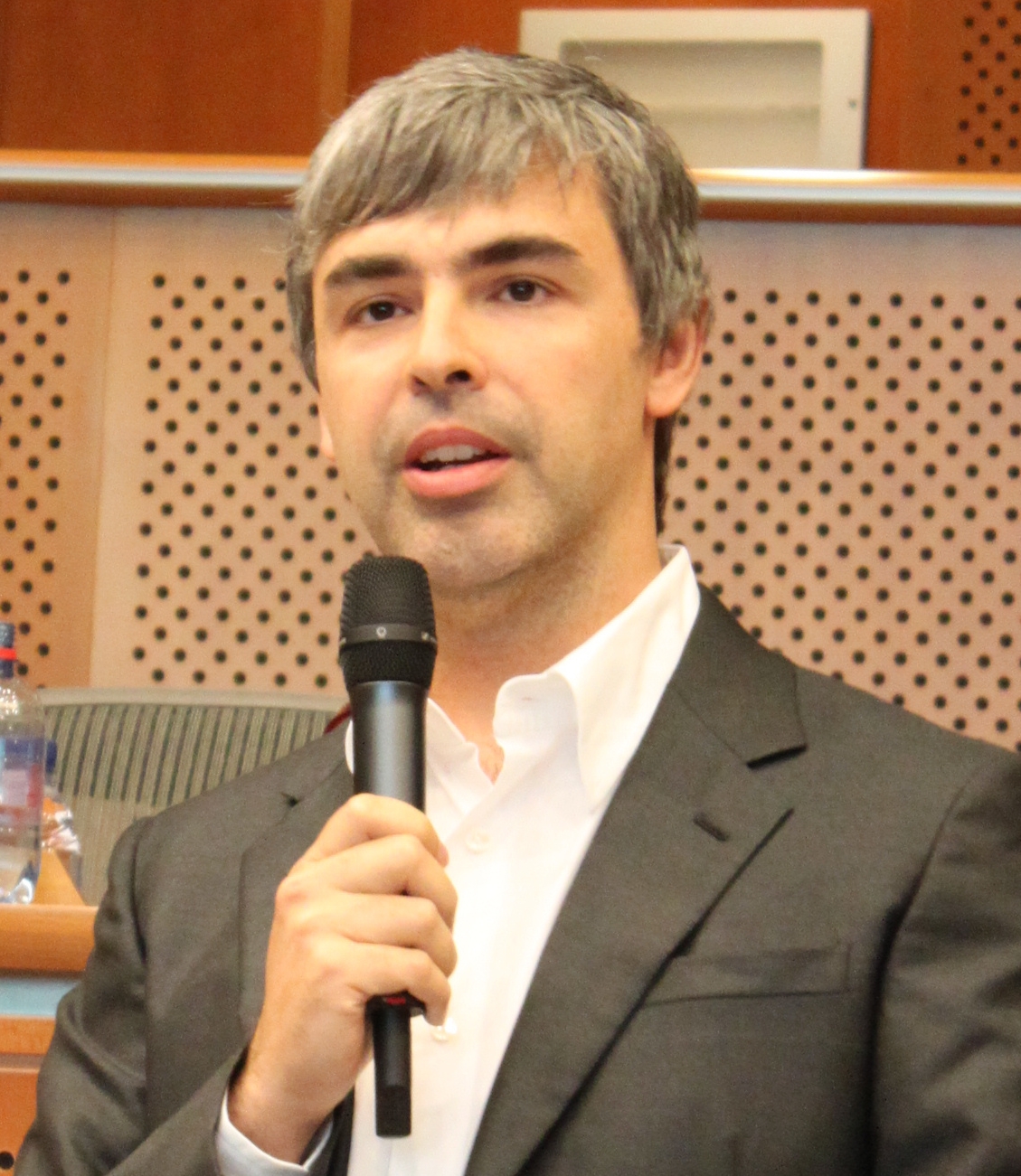






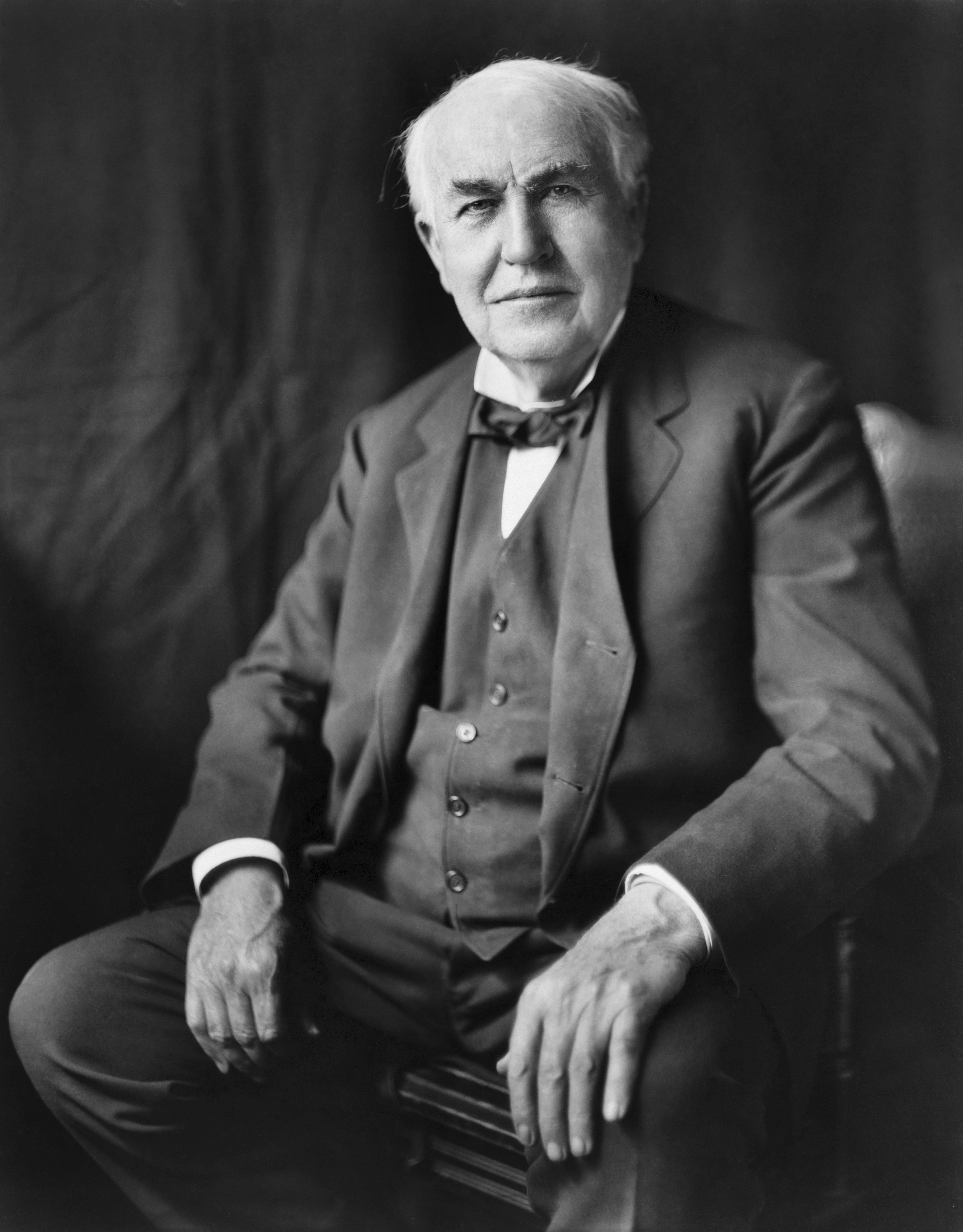










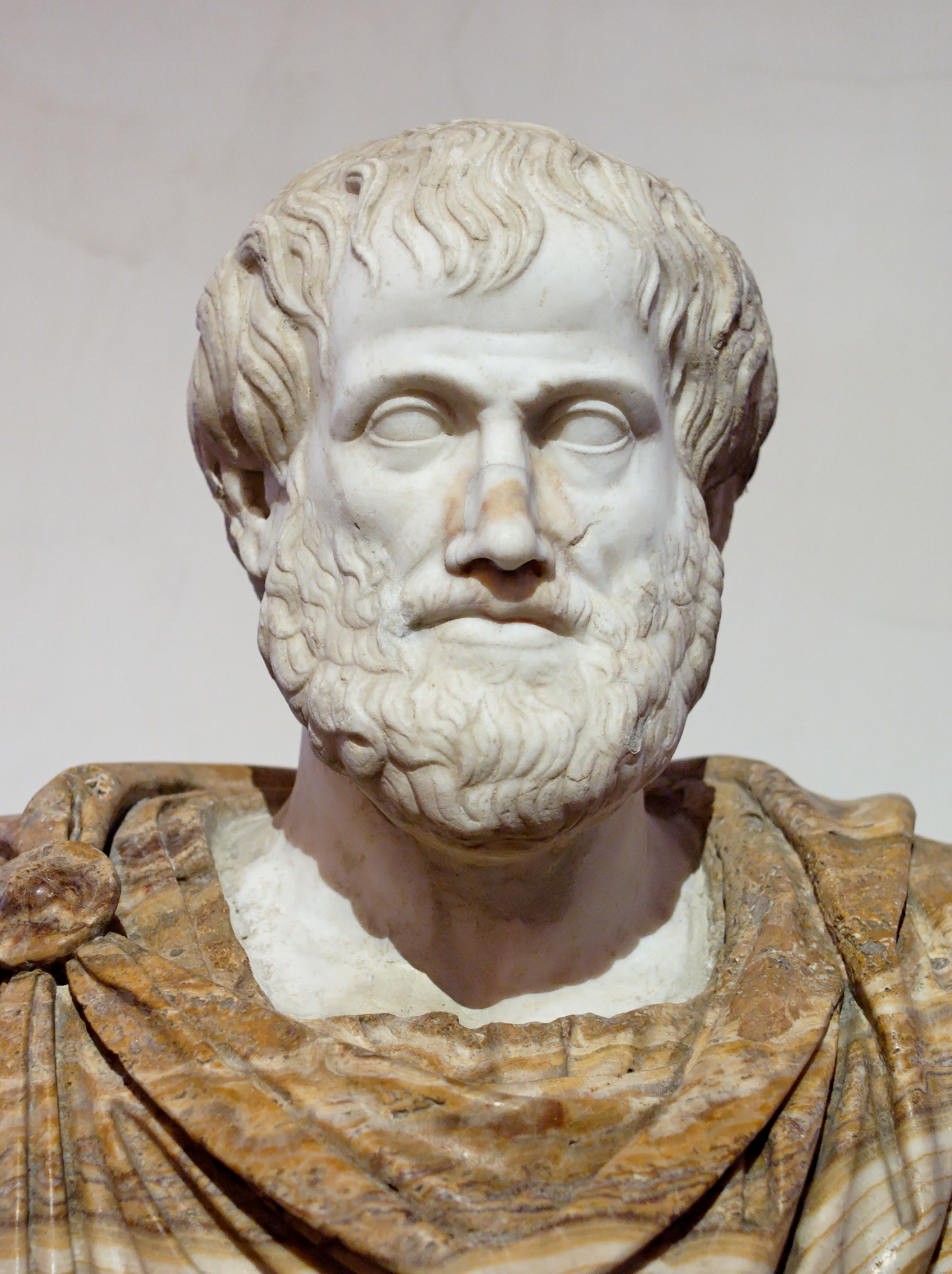






















.jpg)


















.jpg)